

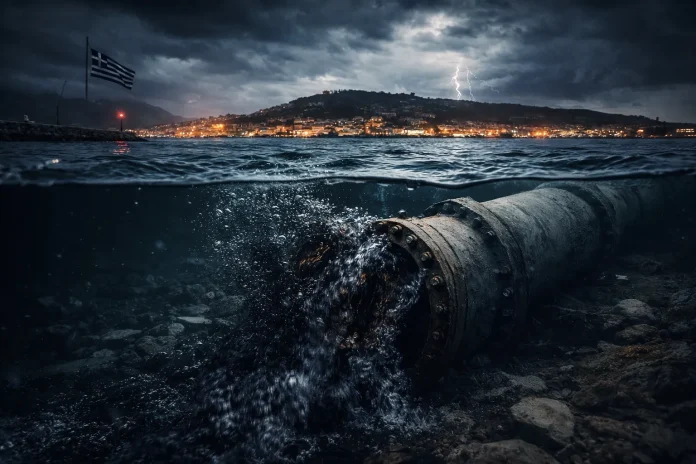
Aegina in a state of emergency after major water supply disruption
Greek authorities have placed the island of Aegina under a state of emergency after a serious failure in the underwater pipeline that supplies drinking water. The emergency designation is meant to speed up coordination and decision-making, so repairs and temporary support measures can move faster than under normal administrative timelines.
This is not only a technical problem. When an island’s water supply becomes unstable, the effects spread quickly across daily life: public health, households, tourism, and local businesses all feel the impact at once. The priority, in the first phase, is reliable temporary coverage and clear, frequent public updates.
What reportedly happened
Available reporting points to damage affecting the underwater pipeline system connected to the island’s supply network. In practical terms, that typically results in lower network pressure, intermittent availability, and heavier reliance on alternative solutions such as water tankers and bottled water.
What the emergency status changes in practice
A state of emergency is not a headline label. It usually functions as a legal and operational “fast lane” that can help authorities:
-
accelerate procedures for urgent works
-
improve coordination between agencies and local services
-
deploy temporary solutions at a wider scale
-
reduce delays caused by standard procurement and paperwork
For residents and businesses, the most important outcomes are consistency and predictability: where water is available, when temporary deliveries are scheduled, and what safety guidance applies.
What residents and businesses should prepare for
In a water disruption, the main pressure points are straightforward:
-
safe drinking water access every day
-
basic hygiene and cleaning needs
-
higher short-term costs (bottled water, storage, transport)
-
operational strain on food service and hospitality
The most useful step for households is to organize calmly around essentials: potable water for drinking and cooking, and a separate plan for non-potable needs (cleaning, flushing), depending on official guidance.
For broader, practical preparedness during disruptions, Newsio’s step-by-step guide can help people plan without panic: Οδηγός επιβίωσης για όλους: τι κάνεις σε κακοκαιρία, σεισμό, φωτιά, πλημμύρα και έκτακτη ανάγκη.
Public communication matters as much as the repair itself
In infrastructure crises, public trust depends on three things:
-
clear, repeated updates (even when the news is “no change yet”)
-
specific guidance by area (not generic statements)
-
realistic timelines explained in phases
Residents should rely on official public announcements for local distribution points, tanker schedules, and any water-use restrictions. In Greece, official Civil Protection information and emergency guidance is centralized through the Ministry’s channels, including the 112 service: 112 | Ministry of Climate Crisis and Civil Protection.
The bigger issue: island resilience
Aegina’s case highlights a wider vulnerability shared by many islands: one break in a critical link can become a society-wide disruption. That’s why maintenance, monitoring, redundancy planning, and contingency routes matter as much as “fixing the pipe.”
For readers who want a clean, official-updates approach to fast-moving emergencies, Newsio’s “official updates + safety guide” format is built for moments like this: Earthquake now” in Greece.
What this means and what to watch next
In the near term, the island’s recovery will be judged less by statements and more by measurable improvements:
-
Progress updates on repair works
-
Reliability and coverage of temporary supply
-
Public health guidance for safe use
-
A clear transition plan back to stable normal supply
Until full restoration is confirmed, residents should follow official notices, prioritize potable water for drinking and cooking, and keep a basic emergency routine that reduces stress.
For a practical model of how greek authorities communicate severe-risk situations and what residents typically need to do, this newsio safety guide is also relevant: Attica, Greece – Orange Warning for Severe Thunderstorms on Monday, January 26 — A Practical Safety Guide.