

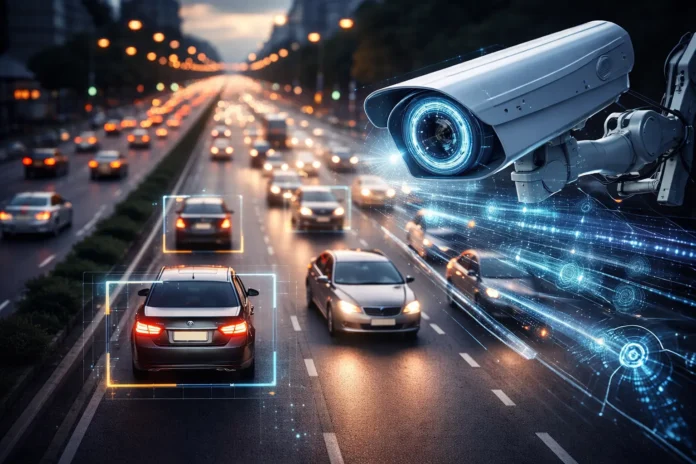
AI Traffic Cameras and Violations: The Technology Transforming Our Roads
In a world where technology continues to shape every aspect of our lives, our streets and roads are no exception. Over the past few years, AI traffic surveillance cameras have begun to play a pivotal role in modernizing the way we monitor, manage, and enforce traffic laws.
These smart cameras are not just watching the road—they are transforming how violations are detected, processed, and acted upon in real-time, all with the help of cutting-edge technology.
From speed detection cameras to red-light cameras, and even systems that can read license plates and analyze driver behavior, these AI-powered tools represent the future of road safety and law enforcement.
The introduction of AI traffic surveillance is not just about catching violators but about creating a smarter, safer road environment that reduces accidents and improves the overall quality of driving.
What Are AI Traffic Cameras?
AI traffic cameras are an advanced form of traffic monitoring that integrates high-resolution cameras, sensors, artificial intelligence (AI), and machine learning algorithms to capture, analyze, and process data about vehicles and their drivers. These cameras are designed to identify and monitor specific behaviors, such as:
-
speeding violations,
-
running red lights,
-
lane violations,
-
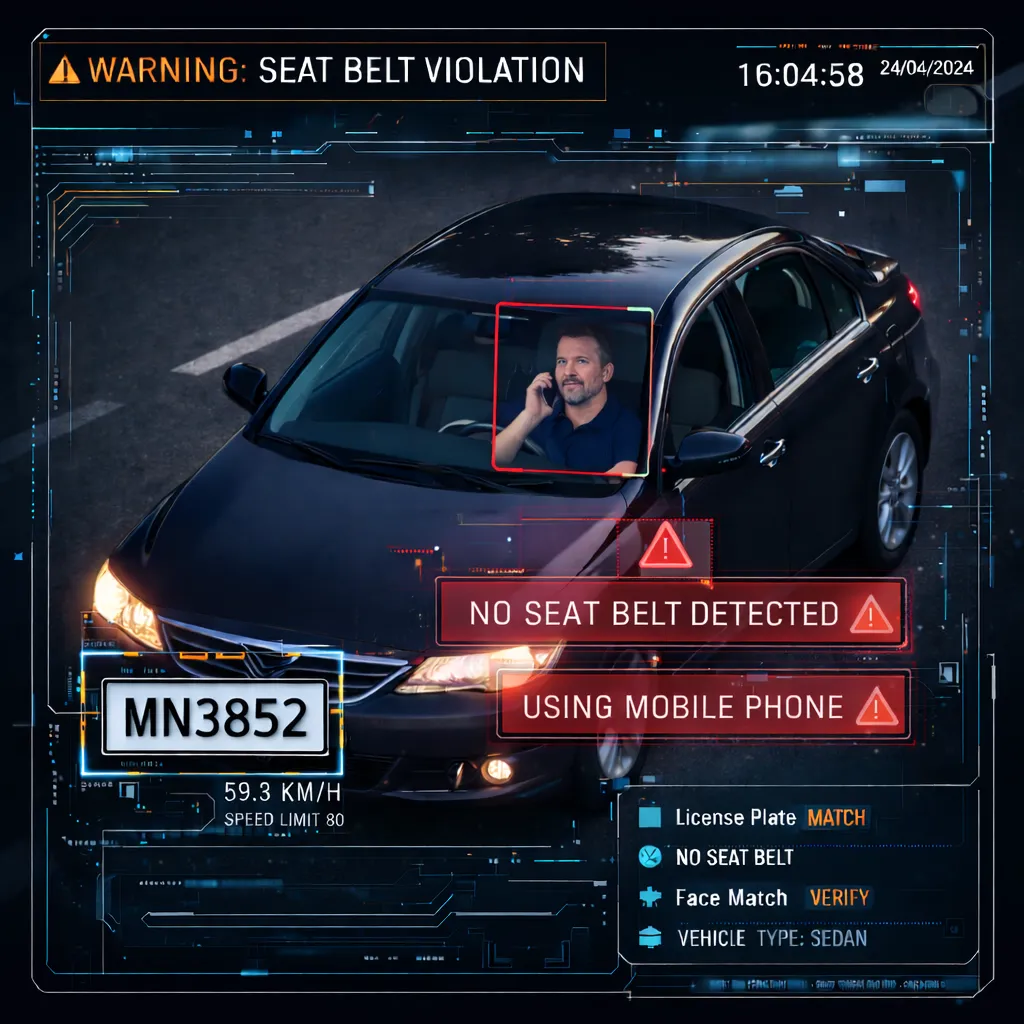
driver distractions (e.g., phone use),
-
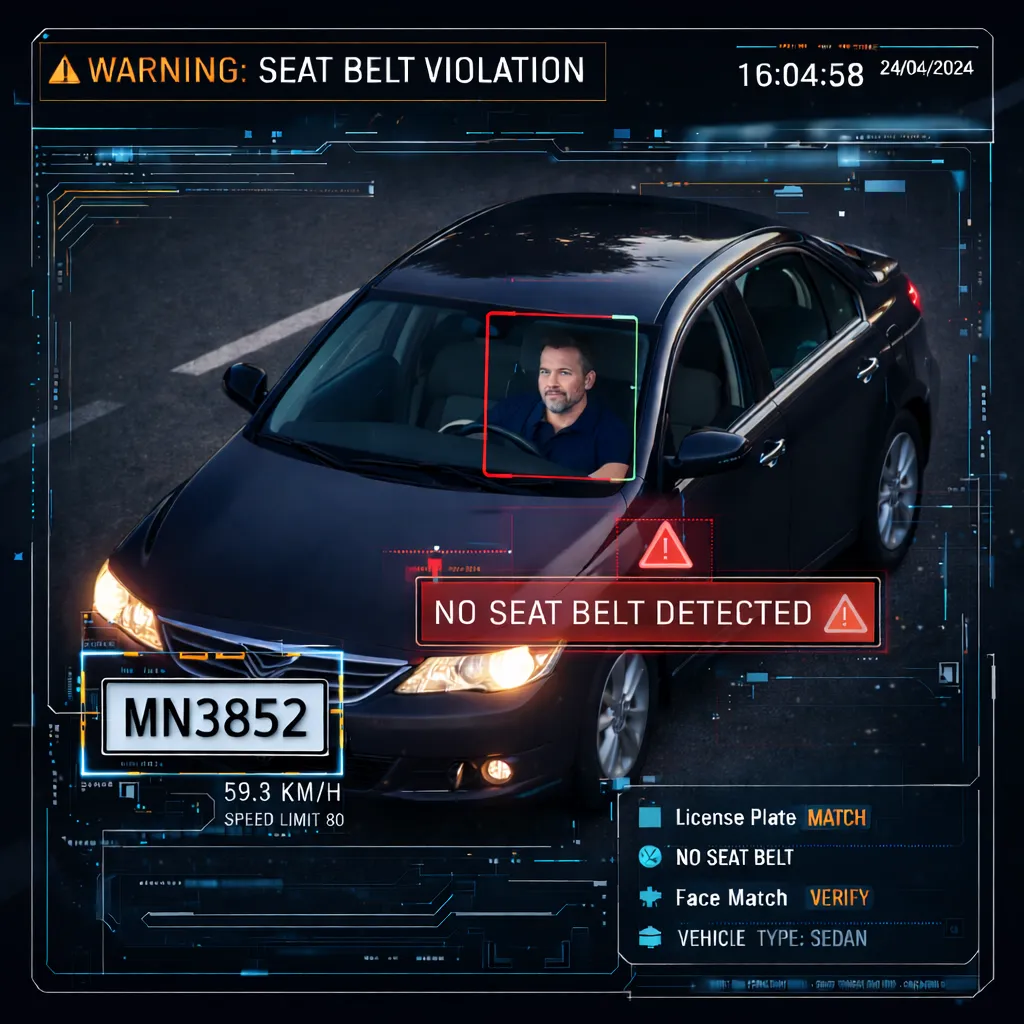
seatbelt usage,
-
unauthorized parking, and more.
These cameras are not just tools for monitoring—they are capable of real-time data processing that helps law enforcement agencies ensure a quicker, more efficient enforcement process. They operate continuously and autonomously, without the need for human intervention, to detect and address violations.
How Do AI Traffic Cameras Work?
To fully understand how these cameras work, it’s important to break down the process into several key steps:
1. Data Capture and Video Recording
AI traffic cameras are strategically installed on roadways, intersections, and highways. Equipped with high-definition cameras and light sensors, they can capture images and video under various lighting conditions, including at night. These cameras monitor the traffic constantly, collecting data on vehicles as they pass by, regardless of the time of day.
2. Real-Time Analysis and Recognition
Once the data is captured, the next phase involves real-time processing. The AI system uses machine learning algorithms to analyze the footage and identify violations. These algorithms are designed to recognize vehicles, understand traffic flow, and detect specific behaviors, such as:
-
speeding (comparing vehicle speed against posted limits),
-
running red lights (detecting vehicles that pass through a red light),
-
incorrect lane use (e.g., switching lanes unsafely).
These systems are incredibly accurate, with high levels of precision in detecting even the smallest infractions.
3. License Plate Recognition (ANPR)
One of the standout features of AI traffic cameras is the use of Automatic Number Plate Recognition (ANPR). This technology allows the cameras to:
-
capture images of vehicle license plates,
-
analyze them in real-time,
-
compare them against databases of registered vehicles,
-
identify the vehicle’s owner and any relevant registration details.
ANPR is particularly valuable for identifying unregistered vehicles or outstanding fines associated with a vehicle.
4. Data Processing and Violation Detection
Once a violation is detected, the system automatically logs the violation, collecting important details such as:
-
date and time of the offense,
-
vehicle speed (if relevant),
-
location of the incident,
-
and the violation itself.
This data is then either processed locally in the camera system or transmitted to a central server for further analysis.
How Are Violations Processed and Fines Issued?
Once the camera identifies a violation, the system takes the following actions:
-
Data Verification: The system double-checks the footage and data to confirm that a violation occurred. In some cases, there might be a human review of the footage.
-
Creating the Violation Report: If the violation is confirmed, a report is generated. This report includes:
-
photographs or videos of the violation,
-
vehicle information (license plate),
-
time and location of the infraction,
-
and other relevant details.
-
-
Sending the Fine: The violation report is sent to the vehicle owner’s registered address. In modern systems, fines may also be delivered electronically via email or through a government portal. The fine usually includes the following:
-
A detailed description of the violation,
-
A copy of the evidence (image/video),
-
Payment instructions,
-
Information about the right to contest the fine if the vehicle owner believes the data is incorrect.
-
Some systems offer online platforms where drivers can view footage of their violation, making it easier to pay fines or contest them if needed.
Types of Violations Detected by AI Traffic Cameras
AI traffic cameras are incredibly versatile and can detect a wide range of violations that would traditionally require manual enforcement:
✔️ Speeding: Cameras can monitor vehicle speeds and compare them to posted limits.
✔️ Red-light Violations: Cameras detect vehicles that run red lights, increasing safety at intersections.
✔️ Lane Violations: Cameras can detect when a vehicle crosses lane boundaries or drives in the wrong lane.
✔️ Distracted Driving: Some AI cameras can detect if a driver is using a mobile phone while driving, a leading cause of accidents.
✔️ Seatbelt Use: Some systems are even capable of detecting whether drivers and passengers are wearing seatbelts.
✔️ Illegal Parking: AI cameras can detect and issue fines for vehicles parked in restricted zones or in spaces that violate parking regulations.
These cameras are often used in tandem with data analytics systems, which help authorities prioritize areas with the highest number of violations, enhancing both enforcement and road safety.
How Are AI Traffic Cameras Transforming Road Safety?
The introduction of AI traffic cameras is fundamentally transforming road safety and law enforcement:
-
Improved Safety and Accident Prevention: By automatically detecting violations like speeding or running red lights, AI cameras help prevent accidents and save lives. They act as a deterrent to risky driving behaviors, encouraging safer driving practices.
-
Enhanced Enforcement Efficiency: AI traffic cameras provide a quicker and more effective means of enforcing traffic laws. They can work continuously, 24/7, ensuring that no violations go unnoticed.
-
Less Human Intervention: These systems reduce the need for manual traffic enforcement, which can be resource-intensive and prone to human error. The automation of the process makes it more efficient and scalable.
-
Deterrence Effect: The presence of AI cameras encourages drivers to follow the rules more strictly, knowing that their actions could be monitored at any time. The psychological effect of being “watched” has a profound impact on driving behavior.
Challenges and Concerns: Privacy, Accuracy, and Control
While AI traffic cameras provide substantial benefits, there are challenges and concerns that must be addressed:
-
Privacy Concerns: The widespread deployment of surveillance cameras raises questions about personal privacy. Some argue that constant monitoring of drivers and vehicles could lead to a breach of privacy.
-
Accuracy of Data: Though AI technology is incredibly advanced, errors in data collection or recognition are still possible. For example, poor camera angles, weather conditions, or temporary malfunctions could lead to false positives.
-
Control and Transparency: With increased reliance on automated systems for law enforcement, there are concerns about the lack of transparency in the decision-making process. Drivers need to be able to contest fines and know that the system is fair and accurate.
Conclusion: A Smarter, Safer Future for Roads
AI traffic surveillance cameras are a groundbreaking technology that is reshaping the future of road safety and law enforcement. As cities become smarter and more connected, these systems will play an essential role in reducing traffic violations, preventing accidents, and creating safer road environments for all.
However, as we embrace this new era of automated surveillance, it is crucial to balance the benefits with concerns about privacy, data security, and accountability. With the right regulations and transparency, AI traffic cameras can be a powerful tool for creating smarter, safer cities.