

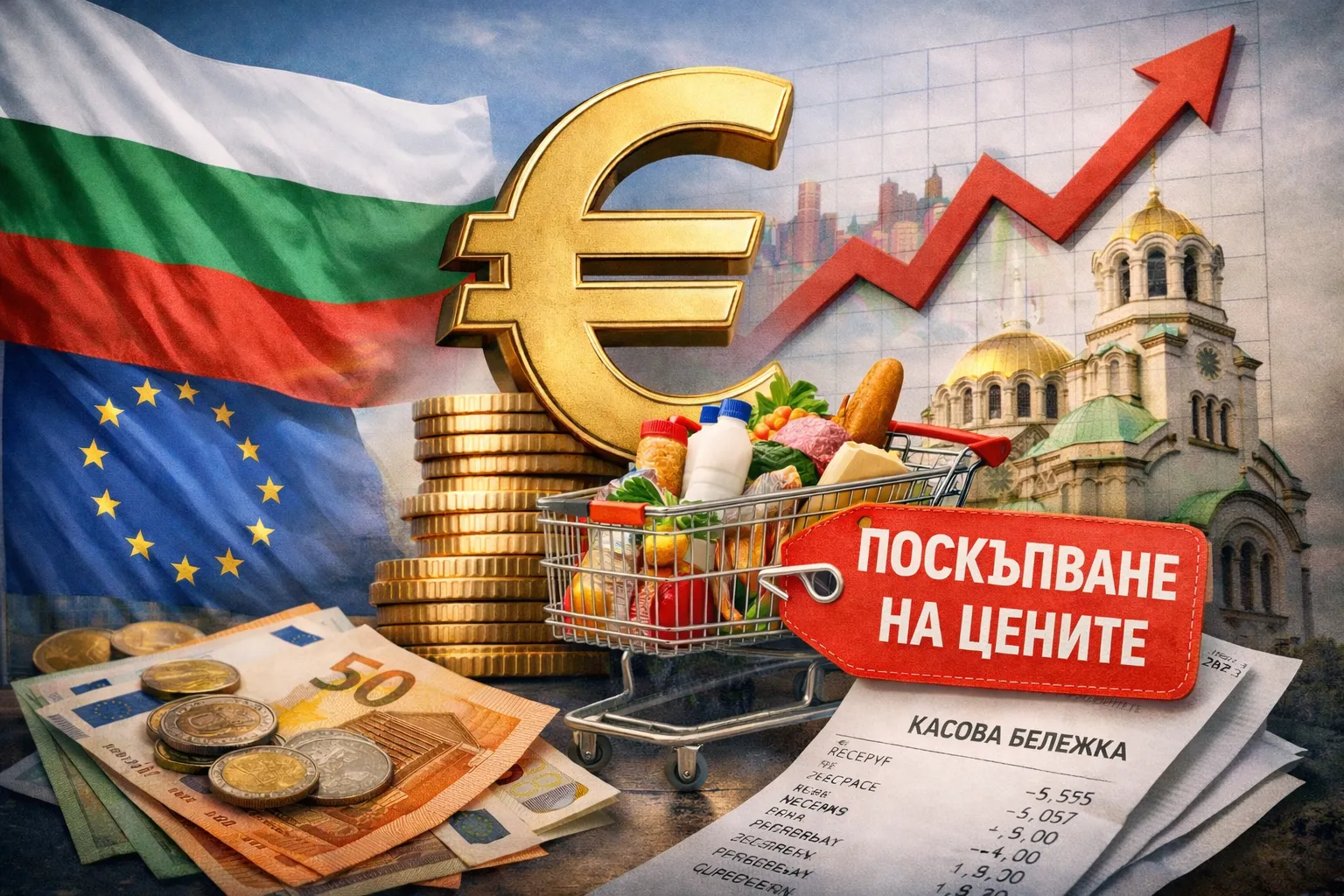
Introduction: A Landmark Event for Bulgaria’s Economic Future
On January 1, 2026, Bulgaria officially joined the Eurozone, adopting the euro as its official currency. This monumental step marked a significant milestone in Bulgaria’s long-standing goal to integrate fully into the European economic framework.
However, alongside the excitement about economic stability, there were immediate concerns about rising prices. These concerns, especially among ordinary citizens, prompted discussions about whether the introduction of the euro would cause a significant increase in the cost of living.
While economists argue that the price hikes are more of a technical nature than an actual reflection of inflationary pressures, ordinary Bulgarians have begun to experience the consequences of the currency shift.
Many feel that prices have doubled, especially for essential goods and services. In this article, we will delve into the economic factors behind these changes, separate fact from perception, and explore the real-world implications of adopting the euro.
“Would you rather listen to the audio version of this article? Watch/listen to it on YouTube”
1. The Road to Joining the Eurozone: Economic Stability or Increased Challenges?
Bulgaria’s accession to the Eurozone had been anticipated for several years. As a member of the European Union since 2007, Bulgaria had been working towards fulfilling the necessary criteria for adopting the euro. These criteria, often referred to as the convergence criteria, include:
-
Price stability: Bulgaria needed to keep inflation rates below 2% for several consecutive years to meet the price stability requirement set by the European Central Bank (ECB).
-
Fiscal discipline: The country had to ensure its public budget deficit remained below 3% of its Gross Domestic Product (GDP), with national debt kept under 60% of GDP.
-
Exchange rate stability: The Bulgarian lev needed to be stable relative to the euro for at least two years prior to adopting the currency.
Despite meeting all the necessary economic criteria and being officially greenlighted by the ECB, the decision was not without its controversy. Citizens were divided on the potential outcomes. While some anticipated that the adoption of the euro would bring about economic stability and increased competitiveness, others feared it would lead to price hikes and worsen the cost of living.
2. Price Increases: Real or Perceived?
A. Public Perception of Price Increases
As Bulgaria officially made the transition to the euro on January 1, 2026, consumers immediately began noticing price increases in various everyday items, such as groceries, fuel, and clothing. The first signs of these increases appeared as early as December 2025, when businesses began displaying dual price tags, one in the Bulgarian lev and one in euros, with prices appearing higher in euros.
However, economists argue that these price hikes are not due to the euro itself but are a result of technical and psychological factors. The most notable of these factors are:
-
Price Conversion and Rounding Up: When prices are converted from the lev to the euro, businesses often engage in rounding up the prices for convenience. This is especially true for smaller items, where a simple conversion might result in a seemingly higher price than the lev equivalent.
-
Psychological Impact of Currency Change: The perception that prices have increased can be attributed to the psychological effect of changing currencies. Consumers often associate the euro with a stronger currency, leading them to believe that prices should be higher even if the actual value of the goods hasn’t changed.
B. The Role of Businesses in Price Adjustments
Many businesses, particularly in the retail and food sectors, saw the transition to the euro as an opportunity to adjust their prices. While some businesses kept their prices relatively stable, others capitalized on the moment to increase their prices. For instance:
-
Small-scale retailers may have rounded prices up when converting from lev to euro, even if the increase wasn’t justified by production costs.
-
Larger chains and service providers sometimes used the currency change as a justification to increase prices slightly across the board, fearing that consumers might be less sensitive to small increases in prices when they were already adjusting to a new currency.
This phenomenon is not unique to Bulgaria. Several countries that joined the Eurozone in previous years, such as Greece, Slovakia, and Lithuania, experienced similar reactions from businesses, who used the currency change as an opportunity to increase prices, even when the cost of production had not risen significantly.
C. The Technical Side of Price Increases: Rounding and Labeling
One of the main technical reasons for price increases is the issue of rounding. When businesses display their prices in euros, rounding to the nearest euro or half-euro unit often results in small increases.
For example, a product that was priced at 3.50 leva (around 1.80 euro) may now be priced at 2.00 euros. This rounding practice is common across many European countries during currency transitions, and it can create the perception of price hikes without a direct cause.
Moreover, the dual pricing system, where both lev and euro prices are displayed, creates a sense of dissonance in consumers’ minds. When consumers see euro prices being rounded upwards, they tend to perceive these increases as inflationary, even if the actual price in terms of purchasing power hasn’t changed drastically.
3. Economic Implications for Bulgaria: Stability or Economic Pressure?
The transition to the euro is a momentous step for Bulgaria’s economy. While short-term price increases are often inevitable during such transitions, the long-term benefits of joining the Eurozone should not be overlooked. Bulgaria stands to benefit in the following ways:
A. Economic Stability and Investment Growth
One of the main advantages of adopting the euro is the stabilization of the currency. With the lev now permanently tied to the euro, Bulgaria is less exposed to currency fluctuations that can negatively affect the economy. This stability increases investor confidence and is likely to encourage more foreign investment in the country.
Additionally, the adoption of the euro allows Bulgaria to be more integrated into the European single market, providing easier access to trade and investment opportunities with other euro-using countries. Over time, this is expected to lead to stronger economic growth and a higher standard of living.
B. Monetary Policy and Fiscal Discipline
Being part of the Eurozone means that Bulgaria will have greater access to the European Central Bank’s monetary policies, which can help keep inflation in check. Moreover, fiscal discipline will be more strictly monitored, ensuring that Bulgaria maintains the low inflation and low fiscal deficits required by the Eurozone’s economic stability pact.
C. The Transition’s Short-Term Pain
While the long-term outlook remains positive, the short-term economic pain of adjusting to the euro cannot be ignored. Many businesses have raised prices during the transition, contributing to public dissatisfaction. However, the overall impact of these price increases is expected to be temporary, with prices gradually stabilizing as consumers and businesses adapt to the new currency system.
4. Conclusion: A New Chapter for Bulgaria’s Economy
Bulgaria’s entry into the Eurozone marks a major milestone in its economic development, but it has come with challenges, especially concerning the perception of price increases. While the rise in prices may feel significant to consumers, it is largely the result of technical adjustments and psychological factors rather than fundamental economic shifts.
As the country settles into its new role within the Eurozone, it will likely experience the benefits of greater economic stability, increased foreign investment, and stronger economic integration with the rest of Europe. Though there may be bumps along the way, particularly concerning the cost of living, Bulgaria’s future as part of the euro area is promising.