

Clean Monday in Greece: What Koulouma is, why kite-flying matters, and how the day works in real life
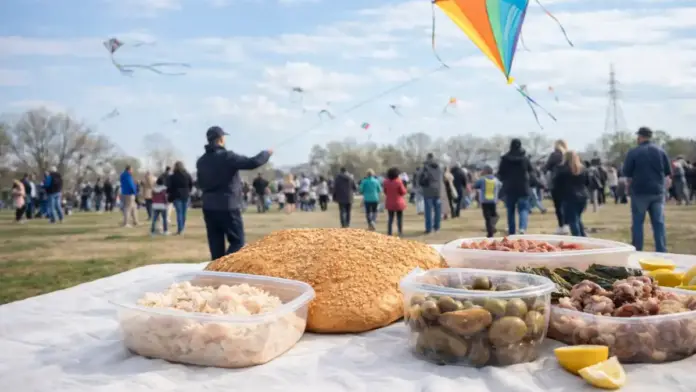
Clean Monday is one of those dates in Greece that you feel before you fully understand it. Cities quiet down, parks and open spaces fill up, and many families and groups head outdoors with food, music, and—almost always—kites.
For people who live in Greece but did not grow up with Greek traditions, the day can look like a mix of holiday, picnic, and religious custom. That is exactly what it is. Clean Monday marks the start of Lent in the Orthodox calendar, but modern Koulouma is also a social ritual: a shared “reset” that brings people outside and together.
This explainer is designed to be practical. You will learn what Clean Monday and Koulouma mean, what people typically eat, why kites became central, and how to join in respectfully—without feeling lost.
Clean Monday, in plain terms
Clean Monday is the first day of Lent in the Greek Orthodox tradition. The word “clean” connects to the idea of a fresh start—spiritually for those who observe Lent, and socially for everyone who enjoys the day as a public tradition.
In practice, most people experience Clean Monday as:
-
an outdoor day (weather permitting),
-
a Lenten table (fasting-friendly foods),
-
and kite-flying as the signature activity.
What “Koulouma” means
“Koulouma” is the popular term Greeks use for the outdoor celebration of Clean Monday. It is not a single formal ceremony. It is the collective habit of going out—often to parks, hills, beaches, and open fields—sharing food, and spending time as a group.
Depending on where you are, Koulouma can be:
-
informal (friends and families bringing their own food), or
-
organized (municipal events with music and community tables).
The common thread is the same: open air, shared space, and a simple menu that travels well.
The “above the fold” essentials: the three things to remember
-
Clean Monday is a public-facing day in Greece, not a private observance. You will see it happening around you.
-
Kite-flying is not a random detail. It is the main ritual for many people, especially families.
-
You do not need to be Greek to participate. You only need basic awareness, respect for the space, and common-sense safety.
Why people fly kites on Clean Monday
Kite-flying sits at the intersection of symbolism and practicality.
Practically, it is a low-cost, social activity that works outdoors and brings people together. It also creates a shared “soundtrack” of the day—wind, movement, and teamwork.
Symbolically, many connect the act of lifting something into the sky with the broader idea of Lent as a new start. Even people who do not think about symbolism still take part because it has become a strong cultural marker of the day.
What people eat on Clean Monday (and why it looks the way it does)
The Clean Monday table is built around Lenten/fasting-friendly foods. In everyday terms, many people avoid animal-based products during Lent, and the menu adapts accordingly.
A typical Koulouma spread often includes:
-
Lagana (a flat, sesame-topped bread baked specifically for the day)
-
Taramosalata (a spread made from fish roe)
-
Legumes (for example, beans or lentil dishes)
-
Seafood (commonly shellfish and other seafood, depending on household tradition)
-
Dolmades (vine leaves with rice)
-
Olives, pickles, salads
-
Halva (a classic sweet for the season)
The menu also makes practical sense: it is easy to share, easy to transport, and easy to serve outdoors.
How the day plays out across Greece
In bigger cities, people tend to concentrate in known outdoor spots and along coastal/open areas. In smaller towns and villages, the day often feels more community-led and personal, with local gatherings that can become mini-events.
Some years feature local highlights—oversized kites, large communal grills, or public food preparation. The important journalistic point is to describe these as local initiatives unless an official certification exists. In other words: “an attempt” is not the same as a confirmed record.
How to join respectfully if you are new to the tradition
You do not need special knowledge. You need a few simple habits.
If you are invited to a table
-
Ask if the menu is strictly Lenten, and bring something that fits (lagana, halva, salad, olives).
-
Feel free to ask what foods are and how they are made. People usually enjoy explaining.
-
Keep it simple: Clean Monday is not about formality. It is about shared time.
If you go to a public gathering
-
Respect the space: leave no trash behind, and avoid lighting anything unsafe.
-
Keep an eye on children and pets—crowds and wind create distractions quickly.
-
Choose open areas that allow kite-flying without hazards.
Kite safety: five rules that prevent most problems
-
Stay far from power lines and utility poles.
-
Do not fly near roads or heavy foot traffic.
-
Keep distance from other kites to prevent line entanglement.
-
If wind becomes too strong, stop. Wind can pull hard and cause falls.
-
Never chase a kite into a dangerous spot (rooftops, cliffs, cables).
Internal reading on Newsio (EN)
If you enjoy explainers that turn “big ideas” into practical understanding, these two pieces pair well with this guide:
-
The rise of digital currencies and their impact on traditional banking
-
Electronic voting in Greece: what’s changing, what’s not, and what citizens should watch for
And for a neutral background definition of the day itself, this reference is useful for newcomers: Clean Monday.
What this means for you
If you live in Greece long-term, Clean Monday is a shortcut to understanding how public traditions work here.
-
It shows how Greece blends religious calendar moments with social life—without requiring everyone to observe the religious aspect.
-
It offers a low-pressure way to connect with neighbors, coworkers, and local communities.
-
It teaches a simple rule about shared outdoor culture in Greece: people value the common space, but everyone is responsible for keeping it safe and clean.
If you are new to the country, the best way to experience Koulouma is to go somewhere open, bring something simple, watch how people set up, and join in with respect. You will understand more in one afternoon than in a week of reading.
Summary
Clean Monday in Greece marks the start of Lent and also functions as a major outdoor tradition known as Koulouma. People head to open spaces, share a Lenten table built around foods like lagana and halva, and fly kites as the day’s most recognizable ritual. The tradition is open to everyone who lives in Greece—Greek or not—so long as participation stays respectful and safe.