

Introduction: The Growing Tensions between Colombia and Venezuela
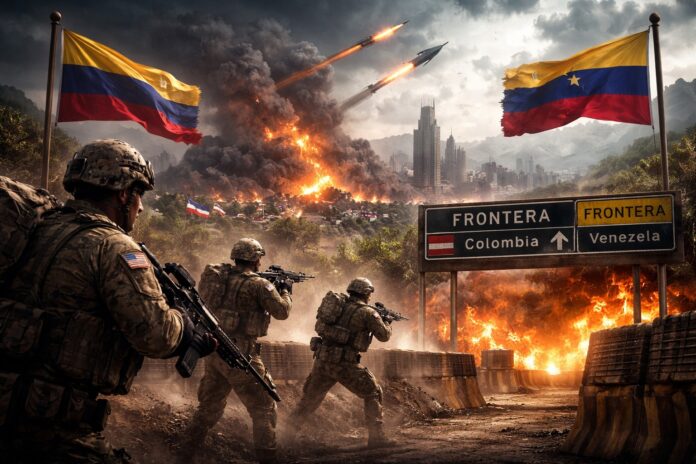
The political and military crisis between Colombia and Venezuela has reached a critical point. The recent missile strike on Caracas has intensified the already existing conflicts and has prompted Colombia to deploy military forces at the Venezuelan border. The attack, which has been condemned by Cuba and other countries in the region, marks a pivotal moment in the ongoing struggle for power and influence in Latin America.
This article will analyze the strategic implications, diplomatic responses, and legal consequences of the escalating tensions, examining the underlying factors that have led to this crisis and the potential consequences for international relations and regional stability.
Missile Strike and Diplomatic Reactions: A Shocking Escalation
The Missile Attack on Caracas: Catalyst for Increased Tensions
The missile strike on Caracas, which caused significant damage to key infrastructure, marks a new chapter in the Colombian-Venezuelan conflict. The Venezuelan government, led by President Nicolás Maduro, has accused Colombia of sponsoring the attack, while Colombia has maintained that the missile strike was a necessary response to the growing threat posed by the Maduro regime.
The Colombian military, under the orders of the government, has initiated a full-scale deployment of troops along the border with Venezuela, signaling a potential escalation of military operations. Cuba, a strong ally of Venezuela, along with several other countries in the region, condemned the attack and called for international intervention to mediate the crisis.
Strategic Military Responses: Colombia’s Border Deployment
Colombia’s Strategy: Protecting National Security
In response to the missile strike, Colombia has strategically positioned its military forces along the Venezuelan border. This move is a direct indication of Colombia’s commitment to protecting national security and its intention to prevent further aggression from Venezuela.
The deployment of Colombian forces is not only a military strategy but also a diplomatic message to the international community. It demonstrates Colombia’s willingness to defend its sovereignty and ensure the security of its borders, despite the geopolitical tensions with its neighbor.
While Colombia’s military actions are seen as a defensive maneuver, the strategic significance of this deployment cannot be underestimated. It represents a shift in Latin American geopolitics, with Colombia aligning itself more closely with U.S. military interests in the region, while Venezuela turns to its allies in Russia and China for support.
Diplomatic Tensions and Reactions: A Divided Region
Regional Responses: Divisions in Latin America
The missile attack and subsequent military actions have deeply divided the Latin American region. Cuba, along with other nations sympathetic to Venezuela’s government, has strongly condemned the missile strike and called for diplomatic negotiations. These countries argue that military aggression only deepens the crisis and undermines the sovereignty of both Venezuela and its neighbors.
On the other hand, countries like Colombia, Chile, and Brazil, which have been more aligned with U.S. foreign policy, support the Colombian government’s actions and call for increased pressure on Maduro’s regime. This diplomatic split highlights the ongoing ideological divide within Latin America regarding the future of Venezuela and the broader regional order.
The involvement of U.S. military support in the region further complicates matters. The United States, which has consistently supported opposition forces in Venezuela, has made it clear that it stands behind Colombia’s right to defend itself. This has led to an increasing polarization of the region, with countries either supporting the Venezuelan government or siding with the U.S. and Colombia.
Legal Consequences: Violations of Sovereignty and International Law
International Law and Military Intervention
The military actions taken by Colombia raise significant questions of international law, particularly regarding the violation of sovereignty and the legitimacy of military intervention. The missile strike on Venezuela’s capital is a direct breach of Venezuela’s national sovereignty, and the deployment of Colombian troops along the border further complicates the legal landscape.
International law prohibits the use of military force without UN Security Council approval, and both Colombia’s actions and Venezuela’s response raise serious concerns about the legality of these military interventions. Human rights organizations have also expressed concerns about the potential for civilian casualties and the violation of humanitarian law in the region.
The United Nations and the International Court of Justice may eventually need to weigh in on the legality of these actions, and the international community will need to decide whether or not to intervene diplomatically to prevent further escalation.
Cuba’s Response and Support for Venezuela: A Regional Cold War
Cuba’s Solidarity with Venezuela
As a close ally of Venezuela, Cuba has strongly criticized the military aggression and has pledged its support for Maduro’s government. The Cuban government views the attack as part of a broader U.S. imperialist agenda in Latin America, aimed at undermining the sovereignty of countries in the region that do not align with U.S. interests.
This support from Cuba comes at a time when Venezuela’s geopolitical alliances with Russia and China are increasingly important. Both Russia and China have expressed concern over the escalating tensions, and they continue to back the Maduro government both politically and militarily.
The regional Cold War between U.S.-aligned and socialist-aligned countries in Latin America is deepening. This divide places additional pressure on countries like Mexico, which are caught in the middle of this conflict, trying to maintain diplomatic neutrality while advocating for peace and stability in the region.
Conclusion: The Future of Latin American Geopolitics
The military escalation between Colombia and Venezuela marks a significant moment in Latin American geopolitics. The strategic interests of Colombia, Venezuela, and their respective allies have created a volatile geopolitical environment that is likely to have lasting consequences for the region.
The coming months will be critical in determining whether diplomatic efforts can prevent further conflict or whether military actions will continue to escalate, drawing in more international actors and affecting the broader balance of power in Latin America. The situation requires careful monitoring, as it could potentially destabilize the entire region, with profound implications for both local and global security.