
Table of Contents
The Critical U.S.–NATO Turning Point: What Is Cracking Between Washington and Europe, What Tehran Gains, and Why the Anti-Western Bloc Is Watching With Strategic Satisfaction
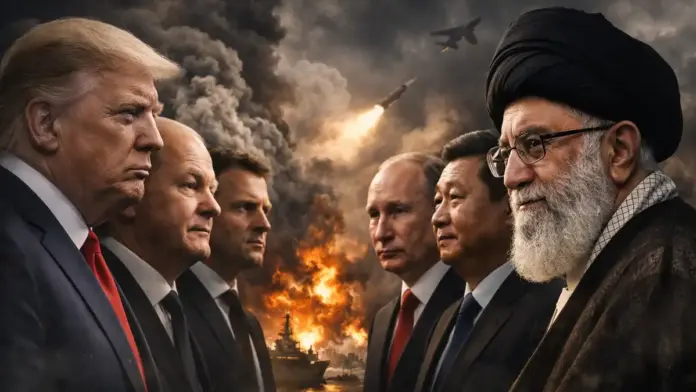
This is no longer a routine quarrel among allies. It is a stress test of the West’s strategic core.
The current tension between the United States and key European NATO members is not just another argument over burden-sharing, tone, or procedure. It is something sharper. Washington is demanding concrete strategic alignment in a war it views as decisive, while much of Europe is answering with blocked overflights, restricted base access, legal hesitation, and political distance.
Reuters reported that France, Italy, and Spain pushed back against parts of U.S. military activity connected to the Iran war, turning what might once have looked like a policy disagreement into a visible alliance rupture.
That is where the phrase “critical turning point” becomes accurate. The issue is not simply that the allies disagree. The issue is that Washington and major parts of Europe now appear to be operating with different ideas of what alliance duty means, what legitimate risk looks like, and how the West should respond to a regime such as Tehran’s. For Trump’s America, European hesitation looks like strategic evasion. For many European governments, Washington’s demand looks like pressure to become co-owners of a war they did not design and do not fully trust.
This matters far beyond the Iran theater. It touches NATO credibility, the meaning of Article 5, the stability of Hormuz, the price of energy, and the larger question of whether the West can still function as a coherent strategic actor under pressure.
For the English-language Newsio background on why Hormuz is not a side issue but a core transmission belt of geopolitical cost, Strait of Hormuz: What a “closure” claim really means and Fuel Prices Surge: How wars move oil markets and what the data says about what comes next fit directly into this frame.
The first rupture: Washington wants wartime solidarity, while Europe offers low-intensity solidarity.
The most important fact is not that Europeans dislike the war. It is that they are resisting it operationally. France blocked certain military supply flights, Italy denied use of Sigonella for some U.S. operations, and Spain closed its airspace to U.S. aircraft tied to the attacks on Iran. These are not symbolic gestures. They are physical restrictions placed on the machinery of allied military support. Reuters documented all three.
From Washington’s perspective, that looks like Europe failing a historic loyalty test. From Europe’s perspective, it looks like the United States trying to convert the alliance into an automatic ratification mechanism for a conflict that was not jointly designed. But the deeper damage begins precisely there. Once the alliance stops agreeing on what the crisis demands, adversaries do not see “healthy democratic pluralism.” They see fracture.
And when that fracture is reinforced by ambiguity from the American side itself, the damage grows. Reuters reported that Defense Secretary Pete Hegseth declined to reaffirm NATO’s collective-defense commitment in clear terms, saying that such a decision ultimately rests with Trump. Once that happens, the crisis stops being only about Iran. It becomes systemic.
Because the real question is no longer just whether Europe will help in this war. It is what Moscow, Beijing, Pyongyang, and Tehran hear when the American core of the alliance speaks so ambiguously about the very doctrine meant to hold the alliance together.
The second rupture: Europe wants to protect Hormuz without becoming co-owner of the war.
This is perhaps the clearest expression of Europe’s strategic instinct. Europe is not saying there is no threat. It is saying it wants a different type of response. Kaja Kallas called for a diplomatic solution and later maritime stabilization, while France explored a possible future mission focused on keeping the Strait of Hormuz open and secure rather than joining the war directly. Reuters reported both moves.
From an American perspective, that can sound almost cynical: Europe wants open shipping, lower oil prices, fewer Iranian threats, and stable maritime routes, but without paying the strategic price of direct confrontation with the regime that threatens all of those things. From the European perspective, the answer is that responsibility does not mean blind attachment to every wartime escalation chosen by Washington and Israel. That is the real conflict here — two rival definitions of the same word: responsibility.
The problem for the West is that time is not neutral. While allies argue over which version of responsibility is more legitimate, Tehran gains something concrete: room. And in wartime, room becomes time, bargaining leverage, symbolic endurance, and political maneuvering space.
What Tehran gains from this turning point
The first gain is narrative legitimacy. The more divided the West appears, the easier it becomes for Tehran to tell its own population — and the wider non-Western world — that it is not facing a unified free world but a rival camp full of contradictions, fatigue, and limited will. From Tehran’s perspective, Europe’s hesitation does not read as peace wisdom. It reads as proof that coercive pressure works. Reuters’ reporting on European pushback gives that interpretation a real operational basis.
The second gain is operational. A regime like Tehran’s does not need to win conventionally in order to gain strategic value. It only needs to show that the opposing camp struggles to maintain coherence. Every transatlantic dispute over flights, bases, legality, and Hormuz gives Tehran reason to believe that pressure on shipping routes, infrastructure, energy flows, and regional actors is not falling into a void. It is producing political vibration inside the West itself. Reuters’ reporting on Europe’s reluctance and on the wider stress around the war makes that clear.
The third gain is diplomatic. As Europe distances itself from Washington’s military line, Tehran gains the possibility of a partial split in the isolation architecture built against it. That is not the same as escaping pressure. It is something subtler and often more useful: remaining under fire from Washington and Israel without becoming fully sealed off from European channels still searching for diplomacy, de-escalation, and postwar management. In crises like this, even a partial fracture in the opponent’s camp is a major asset.
For Newsio’s internal English analysis of how the regime transforms external pressure into a survival narrative, this article pairs naturally with When a Regime Fears Its Own End: Why Tehran Exports Crisis, Hardens Diplomacy, and Turns War into a Survival Narrative.
What the anti-Western bloc gains — and why “bloc” is not an exaggeration
If someone looks only at Iran, they miss half the picture. The other half is how Russia, China, and North Korea read this turning point. They do not need identical ideologies to share a strategic interest. That interest is simple: every crack between Washington and Europe reduces the deterrent density of the West. Reuters’ report on Hegseth’s reluctance to reaffirm Article 5 makes that point load-bearing.
Russia gains first and foremost in strategic climate. Reuters noted that ambiguity around NATO’s collective-defense commitment could embolden adversaries such as Russia. That is not abstract. For Moscow, the ideal outcome is not an Iranian victory in a narrow sense. It is a Europe that becomes accustomed to doubting the automaticity of American protection and a West that begins to treat each major crisis as a source of internal division rather than strategic clarity. That psychological shift is enormously valuable to the Kremlin.
China gains in two ways. First, diplomatically. Reuters reported that China and Pakistan jointly called for peace talks and the restoration of normal navigation through Hormuz. That allows Beijing to present itself as a stabilizing power while preserving useful ties with Tehran and avoiding ownership of the war. Second, China gains from the wider redistribution of strategic attention and financial anxiety. In a world where the West looks divided and the Gulf looks unstable, Beijing can present itself as the more measured pole.
North Korea gains something different but still valuable: ideological confirmation. Reuters reported that Pyongyang condemned the attacks on Iran as illegal aggression. That does not alter the battlefield directly. But it strengthens the broader anti-Western narrative that portrays the United States and its allies as the primary source of disorder while authoritarian rivals pose as defenders of sovereignty. In an age of information war, such narratives matter more than many governments like to admit.
The most important consequence: Tehran does not need to win. It only needs to prove the West cannot remain one.
This may be the central strategic lesson. Western analysis often defaults to the question “who is winning on the battlefield?” Regimes like Tehran’s — and the wider anti-Western ecosystem around them — also think in terms of political attrition, symbolic resilience, and the opponent’s loss of coherence. If the West begins to look like a camp that cannot agree on tools, aims, or thresholds of risk, then its deterrence is damaged even if its military superiority remains overwhelming.
By that logic, the current U.S.–NATO turning point is highly favorable terrain for Tehran. It allows the regime to say: we can endure, divide, pressure, and survive. That is exactly where Europe’s hesitation stops being merely a European problem and becomes a multiplier of value for every power that wants a less unified, less self-assured, less strategically coherent West.
The picture sharpens further once the domestic effects inside Europe are considered. AP and Reuters both highlighted the war’s impact on energy anxiety and allied political stress. The issue is no longer just strategic disagreement among elites. It is also a widening argument about cost, exposure, and how much pain European societies are willing to absorb in conflicts they did not initiate. That is where the strategic damage deepens — not just in ministries, but in public psychology.
The strongest external authority link — and why this is the right baseline
For the clearest international baseline on the U.S.–Europe rupture itself, the strongest authority reference is Reuters’ report on how Europe is pushing back against some U.S. military operations tied to the Iran war: Europe pushes back on some U.S. military operations as concerns over Iran war mount. It supports the article’s central claim that this turning point is not theoretical. It is already visible in bases, airspace, alliance distrust, and widening Western fatigue.
The deeper lesson of the moment
This crisis does not only tell us something about Iran. It tells us something about the West itself. It shows that an alliance can remain enormous in accumulated power and still become fragile in political will. It shows that NATO is tested not only when missiles fall on its eastern frontier, but also when the United States expects Europe to prove what it means by shared security in a real strategic emergency. It also shows that adversaries such as Tehran do not need military parity with the West to create serious strategic trouble. They only need to know where to strike politically, economically, and psychologically.
That is what Russia, China, and North Korea are watching with satisfaction. Not only the war itself, but the erosion of Western certainty. The moment when Europe no longer knows whether to follow, resist, mediate, or wait. The moment when the United States allows doubt to hover even over the principle of collective defense. The moment when Western strategic superiority collides with Western difficulty in remaining politically one.
For the wider Newsio English frame on how strategic crises turn into energy and market stress, Fuel Prices Surge: How wars move oil markets and what the data says about what comes next and Storm ERMINIO in Greece: Where It Hits, When It Peaks, and Why Readiness Matters More Than the Name show from different angles how systems under strain reveal their hidden vulnerabilities. The geopolitical and the operational are never as separate as they first appear.
What readers should keep
First, the U.S.–NATO turning point is not abstract. It is already visible in European refusals over airspace, bases, and operational cooperation in the Iran war.
Second, Tehran gains from that fracture in concrete ways: time, narrative value, diplomatic room, and proof that pressure on energy and shipping can create cracks inside the West.
Third, Russia, China, and North Korea all have objective strategic reasons to welcome a West that looks less certain, less unified, and more vulnerable to fatigue.
Fourth, the core lesson is this: if the West cannot hold coherence against such a clear source of regional instability, then the problem is no longer only Iran. The problem is the West’s own ability to act as a unified strategic body in an era of multiple adversaries.