

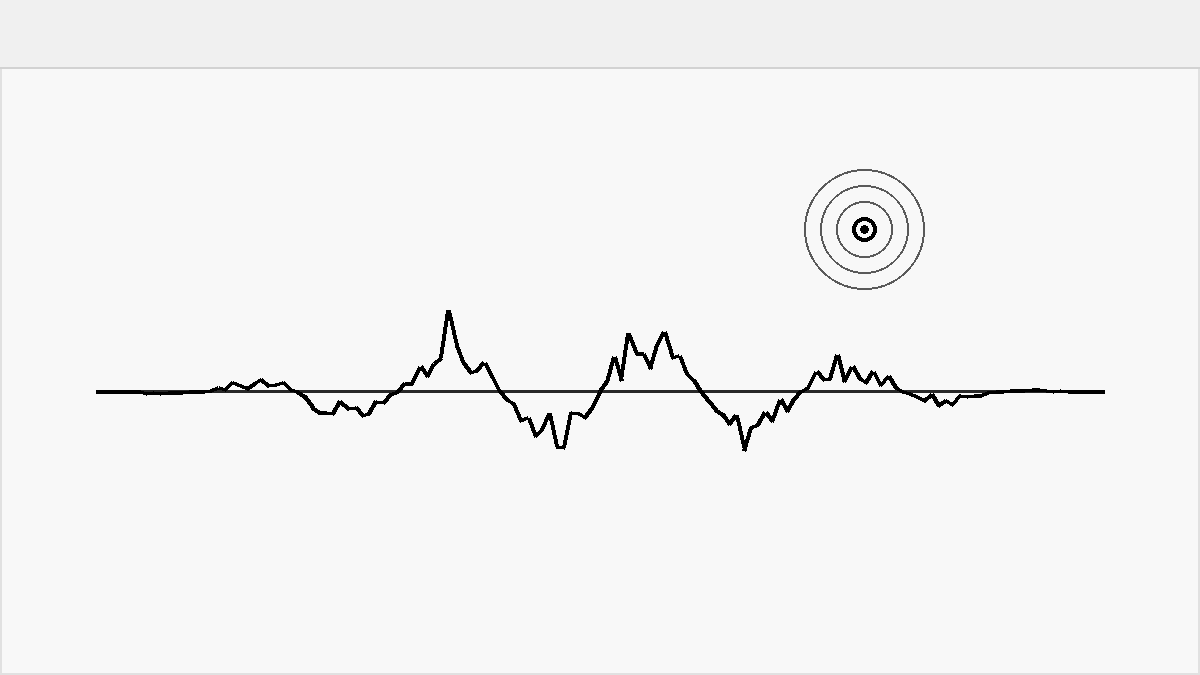
Earthquakes are not a question of if in Greece, but of when. The country sits at a complex junction of tectonic forces in the Eastern Mediterranean, which is why seismic activity is part of national reality—not national drama. What turns an earthquake into a crisis is rarely the tremor itself. It is the loss of sequence: people rush to stairs, trust rumors, misread early estimates, or—most dangerously—seek help through the wrong channels.
This guide is written specifically for Greece. The official sources and emergency numbers below are Greek. If you are outside Greece, do not use Greece-specific numbers like 100 / 166 / 199—use your own country’s emergency services.
First 60 seconds: safety first, phone second
If you are indoors
-
Drop, cover, hold on. Protect your head and neck.
-
Get under a sturdy table or next to an interior wall, away from glass and heavy objects.
-
Do not run to staircases or elevators while shaking continues.
-
If you can, keep distance from shelves, mirrors, and anything that can topple.
If you are outdoors
-
Move away from building facades, balconies, power lines, trees, and signage.
-
Stay in an open area until the shaking stops.
If you are driving
-
Pull over safely, avoid bridges/tunnels if possible, and remain inside the vehicle until shaking ends.
Editorial note: In the first minute, your goal is not to “learn the magnitude.” Your goal is to avoid becoming the statistic.
The 30-second rule for official information (Greece-only)
In Greece, the fastest reliable path is to check official seismic reporting, then verify with a reputable European aggregator—not social media fragments.
1) National Observatory of Athens (NOA) / Geodynamic Institute (Greece)
This is the core reference for events in Greece and the surrounding region. It provides official updates and structured listings of recent seismic activity.
2) EMSC (European-Mediterranean Seismological Centre)
Useful as a rapid cross-check and for a broader Mediterranean picture. It is also where you’ll see early crowd “felt it” reports—helpful for context, not for final conclusions.
3) Greece’s Civil Protection guidance (official preparedness + instructions)
Civil Protection is where you go for what to do, official warnings, and verified operational instructions.
Gold standard: if two trustworthy sources converge to roughly the same magnitude (e.g., 4.9–5.1) and the location aligns, you have a stable first picture.
How to read an earthquake alert without being misled
Early earthquake data is often preliminary. That does not mean it is “wrong.” It means it is early.
1) Magnitude (Mw)
Magnitude describes the energy release, but it does not predict damage by itself. Damage depends on:
-
distance from the epicenter,
-
focal depth,
-
local soil conditions,
-
building quality,
-
time of day and occupancy.
2) Focal depth
Shallow earthquakes can feel sharper near the epicenter. But in the first minutes, depth estimates can change because depth is harder to resolve quickly. A change in depth is not evidence of concealment—it is the system improving its solution.
3) Epicenter vs. “where I felt it”
People frequently confuse “felt strongly here” with “epicenter is here.” Tall buildings amplify swaying. Soft soil amplifies motion. The same earthquake can feel very different across neighborhoods.
4) Revisions
It is normal to see an event listed as “preliminary,” then updated. In practical terms:
-
treat the first alert as situational awareness,
-
treat the first revision as better confidence,
-
treat official follow-ups as operational reality.
The next 10 minutes: reduce risk, prepare for aftershocks
Aftershocks are common. Your next steps should be calm and procedural.
-
Check for hazards: cracks, fallen objects, unstable furniture.
-
If you smell gas or suspect a leak: ventilate and avoid switches/flames.
-
Prefer text messages over calls to keep networks open.
-
Put on shoes, keep a flashlight nearby, and prepare a simple “grab list” (ID, keys, charger, meds).
-
Move away from facades/balconies if you must go outside.
Critical: emergency numbers listed here are for Greece
If you are in Greece and need urgent help, the commonly used emergency numbers include:
-
112 — Emergency number (works in Greece; also widely used across the EU)
-
100 — Police (Greece)
-
166 — Ambulance / EKAB (Greece)
-
199 — Fire service (Greece)
Important: These numbers are for Greece. If you are outside Greece, use your country’s emergency number (for example, in the U.S. it is 911).
Social media during an earthquake: how misinformation spreads
In the minutes after a quake, social feeds become a theater of speed. Speed is not accuracy.
Use these filters:
-
Trust posts that cite named institutions and show magnitude/epicenter/time.
-
Ignore “my cousin said,” “I heard,” “it’s chaos,” and “big one is coming” claims.
-
Videos are not evidence of magnitude. They are evidence of fear.
Editorial line: In Greece, earthquakes are a natural fact. Panic is a social choice. Your discipline is a public good.
Mini-FAQ (Greece-focused)
“Why did the magnitude change?”
Because initial calculations are fast estimates. As additional station data comes in, the solution becomes more accurate.
“Why does depth sometimes look odd?”
Depth is harder to estimate quickly. Early depth values can be unstable; revisions are normal.
“EMSC says one thing, the Greek source says another—what should I believe?”
For events in Greece, treat Greek official reporting as the anchor reference, and use EMSC as a credible cross-check.
A simple Greece-ready checklist
-
Flashlight + batteries
-
Power bank
-
Basic first aid kit
-
Bottled water
-
Essential medications
-
A written note with Greece emergency numbers (112 / 100 / 166 / 199)
Closing note
The most dangerous moment of an earthquake is not always the shaking—it is the instant when people trade procedure for impulse. Greece has lived with seismic risk for centuries, and the lesson is consistent: resilience is not heroism. It is order.