

Electronic Voting in Greece: What’s Changing, What’s Not, and What Citizens Should Watch For
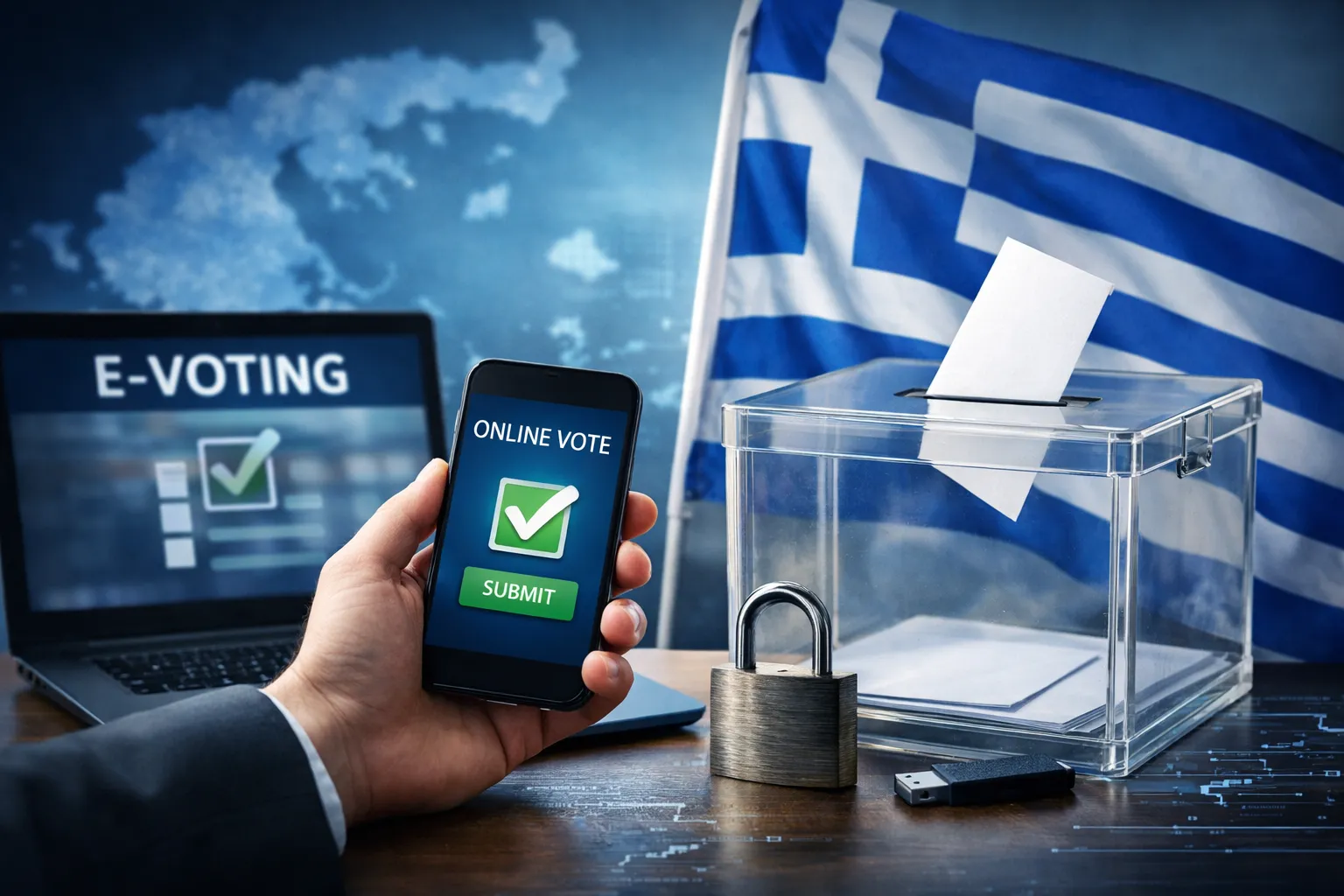
Electronic voting is back in public discussion in Greece. For many people, the idea sounds simple: use technology to make voting easier and reduce delays. But elections are not just another digital service. They are the foundation of democratic legitimacy. That is why the real question is not whether electronic voting is “modern.” The question is whether it can protect, without exceptions, three essentials: ballot secrecy, election integrity, and public trust.
This article explains what “electronic voting” can actually mean in Greece, what safeguards must be non-negotiable, and what citizens should watch for—especially misinformation and scams.
What “electronic voting” can mean in practice
The phrase “electronic voting” often gets used as if it is one single system. In reality, it can describe very different models.
One model is digitally supported polling stations. Voters still go to an official location, but technology helps with identification, organization, and processing. This can reduce waiting time and administrative errors, while keeping the act of voting anchored in a controlled environment.
Another model is remote voting through a device, such as a phone or computer. This is the model that raises the biggest questions. Remote voting is not simply “click and submit.” It introduces serious issues around voter coercion, secure identification, and whether the process can be verified without compromising secrecy.
A third option is a hybrid approach, where traditional in-person voting remains available to everyone, and an additional electronic pathway exists under strict conditions. Hybrid systems can reduce friction while keeping a familiar fallback for citizens who prefer the standard method.
Before anyone can evaluate the proposal honestly, Greece would need clarity on which model is being considered—and why.
🎧 Watch or listen to the analysis in video format
What should not change, even if technology changes
If electronic voting moves forward in any form, the core democratic guarantees must stay the same.
Your vote must remain secret.
No system should allow anyone—state, vendor, attacker, or third party—to connect your identity to your choice.
The result must be accurate and tamper-resistant.
The system must prevent double voting, manipulation, or silent interference. It must produce a correct count that withstands scrutiny.
The process must be transparent enough to earn trust.
Citizens do not need to be engineers, but they do need a system that can be independently audited and publicly explained in plain language.
If a model cannot meet these standards, it does not matter how convenient it appears. Convenience cannot replace legitimacy.
The three non-negotiable safeguards
When people ask, “Is it safe?” they usually mean one thing. In elections, “safe” has multiple layers. A credible system must satisfy all three.
Ballot secrecy
Ballot secrecy is not a technical feature you add at the end. It is the starting point. A system must guarantee that no one can learn how you voted. That includes accidental leaks, insider access, database compromises, and “metadata” exposures.
Election integrity
Integrity means the vote is recorded as intended and counted correctly. It requires protections against unauthorized access, manipulation, and systemic vulnerabilities. It also requires strong operational discipline: secure devices, secure networks, and secure procedures in every step of the chain.
Transparency and independent verification
Trust grows when a system can be checked. That does not mean exposing individual votes. It means a clear framework for audits, oversight, and post-election verification that can detect and correct problems—without asking citizens to simply “believe” it worked.
The biggest real-world risk for citizens: scams that imitate voting
As soon as electronic voting becomes a headline topic, scammers try to exploit it. This is the practical danger most citizens will face first.
Expect to see fake messages that say “the voting platform is open” and ask you to log in. Expect look-alike websites designed to resemble official pages. Expect phone calls claiming they need “verification” for your vote.
Here is the rule that protects you:
No legitimate voting process should ever ask you to share passwords, one-time codes, or personal credentials through a message, email, or unsolicited phone call.
If a message pressures you to act fast, threatens consequences, or asks for sensitive information, treat it as suspicious. In election periods, urgency is often a scam tactic.
Misinformation: how it works in election discussions
Misinformation does not always look like a clear lie. Often it works through half-truths, distorted headlines, or claims that sound technical enough to avoid challenge.
You may see claims like “electronic voting is already fully implemented” or “everything will change next month.” You may also see the opposite: “electronic voting automatically means fraud.” Both extremes can be misleading.
A responsible approach is to look for specifics:
Is there a defined model?
Is there a timeline?
Is there a plan for pilot testing?
Is there a framework for independent audits?
Is there a clear explanation of how secrecy and integrity are preserved?
If those details are missing, the conversation is not mature enough to treat as a final decision.
What citizens in Greece should expect from any serious proposal
If Greece moves toward electronic voting in any capacity, citizens should demand answers that are easy to understand and impossible to dodge.
What exact model is being proposed, and why that model?
How will voter identification work, and how will it be protected?
How will the system prevent coercion if voting is remote?
How will audits be done, and by whom?
What happens if there is a technical failure on election day?
Will the traditional in-person option remain available without barriers?
A credible plan will address these questions before asking for public confidence.
For a clear, official overview of how a secure electronic ballot works, see the official guide to the “ZEUS” electronic voting system.
A calm conclusion
Electronic voting can offer practical benefits—less friction, better accessibility, and a smoother election day experience. But elections require more than convenience. They require legitimacy that holds under pressure.
For citizens in Greece, the safest posture is calm and informed. Follow official announcements, ignore urgent unsolicited messages, and watch for detailed safeguards—not slogans. The quality of the system will be measured by what it protects: your secrecy, the integrity of the result, and the public’s trust in the process.