

End of Paper Tickets: The Shift to Digital Ticketing in Thessaloniki by 2026
The transition to digital ticketing has been a trend across the globe, and now Thessaloniki is taking a significant step toward modernizing its public transportation system. Starting on January 1, 2026, the city will officially end the sale of paper tickets, making way for a new era of electronic and mobile-based ticketing systems. This move will not only streamline the commuter experience but also align Thessaloniki with the growing global push for contactless payments and digital solutions in public transportation.
In this article, we’ll break down what this shift means, how it impacts daily commuters, and provide a comprehensive guide on how to navigate the new system once paper tickets are no longer available.
What is Changing and When?
As of January 1, 2026, the sale of paper tickets for public transportation in Thessaloniki will cease. While this may seem like a drastic change, the transition to electronic and mobile ticketing has been in the works for some time. By that date, all public transport in the city—ranging from buses and trams to the metro—will move exclusively to digital tickets.
However, if you currently have paper tickets, don’t worry! You will still be able to use them until January 31, 2026. After that, you will need to switch to a digital ticketing system or use contactless payment methods.
The New Digital Ticketing System
1) ThessTicket: The Reusable Digital Ticket
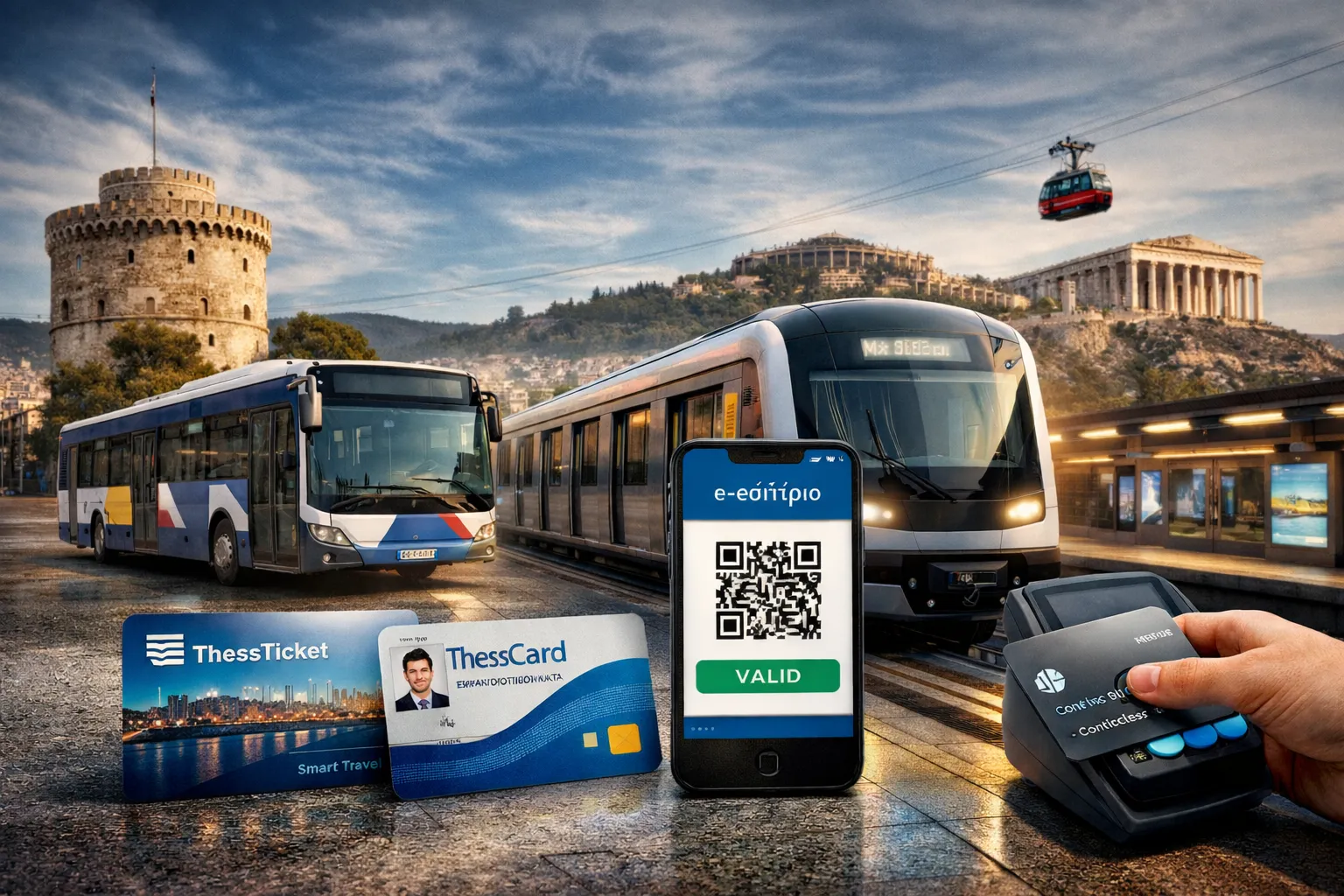
One of the main elements of Thessaloniki’s shift to digital ticketing is the introduction of ThessTicket, a rechargeable and electronic ticket that can be used for single rides, day passes, or even long-term transportation needs. ThessTicket will be available through automatic vending machines, station kiosks, and online for easy access and top-up. This ticket will also be suitable for both frequent commuters and occasional users.
2) ThessCard: The Personalized Smart Card
For those who require longer-term solutions, ThessCard will be the new standard. This personalized smart card allows for easy access to public transport and provides the added benefit of offering discounts or free travel for eligible passengers. The ThessCard will be ideal for those who use public transportation frequently, such as students, seniors, or individuals with reduced fares.
3) Mobile E-Tickets: QR Code for Quick Access
For the ultimate convenience, commuters will also be able to purchase mobile e-tickets through a dedicated app. The app will display a QR code that can be scanned at entry points, allowing for seamless access to the metro, bus, and tram network. This solution is perfect for those who prefer to avoid physical cards or tickets and wish to make their commute as convenient as possible.
Why is Thessaloniki Making This Transition?
Thessaloniki’s shift to a fully digital ticketing system is part of a broader global trend to modernize public transport. Digital ticketing offers numerous benefits, including:
-
Faster and more convenient travel: With digital solutions, commuters no longer need to queue for tickets or carry cash.
-
Contactless payments: This aligns with the growing trend toward safer, more hygienic payment methods, especially in light of global health concerns.
-
Increased efficiency: Digital ticketing systems streamline operations, reduce fraud, and provide better data collection for transit authorities.
-
Environmental benefits: By reducing the use of paper, the city can minimize its environmental footprint, contributing to a greener future.
What Happens If You Don’t Have a Card or Smartphone?
If you don’t have access to a smartphone or a bank card for contactless payments, don’t worry. Thessaloniki’s new system still provides options for you:
-
You can purchase and top up your ThessTicket or ThessCard through automatic ticket vending machines located at various transport hubs.
-
For those who may not be familiar with digital solutions, public assistance will be available to guide you through the process of acquiring and using the new ticketing methods.
Is This Change Happening Across Other Transportation Networks in Greece?
While Thessaloniki is leading the charge in implementing electronic ticketing systems, Athens and other major Greek cities have already made significant strides in adopting digital ticketing.
In Athens, the OASA (Athens Urban Transport Organization) has long been using electronic tickets for buses, trams, and the metro, with the added convenience of the tap2ride system, which allows passengers to use contactless bank cards or smartphones to pay directly for their journeys.
The shift to digital and contactless systems is becoming the norm for urban public transport in Greece, with Athens already fully operational in this regard.
What to Expect Moving Forward
As Thessaloniki transitions to its new digital ticketing system, it is important for residents and commuters to familiarize themselves with the changes. Whether you are an occasional user or a daily commuter, understanding how to use the ThessTicket, ThessCard, and mobile e-tickets will ensure a smooth transition and help you avoid confusion when the paper tickets are phased out.
Key Takeaways:
-
Paper tickets will be phased out by January 1, 2026, but you can use your existing paper tickets until January 31, 2026.
-
ThessTicket and ThessCard will be the new standard for electronic ticketing in Thessaloniki.
-
Mobile e-tickets will also be available via a dedicated app with QR codes for quick access.
-
The transition to digital ticketing aligns with global trends and provides a safer, faster, and more convenient commuting experience.
-
Residents and tourists who are not familiar with digital payments will still have assistance and options available.
Thessaloniki’s move to digital ticketing represents a step forward into the future of transportation, offering improved convenience, environmental benefits, and a smoother overall experience for commuters. As we approach the official start date of January 1, 2026, it’s time to get ready for a more modern, efficient, and contactless way of traveling around the city.
“Would you rather listen to the audio version of this article? Watch/listen to it on YouTube”