

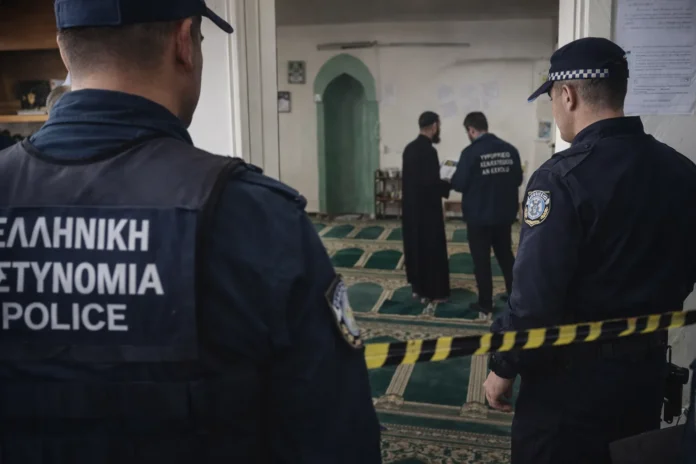
Enforcement on Unlicensed Places of Worship in Athens: What Was Announced, What the Law Provides, and What It Means in Practice
Public discussion in Greece has intensified after statements pointing to a tougher approach toward places of worship operating without the required permits in Athens. Some headlines frame it as a sweeping “crackdown,” while others focus on potential immigration consequences. For citizens trying to understand what is actually changing, the key is to separate political messaging from the legal and administrative process that must be followed for any closure, sealing, or sanction to stand.
This report lays out what is clear, what is still undefined, and what matters in practice.
1) What has been announced, in plain terms
What has been publicly described is an intent to:
-
intensify checks for unlicensed places of worship,
-
proceed with closure/sealing where legal requirements are not met,
-
and, in certain cases, pursue additional administrative consequences where the law allows.
It is important to keep one point front and center: a “statement” is not the same thing as an “action.” Real enforcement requires a documented finding, the correct authority, and a procedure that can be audited and legally defended.
2) What “unlicensed” means and what it does not mean
“Unlicensed” is a licensing and legality category. It refers to sites operating without the approvals/permits required by Greek law.
It does not automatically mean:
-
a judgment on the faith itself,
-
a blanket ban on worship,
-
or collective responsibility for a wider community.
That distinction matters because public debate can easily drift from a legal issue into social polarization. A responsible approach stays on permits, responsibilities, and procedure.
3) Who is responsible for closures and sealing
In Greece, sealing a site is not something done “informally.” It follows a formal chain:
-
a competent authority verifies the facts on the ground,
-
a procedure is triggered under the relevant rules,
-
and sealing/closure (where applicable) is implemented by the authority empowered to do so.
A key takeaway for the public is that enforcement is not just a question of “political will.” It is also a question of capacity, documentation, coordination, and legal robustness—especially if decisions are challenged.
4) What the law provides (and why process matters)
Enforcement has to fit within the legal framework that regulates places of worship, licensing, and administrative actions like sealing.
Here is the best “high-value” authority reference to anchor the story in the actual legal text:
For the relevant legal provisions on places of worship and the rules governing licensing and related measures, see the official material published by the Ministry of Education, Religious Affairs and Sports in this document:Greek Ministry of Education (official document).
Why this matters: when a closure is based on law, it must show which rule applies, who is authorized to act, and what steps were followed. If any part is missing, decisions can be delayed or overturned.
5) “Deportation” claims: what citizens should understand
Public statements sometimes include broad references to deportation. In practice, removal procedures are not automatic outcomes of a closure. They depend on:
-
the person’s legal status,
-
the specific facts established,
-
and what the law allows in each case.
A precise way to think about it is this: licensing enforcement is one track; immigration enforcement is another. They may intersect, but one does not mechanically trigger the other for “everyone involved.”
6) What could make this succeed—or stall
Even when technology or policy exists, real-world enforcement often hinges on operational readiness. The most common points where such initiatives stall are:
-
insufficient staffing for inspections and documentation,
-
inconsistent coordination among agencies,
-
unclear procedural guidance,
-
and a lack of standardized evidence handling (so cases can hold up in court or administrative review).
If authorities want stable results—not just headlines—the focus must be on repeatable procedure, clear responsibility, and predictable timelines.
7) What this means for everyday citizens
For most people, the practical question is not ideological. It is about governance:
-
Will the state apply licensing rules consistently?
-
Will enforcement protect public order without creating unnecessary tension?
-
Will decisions be lawful, evidence-based, and reviewable?
Citizens should treat early claims with caution until they are backed by official acts—such as documented sealing actions and clear procedural references.
Bottom line
The most accurate summary is this: what has been announced is an intensification of enforcement against unlicensed places of worship, but the real story will be defined by the legal steps and the administrative capacity to implement them consistently. If the process is clear and properly resourced, enforcement can be systematic. If it is vague or understaffed, results may be uneven and contested.