

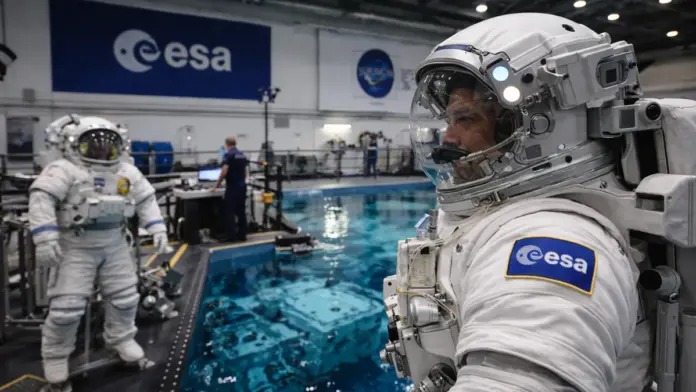
ESA astronaut training: why this matters beyond the headline
When you hear “astronaut training,” it’s easy to file it under distant, cinematic things—space suits, rockets, dramatic countdowns. In reality, it’s a story about something much more grounded: how Europe builds high-reliability talent, how selection works when failure isn’t an option, and how advanced skills circulate through the economy long after the cameras move on.
Think of this as a window into how serious systems recruit and train people. Not with hype. With measurable criteria, structured evaluation, and years of preparation. That’s the real point: astronaut training is less about heroism and more about repeatable excellence under pressure.
If you want the broader context for similar topics on Newsio, you can browse the Science section here: Science
What ESA is—and why precision matters
The European Space Agency (ESA) isn’t a company and it isn’t a single country’s program. It’s a multi-nation organization that runs European space missions: satellites, Earth observation, research partnerships, and human spaceflight operations. The crucial detail is this: ESA’s work is built on standards, verification, and systems thinking.
That same mindset shows up in astronaut selection. ESA doesn’t look for a “superhuman.” It looks for people who can operate inside complex systems—safely, calmly, consistently.
How an astronaut is “built”: a system of capabilities, not a single job title
An astronaut isn’t simply a pilot or a scientist. In practice, the role is closer to a high-stakes systems operator who must perform across multiple domains:
-
follow strict procedures without losing judgment
-
solve problems with limited time and incomplete information
-
communicate clearly under stress
-
work as a team member, not as a lone star
-
maintain physical and psychological stability in demanding conditions
That’s why selection is rarely about one credential. It’s about the full profile: technical foundation, learning speed, discipline, teamwork, and stability over time.
How selection works: what tends to matter most—and what doesn’t
Here’s the clearest way to think about it: ESA selection is designed to identify people who are trainable, reliable, and safe in environments where small mistakes can cascade.
What typically matters
-
strong technical or scientific background (engineering, physics, life sciences, medicine, etc.)
-
evidence of performance in demanding environments
-
ability to follow procedures while thinking critically
-
psychological resilience and strong teamwork habits
-
adaptability—learning quickly, staying calm when variables shift
What matters less than people assume
-
outward “star power”
-
loud confidence without substance
-
being brilliant alone but difficult in a team
In missions and training, the team is the safety net. If you can’t function well inside it, you become a risk factor.
What the training actually includes
ESA training is not a single class. It’s layered, repetitive, and intentionally stressful—because the goal is readiness, not comfort. Training often includes:
-
systems training (spacecraft and station modules)
-
simulations and emergency procedures
-
medical monitoring and physical conditioning
-
operational communication and crew coordination
-
mission-specific preparation (science payloads, tasks, protocols)
The point isn’t to “toughen you up.” The point is to make correct behavior automatic when the environment is unforgiving.
For an official reference on ESA training, this page is a solid starting point: https://www.esa.int/About_Us/EAC/Training
The bigger picture: why space is back at the center of policy
Space is no longer just prestige. It’s infrastructure:
-
communications and navigation
-
Earth observation (weather, fires, environment)
-
resilience of critical services
-
high-end industrial capacity
So astronaut training sits inside a wider strategy: building capability that supports science, security, and competitiveness.
What this means for you
If you’re a student or early-career professional, this story carries a practical message: Europe rewards deep competence and consistent discipline, not shortcuts. Talent matters—but the ability to sustain performance matters more.
If you’re a parent, it’s a reminder of what “real preparation” looks like: strong foundations, language skills, teamwork, health, and steady learning. Not perfection. Progress with structure.
If you’re a citizen watching where the country is heading, this matters because high-reliability programs create spillovers: better skills, better engineering culture, stronger research networks, and more credibility in international projects. Even when the mission is far away, the skill-building is local.
What to watch next
-
official updates on stages of selection and training milestones
-
how this connects to Earth-observation and civil protection capabilities
-
opportunities for Greek institutions, universities, and partnerships
-
how expertise cycles back into local innovation and industry
Closing
ESA astronaut training isn’t just a feel-good headline. It’s a live example of how Europe builds human capability in systems where precision is non-negotiable. For Greece, it’s a reminder that when selection is rigorous and pathways are real, talent doesn’t stay invisible—it connects to global expertise and can strengthen the country’s skills base over time.