

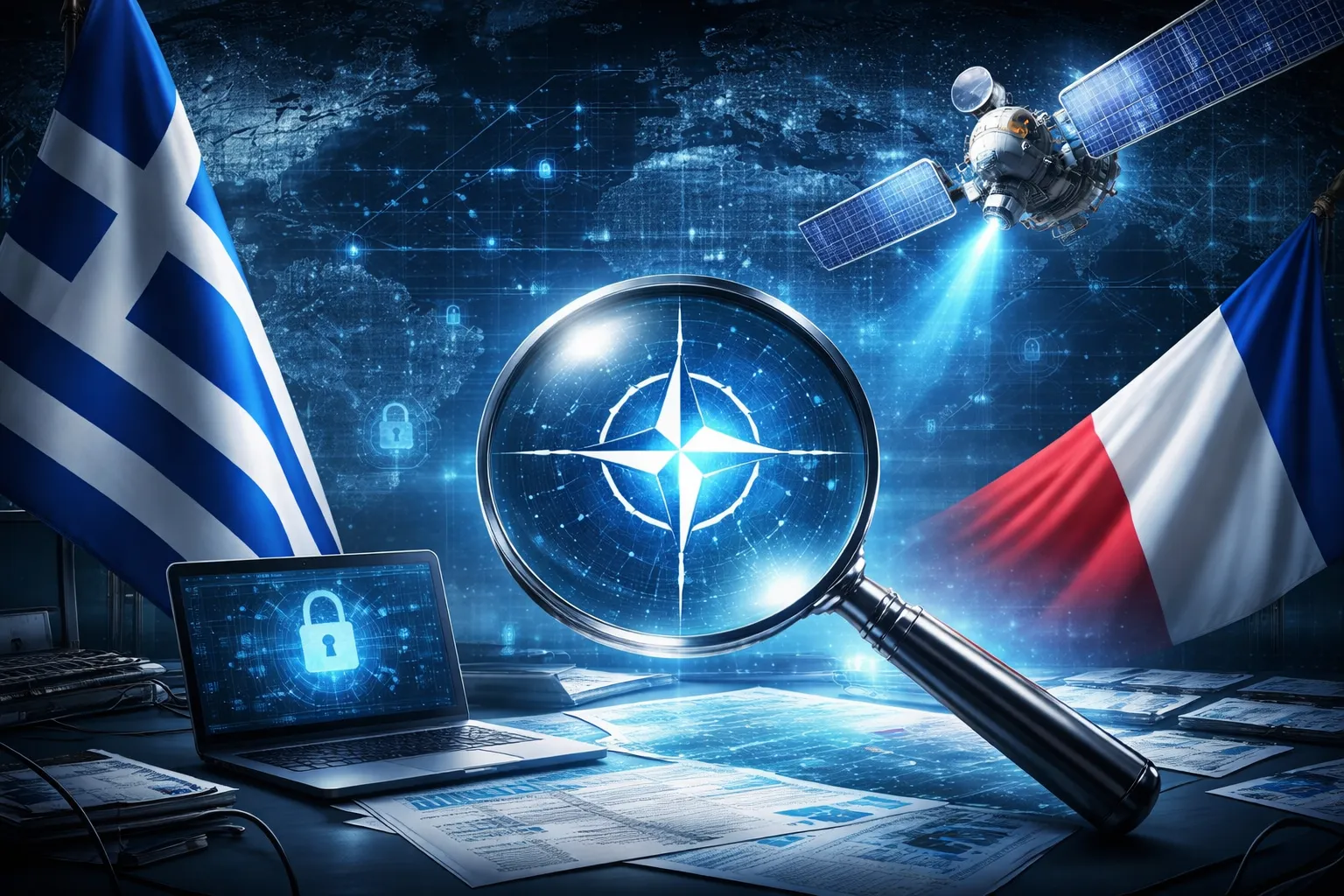
Espionage Investigation: Greece and France probe suspected targeting of NATO-related tech and satellite data
Greek and French authorities are investigating separate cases that reportedly involve attempts to obtain sensitive information, with a focus on NATO-related technology and satellite data. The developments matter because they touch national security, critical communications, and cross-border cooperation between European services. Here’s what is publicly known so far and what investigators are looking into next.
In France, prosecutors have moved forward with suspects in a case that, according to publicly reported details, centers on alleged efforts to access satellite-related information and data of high strategic value. A public report on the case is available via France 24’s coverage.
In Greece, authorities are examining a separate track that involves alleged information-gathering activity and potential unauthorized access or transfer of sensitive material, based on what has been reported. Officials have not publicly released full case files, and investigators typically avoid operational details while inquiries are ongoing.
What has been reported about the French investigation
Public reporting indicates the French case is being handled through judicial channels and focuses on suspected unlawful collection of data tied to high-value systems. In cases like this, investigators usually examine:
-
seized devices and storage media,
-
digital logs and access trails,
-
communication patterns and potential intermediaries,
-
whether the activity points to a broader network.
Because satellite capabilities can affect defense planning, situational awareness, and communications resilience, investigators often treat any alleged targeting of satellite-linked data as high priority.
For broader context on how satellite connectivity can become a geopolitical flashpoint, you can also browse Newsio’s coverage in EN World.
What authorities typically assess in the Greek track
In the Greek strand, the central questions in similar investigations generally include:
-
whether access to systems or documents was authorized,
-
whether sensitive material was extracted or transmitted,
-
how the suspected activity was carried out (methods, timing, channels),
-
whether any motive (financial or otherwise) is supported by evidence.
At this stage, it’s important to use careful language: allegations remain allegations until confirmed through official findings and court proceedings.
Why these cases carry geopolitical weight
Espionage investigations rarely stay confined to a single incident. They often intersect with:
-
protection of classified or restricted information,
-
security of critical infrastructure,
-
cybersecurity and resilience of communications networks,
-
intelligence sharing and coordination among allies.
When NATO-adjacent technology or satellite-linked data is part of the reported focus, the impact can extend beyond one country—because multiple partners may rely on the same systems, standards, or shared operational picture.
For related reporting and analysis on security and policy, you can explore Newsio’s EN Politics section.
What to watch next
As the investigations continue, the next public milestones typically include:
-
official statements or court updates where authorities choose to disclose them,
-
clarification of the alleged conduct and the timeline,
-
possible additional procedural steps if evidence points to wider coordination.
In all cases, the presumption of innocence applies to all individuals involved until a court rules otherwise.