
EU–US Tariffs: Why “A Deal Is a Deal” Matters and What Could Change Next
Tariffs are back at the center of the transatlantic agenda because they don’t just raise prices. They reshape contracts, investment decisions, and supply-chain planning—often before a single rule formally changes.
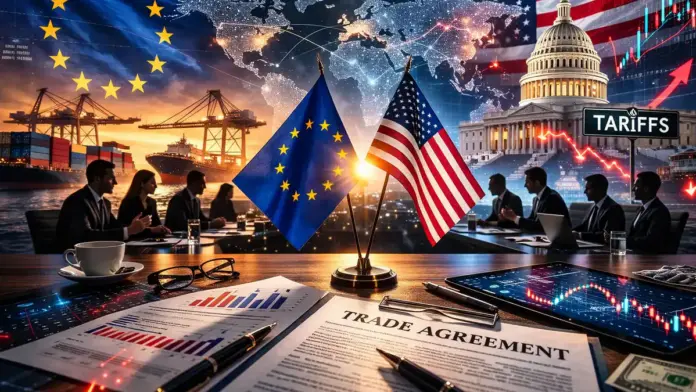
Brussels’ core message is about predictability: European Commission argues that agreed terms should be respected and wants clarity on what the US tariff framework will look like going forward.
The practical risk is uncertainty. When businesses can’t reliably price the next quarter, they pause. That hesitation can ripple into hiring, inventory, and financing—especially in trade-sensitive sectors.
What is confirmed so far, and what is still unclear
Confirmed (based on official positioning)
-
The European Union is publicly pressing for continuity and clarity on tariff policy and is framing this as an “agreements must be respected” issue. You can read the official line here: European Commission statement.
Still unclear (and most important to watch)
-
Whether tariff levels or ceilings will change across broad product categories.
-
Which sectors, if any, will be carved out via exceptions or transition periods.
-
How quickly the US will publish operational guidance that companies can rely on.
-
Whether the EU will move from messaging into formal countermeasures (and on what timeline).
Until those items are clarified, responsible coverage should focus on mechanism and impact—not on predicting outcomes.
Why this matters beyond politics
Tariffs function like a policy-driven cost shock. But the bigger issue is that the shock is hard to price when the rules feel fluid.
When companies sense instability, they typically do three things:
-
delay long-term commitments,
-
renegotiate contract terms,
-
and re-route supply chains where possible.
That can happen quietly, without dramatic headlines—yet it can still weigh on growth.
How tariffs move through the economy
A tariff rarely stays “at the border.” It travels.
1) Contracts and pricing
If costs rise—or might rise—businesses add buffers:
-
price escalation clauses,
-
shorter contract durations,
-
and stricter delivery terms.
That increases friction and reduces competition, especially for smaller suppliers.
2) Inventory and logistics
Uncertainty can trigger two opposite behaviors:
-
“rush shipments” to beat new rules, or
-
“pause orders” until clarity arrives.
Both outcomes create inefficiencies and higher logistics costs.
3) Investment and financing
Companies invest when they can model risk. When trade rules look unstable, the default response is to wait.
That’s why tariff uncertainty often hits investment before it hits consumer prices.
What to watch next: the signals that actually matter
Ignore rumor cycles. Track these four signals instead:
-
Formal guidance from US institutions on tariff scope and implementation.
-
EU follow-up language that moves from “clarity” to “compliance” and legal framing.
-
Sector-specific details (exceptions, ceilings, transition windows).
-
Business response: do companies announce postponements, re-pricing, or routing changes?
If those indicators shift, the economic impact becomes more measurable.
Related context on Newsio
For readers who want practical frameworks—not noise—these explainers help you interpret fast-moving policy stories:
(These aren’t “tariff articles.” They’re tools for disciplined reading and decision-making under uncertainty.)
What this means for you
Even if you never export a product, tariff policy can reach you indirectly:
-
Costs can rise quietly. Not always as a visible “price spike,” but as small increases across inputs, shipping, and procurement.
-
Jobs and investment can slow. When trade rules feel unstable, businesses delay expansion and hiring.
-
Markets react to uncertainty. Financial conditions can tighten when global trade becomes harder to forecast.
If you’re a business owner or work in procurement, the practical takeaway is straightforward: don’t plan around rumors. Plan around published rules, sector-specific guidance, and confirmed timelines.
Summary
The EU is demanding clarity and continuity on tariff policy and is framing the issue as a matter of respecting agreed terms. The key economic risk is not only tariff levels, but uncertainty—because uncertainty changes contracts, logistics, and investment decisions before new tariffs even take effect. For the EU’s official position, the reference point is the European Commission statement.