

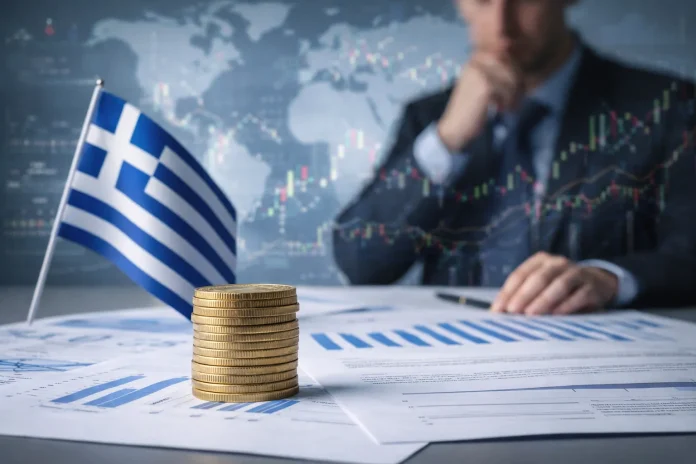
Greece’s 2026 growth outlook: 2.1% on paper, with a tougher world behind it
Greece’s economy is projected to expand by 2.1% in 2026, a pace that suggests continued momentum after several years of recovery. But the same outlook comes with a clear caveat: external shocks—from geopolitics to trade—can quickly reshape growth, investment decisions, and household confidence.
In this piece, we break down what typically drives a 2%+ growth year, where the pressure points sit, and what to watch next as the global backdrop becomes less predictable.
For readers who want a quick, practical foundation for how GDP growth interacts with inflation, interest rates, and wages, see our primer Economy for Non-Economists.
Where the growth could come from in 2026
A 2.1% growth projection usually rests on a mix of drivers rather than one single engine. In Greece’s case, the core pillars tend to be investment, services (including tourism), and domestic demand—each with its own sensitivities.
Key engines to watch
Investment and medium-term projects
When investment holds up, it supports construction, infrastructure, energy upgrades, and business expansion. It also signals that firms are willing to commit capital despite uncertainty.
Household consumption and real income
Consumers spend more when real wages stabilize and inflation eases. Tax and labor-market changes can also affect disposable income and confidence.
External sector: exports and services
Tradeable goods and services can lift growth—but they’re also the first to feel the impact of global slowdowns, shipping disruptions, or higher input costs.
For a broader view of how major global meetings and policy agendas can influence economic expectations, you can also read Davos 2026: What It Means for the Economy.
The risk map: geopolitics and trade as growth “brakes”
The warning about risks tied to geopolitics and international trade is not abstract. For an open economy, shocks often travel through predictable channels—energy, supply chains, financing conditions, and confidence.
How external uncertainty hits first
Energy and transport costs
Geopolitical tension can push up energy prices and logistics costs, squeezing businesses and households. That often shows up quickly in inflation expectations and margins.
Global trade and supply chains
If trade flows slow, or if supply chains face new friction, export demand and industrial production can weaken. Even when domestic activity looks solid, trade shocks can reduce growth at the margin.
Financial conditions and investor sentiment
Higher risk usually means tighter financing, slower deal flow, and delayed investment. Even small changes in funding costs can matter for projects that rely on leverage.
For a real-world lens on how international pressures can spill into daily costs—rent, food, and energy—see Cost of Living: Why Prices Keep Rising.
What this means in practice: growth, but with conditions
A 2.1% forecast is a positive signal, but it’s best read as a baseline scenario—one that assumes no major external escalation and reasonably stable trade conditions. The real question for 2026 is whether Greece can keep growth broad-based, or whether it becomes more uneven, concentrated in a few sectors, and vulnerable to shocks.
What to watch next
1) Updates to projections and leading indicators
Revisions—up or down—often follow changes in energy prices, shipping conditions, or European demand.
2) Trade and geopolitics headlines that affect costs
Even if domestic reforms progress, external volatility can change the math quickly.
3) The confidence channel
When businesses and households turn cautious, investment and consumption slow—often before the data confirms it.
For official publications, macro updates, and risk assessments, the primary institutional reference point is the Bank of Greece.
Closing outlook
Greece may enter 2026 with steady momentum—but the year is likely to test resilience. The upside comes from sustained investment and stable demand; the downside is driven largely by a world where geopolitics and trade can shift faster than forecasts.