

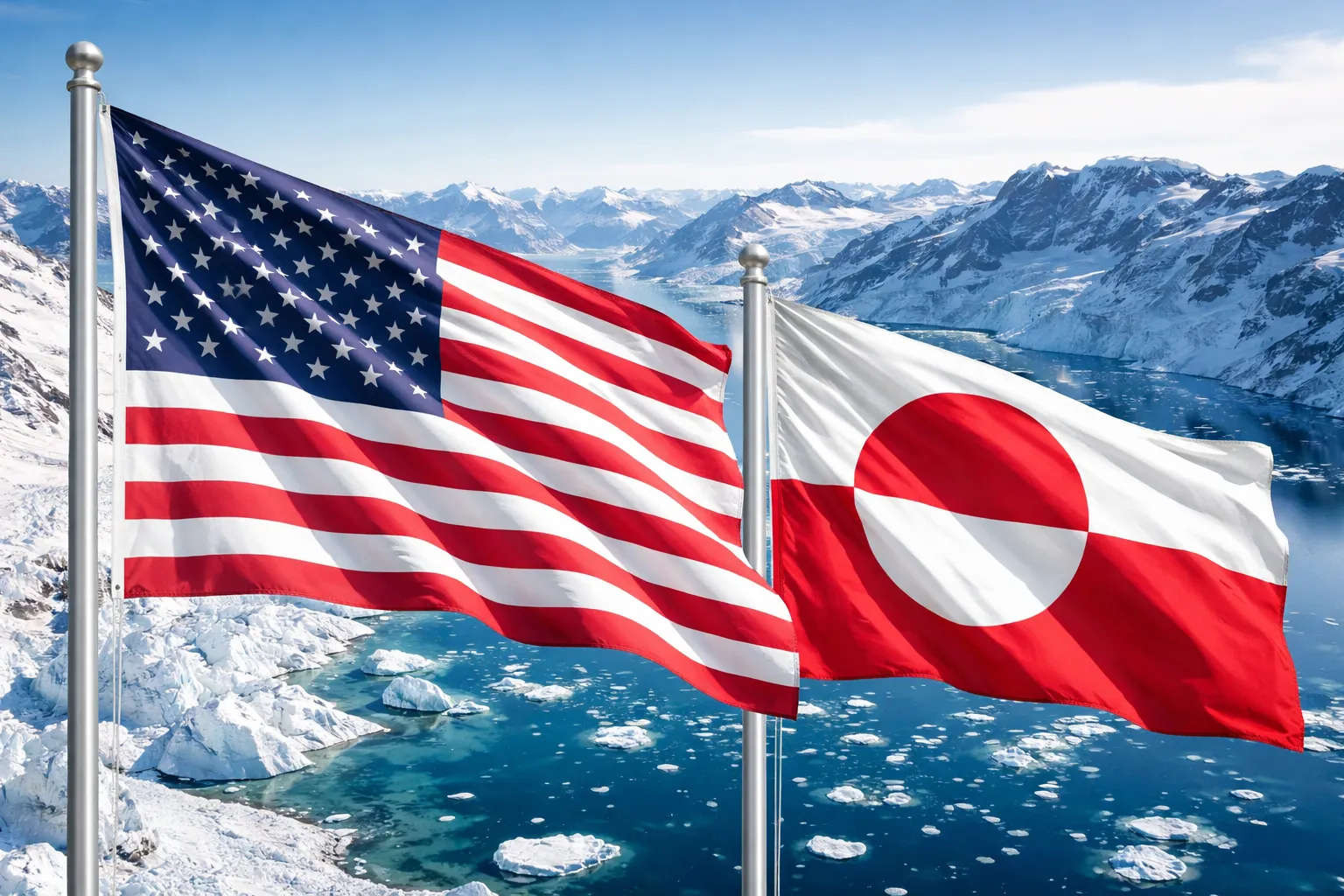
Introduction: Geopolitical Tensions and Historical Context
The possibility of the United States acquiring Greenland has long captured the imagination of geopolitical analysts and policymakers.
Situated strategically in the Arctic region, Greenland is not only the world’s largest island but also a pivotal piece of geopolitical real estate. As the global powers, especially the United States, maneuver for dominance in the Arctic, the question of Greenland’s status has come to the fore.
This article aims to delve deeply into the factors that would shape such a move, examining historical precedents, geopolitical motivations, and the international implications.
Geostrategic Importance of Greenland
Greenland’s significance on the world stage cannot be overstated. Geographically, it sits at the crossroads between the North Atlantic and the Arctic Ocean, placing it at the center of global shipping lanes.
Moreover, as the world grapples with the challenges posed by climate change, the Arctic is becoming increasingly valuable due to its rich natural resources, including oil, gas, and minerals. As global temperatures rise, more of these resources are becoming accessible for exploration.
The United States has long recognized Greenland’s strategic importance, particularly through its military presence. The Thule Air Base, located in Greenland, is one of the most important military installations for the U.S., providing surveillance and early warning capabilities for North America, especially in the context of threats from Russia.
In addition to its military and resource-based significance, Greenland is viewed as a key player in the U.S.’s broader strategy for asserting dominance in the Arctic and countering Russian influence in the region.
Historical Precedents and the Idea of a U.S. Acquisition
The notion of the U.S. acquiring Greenland is not a new one. It traces its origins to 1867 when the United States purchased Alaska from Russia. The idea was revisited several times over the years, with notable instances occurring during the Cold War. In 1946, President Harry S. Truman offered to buy Greenland from Denmark for $100 million.
However, the Danish government rejected the offer, citing its responsibility for Greenland’s sovereignty. Despite this rejection, the U.S. maintained a strong military presence in Greenland, reinforcing its importance in the Western defense strategy.
The idea re-emerged in 2019 under the administration of President Donald Trump, who controversially suggested that the United States might purchase Greenland from Denmark. This suggestion was met with significant backlash from Denmark, with Prime Minister Mette Frederiksen calling the idea “absurd.” However, the controversy highlighted the continuing interest of the United States in Greenland and its potential strategic and economic value.
The Political Landscape: The Role of Denmark and Greenland
Greenland is an autonomous territory within the Kingdom of Denmark. While Denmark maintains control over foreign affairs and defense, Greenland governs its internal matters. Any attempt by the United States to acquire Greenland would require the approval of both the Danish government and the Greenlandic people.
Public sentiment in Greenland is a critical factor in this equation. While some in Greenland may welcome closer ties with the United States, especially in the context of economic cooperation or military protection, the notion of selling the island would likely be met with resistance.
Greenland has expressed aspirations for greater independence from Denmark, and a move to join the United States would involve complex considerations of national identity, sovereignty, and self-determination.
A more feasible path, then, might be closer collaboration between the United States and Greenland. In recent years, Greenland has expressed an interest in fostering closer economic and military ties with the U.S. without necessarily surrendering its sovereignty.
The U.S. could pursue deeper strategic partnerships with Greenland, focusing on joint military initiatives, resource exploration, and technological innovation in Arctic research, without the need for full acquisition.
The Legal and Diplomatic Hurdles: International Law and Sovereignty
From a legal perspective, the acquisition of Greenland by the United States would face significant obstacles under international law. The principle of territorial integrity, enshrined in the United Nations Charter, prohibits the forcible acquisition of territory.
While Greenland’s potential sale or cession to the U.S. could technically occur through a bilateral agreement, it would require not only the consent of Denmark and Greenland but also respect for international law concerning self-determination. Furthermore, any such agreement would need to address the broader geopolitical implications.
The acquisition of Greenland by the United States would likely be viewed as a challenge to international norms, especially by countries like Russia and China, which are already asserting their influence in the Arctic. A move to absorb Greenland could trigger tensions with NATO allies and other global players, further complicating the geopolitical landscape.
Economic Considerations: The Value of Greenland’s Resources
Greenland’s economic potential is vast, particularly in its natural resources. The island is rich in mineral deposits, including rare earth elements and metals essential for modern technology and defense industries. The thawing of the Arctic due to climate change has opened up new shipping routes and increased access to previously untapped oil and gas reserves.
For the United States, gaining access to these resources would have clear economic benefits, especially in terms of energy security and technological innovation. Greenland’s vast natural wealth could be a key factor in making the idea of acquisition more appealing to the U.S. government. Additionally, Greenland’s growing tourism sector, centered around its unique landscapes and the Arctic ecosystem, presents another avenue for economic cooperation.
However, these economic opportunities must be balanced with concerns over the environmental impact of resource extraction in such a fragile region. Any attempt by the U.S. to exert control over Greenland’s resources would need to take into account the environmental risks posed by mining, drilling, and other industrial activities in the Arctic.
Potential Scenarios: What Could the Future Hold?
-
Diplomatic Agreement and Resource Sharing: A plausible scenario for closer U.S.-Greenland relations would involve a diplomatic agreement that focuses on resource sharing, military cooperation, and environmental protection. This would allow Greenland to maintain its sovereignty while benefiting from U.S. technological expertise and military security.
-
Full Sovereignty Under U.S. Protection: A more dramatic scenario could involve Greenland gaining full independence from Denmark and entering into a formal political and economic union with the United States. This scenario, while unlikely, would provide Greenland with economic aid, military security, and technological development while also granting the U.S. control over the region’s resources.
-
Geopolitical Partnership: A third possibility is the establishment of a formal geopolitical partnership between the U.S. and Greenland, wherein the U.S. strengthens its military and economic presence in Greenland without the need for full political integration. This arrangement would preserve Greenland’s autonomy while allowing the U.S. to secure its interests in the Arctic.
Conclusion: The Future of Greenland and the United States
While the likelihood of the United States fully acquiring Greenland remains low under current political conditions, the region’s strategic significance will continue to drive U.S. interest. The future of Greenland lies in its ability to navigate the complex geopolitical terrain of the Arctic while balancing its desire for independence with the strategic benefits of partnerships with powerful nations like the United States.
In conclusion, the path forward for Greenland may not involve outright acquisition, but it will certainly include deeper cooperation with global powers, especially in the context of the Arctic’s growing importance. Whether through diplomatic agreements, resource-sharing initiatives, or enhanced military alliances, Greenland will remain a critical piece in the ongoing geopolitical chess game of the Arctic.