

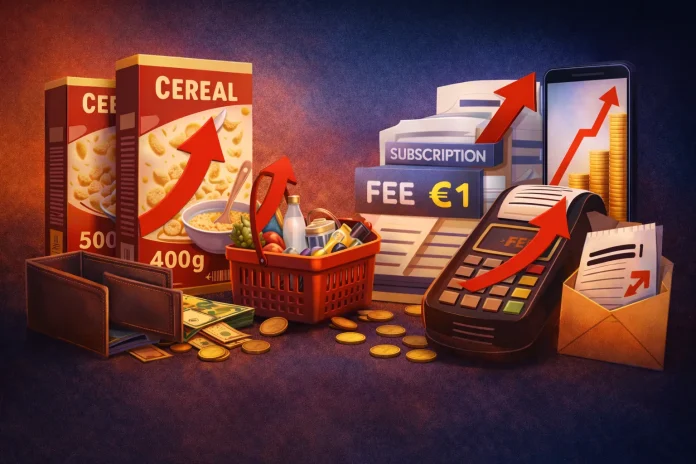
The price increases you don’t immediately see
Many households feel that their monthly budget is under more pressure, even when their habits haven’t changed much. The explanation often lies in “hidden” price hikes — small adjustments in prices, quantities, or fees that go unnoticed at first but add up over time. In this article, we map where these increases most commonly appear and what consumers can do in practical terms.
These are not always obvious shelf-price jumps. In many cases, costs rise indirectly through smaller product sizes, new service charges, or gradual changes in pricing structures.
Shrinkflation: paying the same for less
One of the most widespread examples is the reduction in product quantity without a matching drop in price, a practice widely known as shrinkflation. The packaging may look similar and the price tag may seem unchanged, but consumers are effectively buying less.
The impact becomes clear over time at the grocery store: more frequent purchases to meet the same needs. The broader pressure this creates on household budgets is part of a wider cost-of-living trend, which Newsio has examined in a related analysis on everyday price pressures and household expenses
Small charges that quietly add up
Hidden price increases are not limited to food. They are also common in services that many people use every day.
Subscriptions and digital services
Streaming platforms, apps, and other digital services often introduce gradual price increases or new pricing tiers. A difference of just a few dollars per month can become significant over a year, especially when multiple subscriptions are involved.
Banking and administrative fees
Fees for services that were once free — such as certain notifications, account maintenance, or printed statements — can slowly raise overall costs without attracting much attention.
Transportation and everyday services
Fuel surcharges, service fees, or updated pricing policies affect daily travel and routine services. Combined with broader economic pressures, these changes reinforce the sense that incomes are not stretching as far as before. Newsio has also covered how rising service costs are affecting disposable income and daily budgets.
The psychology of the “small amount”
Small increases often feel easier to accept because they do not cause immediate sticker shock. An extra dollar or two does not seem dramatic in isolation. But when similar adjustments occur across dozens of products and services, the total impact becomes substantial.
What consumers can do
Responding to hidden price hikes is not always easy, but a few practical steps can help limit their impact:
-
Check the unit price (per pound, per liter, per ounce) rather than only the total shelf price
-
Compare package sizes carefully, especially for frequently purchased items
-
Review subscriptions and recurring services regularly to cancel or downgrade those no longer needed
-
Track key monthly expenses to spot gradual increases over time
At the policy level, consumer protection frameworks focus on price transparency and fair commercial practices. Official guidance on consumer rights and protections is available through the European Commission’s consumer policy pages.
The bottom line
Hidden price hikes rarely arrive with a big announcement. They tend to appear gradually, in small steps. Staying informed, comparing prices carefully, and paying attention to recurring charges are among the most effective tools consumers have to protect their household budgets.