

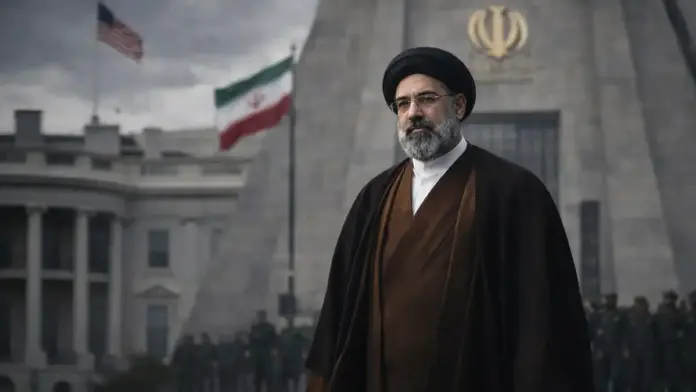
Iran has elections — but elections alone do not define a democracy
Iran officially calls itself the Islamic Republic of Iran, a political system that, at first glance, appears to combine elements of republican governance with religious authority. The country holds elections, maintains a parliament, elects presidents, and presents itself as a political order where citizens participate in shaping the leadership of the state.
Yet beneath this institutional surface lies a far more complex reality.
Political authority in Iran ultimately does not flow entirely from voters. Instead, it exists within a hybrid structure where electoral politics operate alongside — and often beneath — a powerful clerical hierarchy. At the center of that hierarchy stands the Supreme Leader, the single most powerful figure in the Iranian state.
This dual structure is what makes Iran one of the most debated political systems in the modern world. It is neither a classical democracy nor a conventional dictatorship. Instead, it represents a unique model often described by scholars as a theocratic republic or electoral authoritarian system.
Understanding how that system works is essential for understanding not only Iranian politics, but also the geopolitical behavior of the country in the Middle East and beyond.
The Supreme Leader: the highest authority in the Iranian state
In most democratic systems, political authority ultimately rests with elected officials accountable to voters. Presidents and prime ministers may hold significant power, but they can be removed through elections or parliamentary processes.
Iran’s political structure functions differently.
The Supreme Leader holds ultimate authority over the state. The position was established following the 1979 Islamic Revolution and is rooted in the doctrine of Velayat-e Faqih, or “Guardianship of the Islamic Jurist.” Under this principle, a senior Islamic scholar must supervise political authority to ensure that governance remains aligned with Islamic law.
The Supreme Leader therefore occupies a role that extends far beyond symbolic leadership.
According to Encyclopaedia Britannica, the Supreme Leader commands the armed forces, appoints key figures in the judiciary and state broadcasting, and holds decisive influence over national security, intelligence services, and foreign policy.
Even when Iranian citizens elect a president, that president operates within a framework ultimately overseen by the Supreme Leader.
This institutional hierarchy fundamentally shapes the limits of electoral politics in Iran.
The Guardian Council: the gatekeeper of elections
Iran does conduct regular elections for the presidency, parliament, and certain religious bodies. Millions of voters participate, and electoral campaigns often generate significant public debate.
However, before candidates appear on the ballot, they must first pass through a powerful institutional filter.
That filter is the Guardian Council.
The Guardian Council is a twelve-member body composed of Islamic jurists and legal scholars. Its responsibilities include interpreting the constitution, reviewing legislation passed by parliament, and supervising elections.
Most importantly, the council has the authority to approve or disqualify candidates before elections take place.
As detailed by Britannica, the council evaluates whether candidates meet ideological and religious criteria compatible with the Islamic Republic.
This vetting process significantly narrows the range of political competition.
Potential candidates who challenge the ideological foundation of the system rarely make it onto the ballot. As a result, voters ultimately choose between individuals already approved by institutions aligned with the broader political framework of the state.
Critics argue that this mechanism restricts genuine political pluralism and prevents elections from functioning as fully open democratic contests.
The Assembly of Experts and leadership succession
Another key institution within Iran’s political system is the Assembly of Experts, the body responsible for selecting and theoretically supervising the Supreme Leader.
Members of the Assembly of Experts are elected by the public, but like other candidates in Iranian elections, they must first be approved by the Guardian Council.
This means the body responsible for choosing the Supreme Leader is itself formed within the same ideological structure that defines the rest of the political system.
According to Britannica, the Assembly has the authority to appoint a new Supreme Leader and to monitor the performance of the existing one.
In practice, however, leadership transitions occur within a relatively closed circle of religious and political elites.
For this reason, debates surrounding succession — including discussions involving figures such as Mojtaba Khamenei — often raise questions internationally about the openness and transparency of Iran’s leadership selection process.
The theological foundation of governance
To understand why Iran’s system differs from liberal democracy, it is necessary to understand the philosophical foundation of the Islamic Republic.
Following the revolution of 1979, the architects of the new state sought to build a political system that combined popular participation with religious guardianship.
The doctrine of Velayat-e Faqih became the cornerstone of that vision.
Under this model, democratic institutions exist, but they operate under the supervision of religious authority. Elections are allowed, political debate occurs, and citizens vote for various offices — yet the ultimate guardianship of the system remains in the hands of clerical leadership.
Supporters of the system argue that this structure protects the ideological integrity of the state. Critics argue that it restricts political freedom and prevents the emergence of genuine democratic competition.
The tension between these two interpretations lies at the heart of ongoing debates about Iran’s political legitimacy.
Elections in Iran: participation without full political openness
Iranian elections often attract significant voter participation, particularly during presidential contests. Political factions aligned with different ideological tendencies — reformist, conservative, or hardline — compete within the boundaries of the system.
Yet those boundaries remain tightly defined.
Independent opposition movements that challenge the foundational structure of the Islamic Republic rarely gain institutional access to the political process.
International organizations frequently highlight this limitation.
For example, Freedom House classifies Iran as “Not Free”, citing restrictions on political rights, candidate eligibility, and freedom of expression.
Scholars associated with the Varieties of Democracy (V-Dem) Institute similarly describe Iran as an electoral autocracy — a system where elections exist but meaningful democratic competition remains constrained.
Why the Iranian system continues to shape global geopolitics
Iran’s political structure matters far beyond its borders.
The country sits at a strategic crossroads linking the Middle East, Central Asia, and global energy routes. Decisions made by the Iranian leadership affect regional conflicts, diplomatic negotiations, and global energy markets.
Issues such as tensions in the Persian Gulf, disputes involving the Strait of Hormuz, and broader geopolitical rivalries often intersect with the internal dynamics of the Iranian state.
Readers interested in the broader strategic context can also explore Newsio’s analysis of the geopolitical implications of tensions around the Strait of Hormuz and related regional developments in this deeper regional escalation analysis.
Understanding how political authority functions inside Iran therefore provides essential context for interpreting the country’s actions on the global stage.
Elections versus democracy: understanding the distinction
One of the most important lessons in political science is that elections alone do not guarantee democracy.
A fully democratic system requires several key conditions:
• open and competitive elections
• freedom of political organization
• independent institutions
• free media and public debate
• the genuine ability of voters to replace leadership through the ballot box
When some of these conditions are limited or controlled, elections may still occur, but the broader system may not function as a true democracy.
Iran represents a striking example of such a hybrid model.
The country contains elements of electoral participation and institutional representation, yet ultimate authority rests within a religious-political framework that shapes and limits the scope of political competition.
A system that defies simple labels
For observers outside the region, Iran’s political system can be difficult to categorize.
It is not a conventional dictatorship where elections are entirely absent. Nor is it a liberal democracy where political authority flows solely from voters.
Instead, it represents a unique synthesis of religious guardianship and electoral participation — a model that has endured for more than four decades since the Islamic Revolution.
Understanding that structure helps explain both the internal dynamics of Iranian politics and the broader role the country plays in global geopolitics.
As debates over leadership succession, political reform, and regional influence continue, the question of how democratic Iran truly is will likely remain one of the most important discussions surrounding the Islamic Republic.