
Table of Contents
Iran and Lebanon are moving into a more dangerous phase
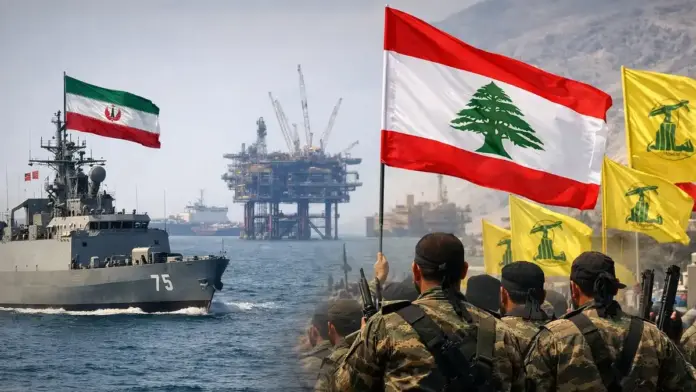
Iran and Lebanon are no longer sitting in separate storylines. They are now part of the same regional stress map. Tehran is signaling that pressure on Iran can translate into pressure on Gulf infrastructure and shipping, while Beirut is speaking more openly about Hezbollah as a force that complicates state control, internal stability, and any credible path to de-escalation.
That is the core point readers should keep. This is not only about military headlines or rhetorical escalation. It is about the connection between energy routes, political sovereignty, proxy power, and the risk that one front in the Middle East can rapidly widen into several.
Reuters reported on March 17 that President Trump had been warned before striking Iran that Tehran could retaliate against U.S. Gulf allies, while Lebanese Prime Minister Nawaf Salam had already warned against dragging Lebanon into “another adventure.”
The danger is not only what is said publicly. It is what can be hit, disrupted, or politically destabilized. That is why this story matters beyond the region: the Gulf is tied to global energy flows, and Lebanon remains one of the clearest examples of what happens when a state struggles to fully control armed power within its own borders.
For broader context on the larger escalation framework, see U.S.–Israel–Iran: what we know about the coordinated strikes — and what remains unconfirmed.
What Iran is really signaling in the Gulf
Iran’s message is not limited to a warning in the abstract. Reuters reported that U.S. officials and sources familiar with intelligence assessments had warned that strikes on Iran could trigger retaliation against Gulf capitals and regional allies if Tehran concluded they were supporting or enabling the attacks. That shifts the story from battlefield exchange to regional cost imposition.
In plain terms, Tehran wants its adversaries to understand that the Gulf is not a safe rear zone. Ports, industrial areas, energy facilities, shipping lanes, and logistics hubs can all become part of the pressure map. That is why the phrase “warning the U.S. through Gulf industries” matters. It reflects a broader Iranian logic: if Iran is squeezed hard enough, it can make the wider region pay a price.
Reuters also reported last week that Iranian Revolutionary Guards said they would not allow “one litre of oil” to be shipped from the Middle East if the U.S. and Israeli attacks continued.
This is also why readers should not reduce the crisis to rhetoric alone. The operational environment matters more than slogans. Airspace risk, shipping insurance, tanker movement, infrastructure vulnerability, and market psychology all become part of the story the moment the Gulf is seen as an active pressure zone rather than a passive backdrop.
For a wider internal and regional lens on Tehran, this Newsio explainer adds useful context: Iran 360°: What’s happening now, what people are demanding, and the realistic outlook for 2026.
Why the Gulf matters far beyond the region
The Persian Gulf matters because strategic disruption there does not stay local. Reuters reported that Gulf Arab states have been pushing the U.S. to neutralize Iran’s military threat after attacks and threats raised fears for economies built around energy exports, imports, and infrastructure. That means the crisis touches not only military planners but also traders, insurers, airlines, importers, and governments far outside the immediate battlefield.
The wider market logic is simple. When regional war risk rises, the price of moving oil, gas, goods, and passengers can rise with it. Even when full closure does not happen, risk pricing alone can do damage. That is why the Strait of Hormuz remains such a critical reference point in any Iran-related escalation. If confidence in secure flow erodes, the effects travel fast.
The wider market logic is simple. As Reuters has reported in its coverage of Gulf risk and regional pressure, even when full closure does not happen, risk pricing alone can still damage energy flows, transport costs, and business confidence.
This is also where misinformation often confuses readers. A common false simplification is that Iran is always “just bluffing” unless it announces a full-scale move. That misses how modern pressure actually works. Disruption can be selective, indirect, deniable, and still strategically effective. Information fog, signal ambiguity, and calibrated risk are often part of the method, not signs that nothing is happening. Newsio’s verification-focused piece on Iran internet blackout and Starlink: what’s confirmed, what’s unverified, and what to watch next is useful here because it shows how quickly uncertainty can distort public understanding in a fast-moving Iran story.
What is changing in Lebanon
Lebanon’s shift is political as much as military. Reuters reported on February 28 that Prime Minister Nawaf Salam said he would not accept anyone dragging Lebanon into “adventures that threaten its security and unity,” in what the agency described as a veiled message to Hezbollah. AP later reported that Lebanon’s leaders called Hezbollah’s rocket fire into Israel illegal and urged the Lebanese army to move against groups holding weapons outside state control.
That matters because it signals a deeper change in tone. For years, the Lebanese state often operated in gray space around Hezbollah: not fully confronting it, not fully controlling it, and not fully absorbing its power into normal state structures. The sharper language now suggests that at least part of the Lebanese leadership increasingly sees Hezbollah not as a stabilizing shield but as a force that can expose the entire country to another devastating cycle.
That does not mean Lebanon has found an easy answer. Hezbollah remains deeply rooted, politically significant, and militarily capable even after major losses. Reuters reported that Israel had warned Lebanon it would hit civilian infrastructure hard if Hezbollah entered any U.S.-Iran war, while AP reported that efforts to disarm Hezbollah have been ongoing since the 2024 ceasefire but remain far from complete. So the state’s tougher language is significant, but it does not erase the hard reality of power on the ground.
Why calling Hezbollah an “obstacle” matters
When a government starts treating an armed actor as an obstacle to peace or stability, that is more than messaging. It is a statement about sovereignty. It means the state is implicitly saying that diplomacy, reconstruction, deterrence, and normal politics cannot function properly while a parallel military structure still shapes the national risk environment. Reuters and AP reporting from late February and early March both point in that direction.
This is where a second misleading narrative needs to be stripped away. It is no longer accurate to describe Hezbollah’s role inside Lebanon as politically untouched or nationally unquestioned. Public fatigue, state pressure, war damage, and external diplomatic pressure have all changed the environment. The organization still has support and hard power, but the political space around it is not what it was.
That does not automatically produce peace. In fact, it can create a more brittle situation: a weaker consensus, sharper internal pressure, and a greater temptation for outside actors to test how much room they now have. A country can move toward clearer state language and still remain far from a stable monopoly on force. That is exactly the trap Lebanon appears to be navigating now.
Where misinformation gets this story wrong
The first distortion says Iran is merely making noise. The second says Lebanon is still dealing with Hezbollah as if nothing has changed. Both readings are too lazy for the facts now available. Reuters reporting on retaliation risk in the Gulf and on Lebanon’s internal warnings shows movement on both fronts.
The more accurate reading is harder but clearer. Iran is signaling that escalation can spread into the Gulf’s economic and industrial arteries. Lebanon, meanwhile, is showing more open discomfort with Hezbollah as an armed actor outside full state control. Those two developments are not identical, but they are connected by the same regional logic: proxy power, deterrence, and state vulnerability are colliding at the same time.
The safest conclusion for readers is not panic and not false reassurance. It is disciplined clarity. The Gulf is a live pressure point. Lebanon is a live sovereignty problem. And both stories now sit inside the same escalation architecture. For a narrower time-pressure lens on the diplomatic side, see Trump’s 10-Day Window for Iran: What It Means.
What to watch next
Watch first for whether Iran-linked pressure remains mostly indirect or becomes more visibly tied to infrastructure, shipping, or Gulf capitals. Reuters’ March 17 reporting makes clear that this risk was not hypothetical inside U.S. briefings.
Watch second for whether Lebanon’s tougher line on Hezbollah becomes policy with enforcement or stays mostly political language. That difference will determine whether the country is entering a real state-building phase or just a more openly stressed version of the old balance.
Watch third for whether diplomacy begins to cap the crisis or merely narrate it. If the Gulf remains exposed, Hezbollah remains active, and state actors keep signaling without setting a ceiling, the danger is no longer only one more strike. It is cumulative miscalculation across several fronts at once.
Summary
Iran is making clear that the Gulf can become a cost zone if pressure on Tehran keeps rising. Lebanon is making clearer than before that Hezbollah’s armed role is not just a security issue but a structural obstacle to sovereignty and calm. Put together, these are signs of a more dangerous regional phase: one in which energy routes, state control, and proxy power are tightening into a single crisis map.