

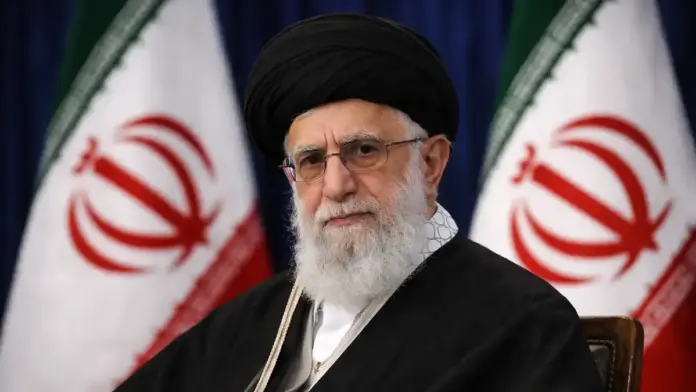
Khamenei death claims: What we know, what isn’t confirmed, and why the distinction matters
In fast-moving conflicts, the first casualty is often clarity. A single claim can spread faster than official confirmation, and in the fog of war that gap becomes a weapon: to intimidate, to mislead, to force reactions, or to shape headlines before the facts harden.
That’s why we’re drawing a firm line from the start. Right now, there are high-profile claims about Iran’s Supreme Leader, Ayatollah Ali Khamenei. But the story is not “closed” in the way readers deserve—because the most important validating element is still contested: a clear, authoritative Iranian confirmation through unmistakable official channels.
A serious editorial doesn’t pretend the uncertainty isn’t there. It organizes it.
What we know so far
The core claim, and where it comes from
Multiple reports cite Israeli and U.S. statements suggesting Khamenei has been killed. At the same time, Iranian outlets and aligned messaging have pushed back—framing the claim as psychological warfare or insisting he remains active.
That split matters. In the information battles that accompany military escalation, the “source” is part of the story, not a footnote.
What is verified—and what remains disputed
Verified:
-
There are public claims from figures tied to the conflict that Khamenei is dead.
-
The regional situation is highly escalated, and the information environment is saturated with competing narratives designed to move public opinion and state behavior.
-
Major outlets are explicitly framing the situation as contested—“claimed,” “reported,” or “not confirmed by Iran.”
Not verified as a settled fact (at the time of writing):
-
A single, unequivocal, institutional Iranian confirmation that closes the matter without ambiguity.
A reader can hold two truths at once: the claim is serious and potentially true, and the claim is not yet locked as an uncontested, institutionally confirmed fact.
Why “not officially confirmed” is not a small detail
In closed political systems, leadership announcements rarely follow a clean, immediate press-release logic. Delays can reflect security, succession planning, internal bargaining, or deliberate strategic ambiguity.
That does not prove anyone is alive. But it does mean that treating “claimed” as “confirmed” is how newsrooms lose credibility—especially when propaganda incentives are highest.
If you want a broader lens on how Iran’s internal realities shape what we see externally, this is the clearest context piece to keep in mind: Iran 360: what’s happening now, what people are demanding, and the realistic outlook for 2026.
What changes if it’s confirmed: succession, cohesion, and the risk of miscalculation
If Khamenei’s death is ultimately confirmed, the immediate question isn’t symbolism. It’s system continuity.
Iran’s power structure is built on overlapping legitimacy—religious authority, security institutions, and political mechanisms that stabilize elite competition. Remove the apex during a major confrontation, and you create a dangerous window where three pressures collide:
-
Succession mechanics (who can claim legitimacy fast),
-
Security cohesion (who controls the instruments of force),
-
Narrative control (who gets to define the meaning of the moment).
There are several plausible pathways in such a scenario—ranging from tightly managed continuity to a more fragile transitional balance. The risk, in the short term, is that rivals or hardline blocs may interpret uncertainty as an opportunity, and that the system may lean on sharper internal control to project stability.
Why the region could become more volatile, not less
Outside Iran, the same event can trigger opposite instincts:
-
De-escalation to prevent further destabilization, or
-
Escalation to demonstrate resolve and avoid appearing weakened.
During crisis periods, states also act on what they think the other side believes. That’s how miscalculation happens—especially when intelligence signals, public claims, and media narratives diverge.
If you want a clean example of how political “windows” and timing can become instruments of pressure, here’s the relevant framing: Trump’s “10-day window” on Iran: what it means and what to watch next.
The information war is part of the battlefield
This is the most uncomfortable truth in moments like this: some of what you read is not “news” in the traditional sense. It’s influence operations competing in real time.
That doesn’t mean you dismiss everything. It means you grade information:
-
What’s officially stated?
-
What’s independently corroborated?
-
What remains contested?
A practical guide for readers who want to stay grounded—especially when headlines are designed to trigger emotion—is here: How to read the news without being manipulated: fact-checking, sources, and propaganda signals.
For readers who want to see the primary reporting that anchors the claim—presented explicitly as a claim and not as settled fact—here is the reference point: Reuters reporting on the Israeli official’s statement.
What this means for you
If you just want a clean, reliable understanding
The key move is simple: don’t let the headline decide the truth for you.
In this story, the responsible stance is:
-
Treat the claim as serious.
-
Treat the confirmation status as open unless and until an unmistakable institutional confirmation closes it.
-
Track the next signals that actually lock reality in place.
If you’re watching markets, travel, or broader risk
Even without a final confirmation, perception can move faster than policy:
-
volatility rises,
-
risk pricing changes,
-
routing and security decisions tighten.
That doesn’t automatically mean “collapse.” It means uncertainty becomes a cost—sometimes within hours.
What to watch next (the “locking” indicators)
If the story is going to harden into confirmed fact, you typically see:
-
a clear institutional statement from Iranian official channels,
-
sustained convergence of major agencies on the same, independently supported core,
-
visible succession signals—formal or informal—that indicate the system is moving to continuity mode.
Until those appear, the honest line remains: major claims, contested confirmation, high stakes.
• Summary: There are serious, high-profile claims about Khamenei’s death, but the story remains contested without an unmistakable institutional confirmation from Iran. The consequence—if confirmed—would be immediate pressure on succession, cohesion, and regional stability.