

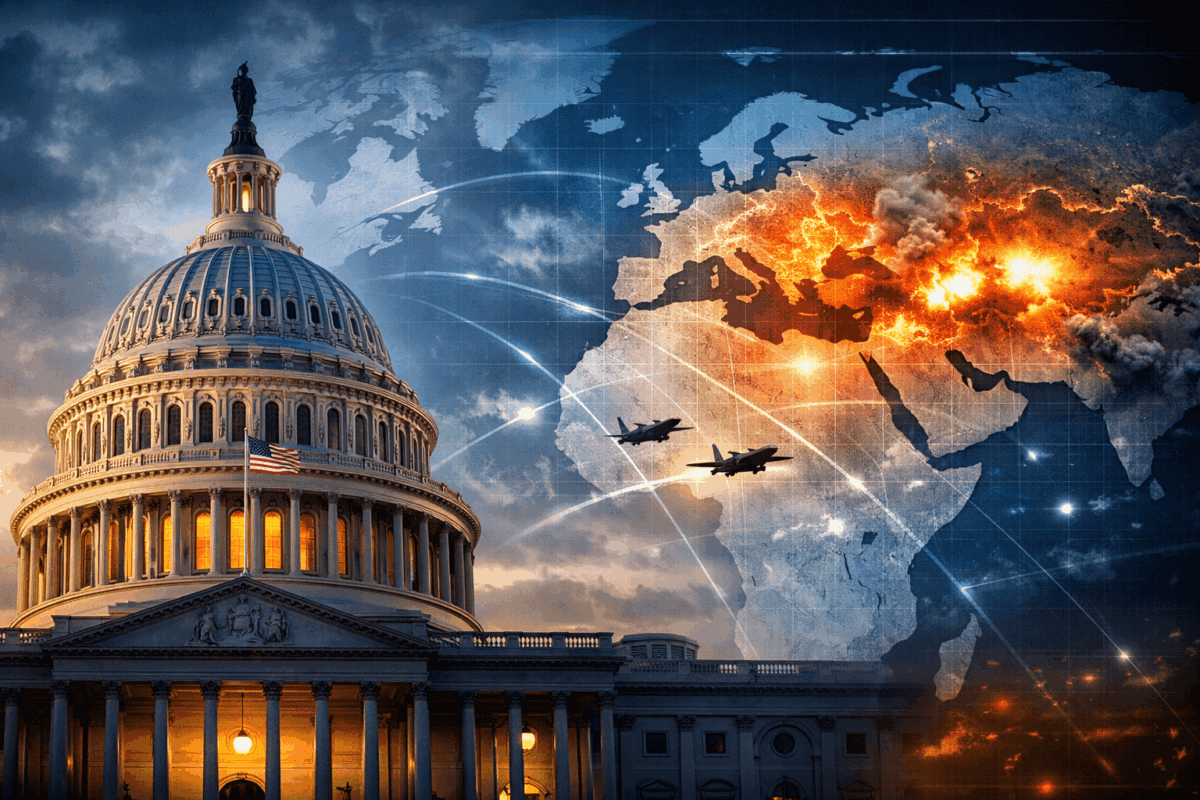
Part A – Kyiv strike ahead of talks
Introduction
When a major strike hits a capital city just as diplomacy heats up, it rarely stands alone as a military event.
It functions as a message. It tests nerves. It tries to reshape the conversation before negotiators even sit down.
Kyiv carries symbolic weight in this war. Any escalation there aims beyond physical damage. It targets public confidence, alliance cohesion, and the political bandwidth of leaders who have to defend every next step at home.
The timing matters because timing is leverage.
The U.S. government summarizes the scale and scope of military assistance in its official release on U.S. Security Cooperation with Ukraine.
What this kind of strike tries to achieve
Russia has repeatedly used escalation to influence the terms of debate.
A high-visibility attack near a diplomatic moment can signal three things at once:
-
I can raise the cost of any process that ignores my conditions.
-
I control the tempo when I choose to.
-
I won’t accept your timeline for “peace” or de-escalation.
This is not only about territory. It is about who sets the agenda.
Why Kyiv always hits differently
Strikes on a capital do more than disrupt.
They challenge the idea of normal life, functioning governance, and national resilience. They also force allies to answer an uncomfortable question in real time: do we respond with more support, more caution, or a push for talks?
Ukraine typically flips the narrative. It frames the attack as proof that any “peace” without hard guarantees is a pause, not an end.
That framing matters because it shapes what domestic audiences will accept next.
The bargain hardens before it begins
“Peace” means different things to different actors.
For Ukraine, the core issue is survival as a sovereign state—backed by credible security guarantees.
For Russia, the priority is strategic insulation and political optics: control, leverage, and a settlement that locks in advantages.
For the West, the central challenge is stability without rewarding aggression as a method.
Those goals collide. A strike timed around diplomacy attempts nayo move the argument from “what is right” to “what is doable.”
That shift is where leverage lives.
Part B
The context: escalation as agenda-setting
In long wars, military action does not only serve battlefield aims.
It also shapes perception—who looks strong, who looks cornered, who looks eager to “freeze” the conflict. A strike ahead of high-level talks tries to write the opening paragraph of negotiations.
It says: we enter this room under pressure, not optimism.
The message to Ukraine: fatigue is a battlefield
This kind of attack often targets more than targets.
It targets endurance.
Even when air defenses blunt the impact, the psychological goal remains: create doubt, exhaust attention, and stress daily life. Winter amplifies that pressure. Infrastructure strain becomes political strain.
Ukraine’s counter-strategy is straightforward: turn the pressure into a rally point and into a case for stronger, not weaker, guarantees.
That creates a direct clash of narratives.
The message to the West: “your choices have a cost”
To European capitals and Washington, the signal is more complex.
It typically carries three sub-messages:
-
Your support won’t end this quickly.
-
Your unity will be tested.
-
If talks happen, they will happen under my conditions.
The West then has to avoid two traps.
One trap is looking like it negotiates under fire. That invites more coercion.
The other trap is sleepwalking into escalation dynamics that increase the risk of accidents, miscalculation, or uncontrolled spillover.
Why the bargaining frame matters more than the battlefield frame
Negotiations do not start when officials speak publicly.
They start when each side tries to define what counts as “realistic.”
Escalation can push the conversation toward a narrower menu: ceasefires, freezes, phased withdrawals, ambiguous language, temporary arrangements.
That is precisely why security guarantees become the focal point. Without them, a pause becomes a reset window.
Where red lines collide
The hardest part is not drafting language. It is aligning bottom lines.
Ukraine seeks credible protection from a repeat invasion.
Russia seeks a strategic outcome that limits Ukraine’s options long-term.
The West seeks a durable order that does not normalize conquest.
If these red lines cannot overlap, then “peace” becomes branding for something far more fragile.
The three pathways that usually follow
Pathway 1: hardening and closure.
The strike stiffens positions, triggers stronger support, and narrows diplomatic room.
Pathway 2: quiet channels.
Back-channel talks intensify without public commitments. Officials probe terms without paying the political price of openness.
Pathway 3: pressure toward a “freeze.”
Fatigue pushes some actors to favor a stop-gap arrangement. This path becomes dangerous if it lacks verification, enforcement, and real deterrence.
None is clean. Each carries risk.
Europe’s dilemma is not theoretical
Europe is not a spectator.
Every escalation sharpens the tension between long-term support and short-term stability. The political cost rises as time drags on, but the strategic cost rises if a weak settlement invites repetition.
Europe has to decide whether “calm” is the same thing as “security.”
It is not.
Part C
The bigger picture: the war is also an argument about rules
This is not only a war over lines on a map.
It is a contest over whether borders can change through force and whether coercion becomes a standard negotiating tool.
That is why the timing of a strike matters. It tests whether violence can shape the framework of diplomacy.
If it can, it sets a precedent that will outlive this war.
“Realism” is not surrender, and it is not a slogan
Realism does not mean cynicism.
It means clarity:
-
Which incentives are fixed?
-
Which promises can be enforced?
-
Which compromises reduce risk rather than postpone it?
The most dangerous version of realism is the kind that trades time for illusions.
The most useful version ties every concession to measurable security.
The question that decides everything: who guarantees the next day?
The durability of any settlement depends on what happens after signatures and photo-ops.
Without enforceable guarantees, agreements become intermissions. They invite rearmament, regrouping, and renewed leverage.
Ukraine knows that.
Russia counts on ambiguity if it can secure it.
The West worries about escalation, but it also worries about normalizing coercion.
A deal that cannot answer “who guarantees the next day” will not hold.
Final conclusion
A strike on Kyiv on the eve of diplomacy is not just violence. It is a negotiating move.
It tests Ukraine’s resilience, the West’s cohesion, and the seriousness of any peace talk framing.
Most of all, it underlines a hard truth: peace is not a word. It is an architecture.
If that architecture lacks credible guarantees, then “peace” becomes a ceasefire with a timer—and the war simply shifts into its next phase.
Διαβάστε την ελληνική εκδοχή εδώ.