
Introduction: The Arrest of Nicolás Maduro
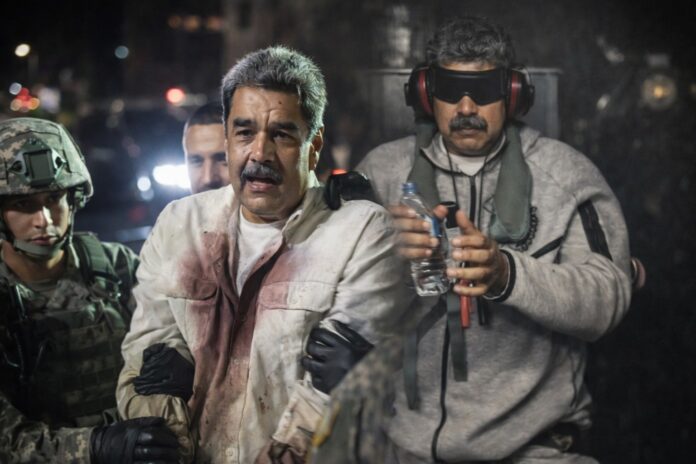
On January 3, 2026, Nicolás Maduro, the president of Venezuela, was arrested in a high-profile operation led by U.S. military forces. This unprecedented move, which has sent shockwaves through the international community, marks a significant escalation in U.S. foreign policy towards Venezuela and is bound to have lasting geopolitical ramifications.
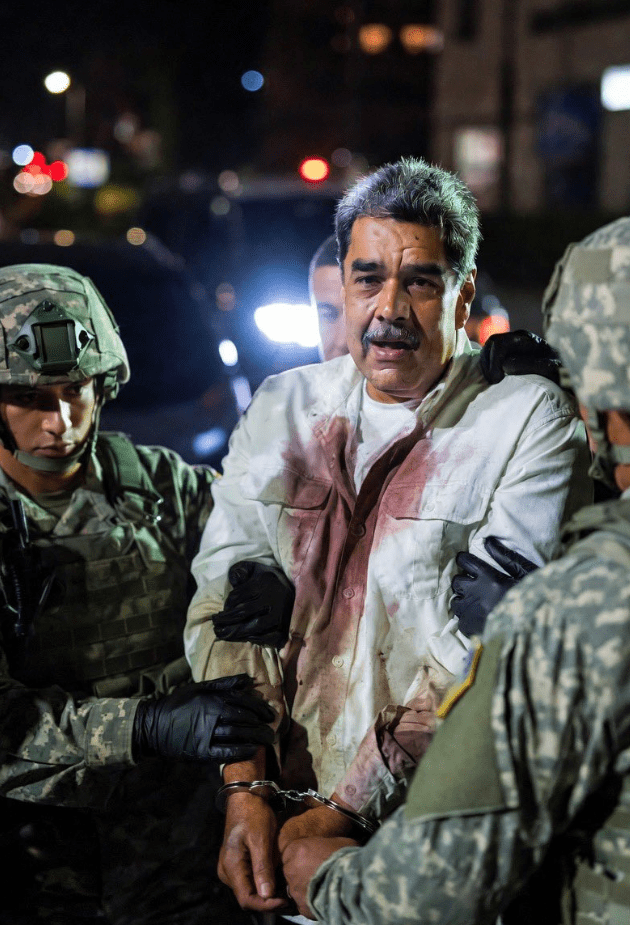
The U.S. government, led by President Donald Trump, released an official statement and even shared an image of the bloodied and handcuffed Maduro in military custody. The image quickly became a symbol of this dramatic shift in the power dynamics within Latin America. As the news spread, world leaders and organizations began to react, with some supporting the action, while others strongly condemned it as a violation of Venezuela’s sovereignty.
This article explores the political, military, and geopolitical implications of Maduro’s arrest, the reaction of international players, and the future of Venezuela following this historic event.
The U.S. Operation: Strategy and Execution
The Military Action
The U.S. military operation began in the early hours of January 3, 2026. U.S. forces, likely supported by special forces units, executed a strategic strike against Maduro’s known locations in Caracas. The operation was well-coordinated, involving airstrikes and specialized ground units. U.S. military sources stated that Maduro was located in a well-fortified compound and was taken into custody without much resistance.
The United States’ government had long accused Maduro’s regime of being involved in drug trafficking, human rights abuses, and electoral fraud. The arrest had been part of a broader U.S. strategy to destabilize the Venezuelan government and push for a change in leadership in line with American interests.
In a live broadcast, President Trump referred to the operation as a “critical victory for justice” and expressed confidence in the future of Venezuela once Maduro was removed from power.
The Arrested Leader: Nicolás Maduro’s Legal and Political Fate
What Happens Next for Maduro?
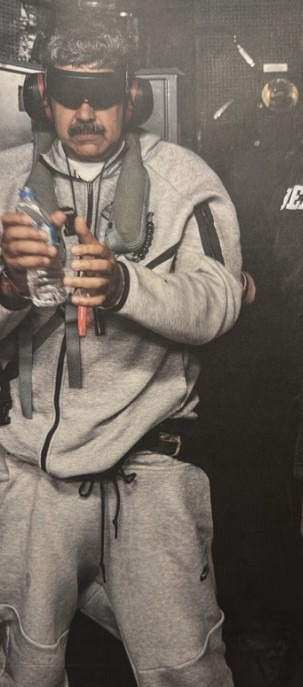
Following the arrest, Maduro was quickly transferred aboard the USS Iwo Jima, a U.S. military vessel, and is currently being held in U.S. custody. The legal implications of his arrest are far-reaching. The U.S. government has charged Maduro with drug trafficking, corruption, and crimes against humanity, including allegations of torture and political repression.
Maduro’s legal team in Venezuela quickly condemned the arrest, calling it a “flawed operation” and “unlawful” under international law. The Venezuelan government has requested Maduro’s immediate release and vows to take action at international courts.
Impact on Venezuela’s Political Landscape
The political fallout from Maduro’s capture is likely to be swift. In his absence, Delcy Rodríguez, Venezuela’s vice president, assumed the position of acting president. Under Venezuela’s constitution, the president must be replaced by a deputy in case of vacancy, leading to a power struggle within the Venezuelan government.
The opposition in Venezuela, led by figures like Juan Guaidó, who has been recognized by the U.S. and several countries as the legitimate president, has hailed the arrest as a historic win for democracy in Venezuela. With Maduro’s arrest, many see an opportunity to restore democratic order to the country.
However, it remains unclear how the international community will respond to the power vacuum. The U.S. has yet to announce whether it intends to support Guaidó’s rise to power or pursue a different path altogether.
Global Reactions: Divided Opinions on the Arrest
Support from Allies
Several countries have expressed their support for the U.S. operation, seeing it as a necessary action against Maduro’s authoritarian regime. Brazil and Colombia, two key U.S. allies in Latin America, have welcomed the move, citing the need to end the crisis in Venezuela, which has seen millions flee the country due to the economic collapse and political repression.
In the European Union, reactions were mixed. Spain and Italy both condemned Maduro’s human rights abuses and praised the U.S. for taking action. However, France called for a peaceful political solution, warning that further escalation could destabilize the region.
Opposition from Russia and China
On the other hand, Russia and China, long-standing allies of Venezuela, have strongly condemned the U.S. actions. Both nations have argued that Maduro’s arrest represents a direct violation of Venezuela’s sovereignty and the principles of international law. Russian diplomats have accused the U.S. of imperialism and interfering in Venezuela’s internal affairs.
The Russian Ministry of Foreign Affairs issued a statement declaring that they would take “appropriate measures” in response to the U.S. actions. Likewise, China called for immediate diplomatic talks and warned the U.S. not to escalate tensions further.
The Future of Venezuela: Geopolitical Consequences
Venezuela’s Role in Latin America and Beyond
The arrest of Nicolás Maduro is not only a military and legal event but also a geopolitical turning point for the entire region of Latin America. The power vacuum left by his removal could lead to new alliances and potential regional conflicts.
Countries like Cuba, Bolivia, and Nicaragua, which share ideological ties with Venezuela, may seek to counter U.S. influence by increasing cooperation with Russia and China, both of whom are keen on expanding their influence in the Americas. Conversely, U.S. support for Venezuela’s opposition may increase tensions in the region, leading to a more polarized Latin America.
The U.S. strategy will also be closely watched by global powers such as India and the European Union, who may choose to take sides in the unfolding diplomatic crisis. How the situation is handled could set a precedent for future U.S. interventions in the region.
Conclusion: A New Chapter in U.S.-Latin America Relations
The capture of Nicolás Maduro marks a historic moment in U.S.-Latin America relations. While the future of Venezuela remains uncertain, the global ramifications of this event will likely shape the political landscape of Latin America for years to come. The situation remains volatile, and the world watches closely to see how the crisis will unfold.
As the U.S. and Venezuela continue to navigate the consequences of this dramatic turn of events, one thing is clear: the international order and the dynamics of power in Latin America have been irrevocably altered.