
Introduction: The Arrival of Nicolás Maduro in the United States
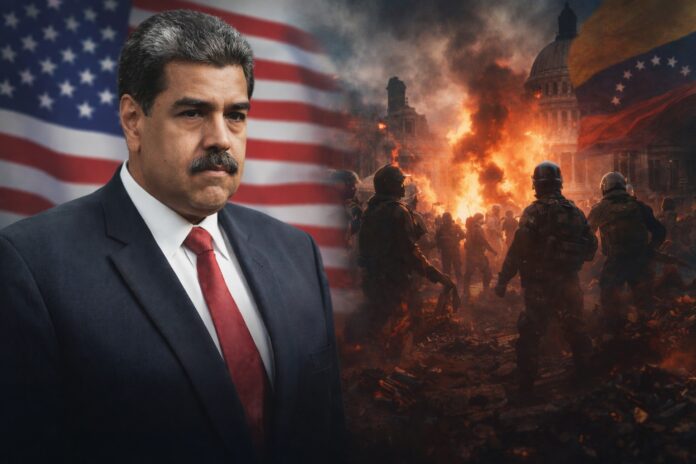
The arrival of Nicolás Maduro in the United States in 2026 marks a pivotal moment in the ongoing political and diplomatic crisis surrounding Venezuela’s embattled regime. Maduro, who has long been the subject of international scrutiny due to his authoritarian leadership and the severe human rights violations that have taken place under his rule, is facing unprecedented pressure both domestically and abroad.
His arrival on U.S. soil, a move fraught with geopolitical tension, has brought renewed attention to the dire economic, social, and political conditions in Venezuela.
Maduro’s government has been accused of widespread corruption, human rights abuses, and suppressing opposition forces with brutal force. His leadership has been marked by political repression, economic collapse, and a humanitarian disaster that has left millions of Venezuelans fleeing their country.
The United States, alongside many international actors, has imposed a series of sanctions on Venezuela and its leadership, further isolating the nation on the global stage. Now, with Maduro in the U.S., tensions are poised to escalate, and the question arises: What does this mean for Venezuela, the U.S., and the broader international community?
Venezuela’s Political and Economic Crisis Under Maduro
The roots of Venezuela’s current crisis can be traced back to Hugo Chávez, Maduro’s predecessor, who laid the foundation for a socialist revolution that promised to uplift the nation’s poorest citizens but ultimately led to the country’s economic and political downfall. Following Chávez’s death in 2013, Maduro assumed power in an environment of political instability and economic mismanagement, which exacerbated the problems that had already begun to take root under Chávez’s leadership.
Under Maduro’s rule, Venezuela has seen the collapse of its once-thriving oil economy, which accounts for around 95% of the country’s exports. The decline in global oil prices, compounded by mismanagement of resources and corruption, led to an economic freefall. Hyperinflation, estimated at several million percent annually, has rendered the Venezuelan bolívar almost worthless. The economic collapse has left basic goods, such as food, medicine, and household essentials, in severe shortage, with many families unable to afford even the most basic necessities.
As the economy crumbled, so did the social fabric of the country. Poverty rates surged, with over 90% of the population now living below the poverty line. Healthcare and education systems, once among the strongest in Latin America, are in ruins, with critical shortages of medicines and supplies. The migration crisis has been one of the largest in the world, with millions of Venezuelans fleeing the country, seeking refuge in neighboring Colombia, Brazil, and other nations in Latin America.
The Human Cost: Deaths, Bombings, and Political Repression
As Venezuela’s political instability deepened, protests and opposition movements grew in strength, calling for Maduro’s resignation and the restoration of democratic processes. However, these protests were met with violent crackdowns by the Venezuelan military and security forces, leading to widespread human rights violations. Reports indicate that thousands of Venezuelans have been killed in these violent clashes, and many others have been subjected to torture and detention under the regime’s repressive tactics.
The government’s use of force has been nothing short of brutal, with bombings of protest sites, attacks on civilians, and indiscriminate violence aimed at suppressing dissent. Snipers were deployed to target protestors, and police have used live ammunition against unarmed citizens. The United Nations has condemned these actions, calling them violations of international law, and the International Criminal Court (ICC) has launched investigations into Maduro and his government for crimes against humanity.
These atrocities have not only deepened the crisis within Venezuela but have also sparked widespread condemnation across the globe. International organizations, including the Organization of American States (OAS), have called for accountability, while nations like the United States, Canada, and many in Europe have imposed sanctions on Venezuelan officials and companies, seeking to pressure the regime into ceasing its violence.
The Geopolitical Implications of Maduro’s Arrival in the U.S.
Maduro’s arrival in the U.S. signals a dramatic shift in the geopolitical landscape. His presence on American soil is both a symbol of defiance against the international community’s pressure and a reflection of the complicated political dynamics between Venezuela, the U.S., and its allies.
While the U.S. has long been an outspoken critic of Maduro’s government, this move raises important questions regarding diplomatic relations and international law. Some view Maduro’s visit as a political theater aimed at securing political concessions, while others fear it could be part of a broader effort by the Venezuelan government to seek asylum or political support from factions within the United States.
The U.S. government’s response will be crucial in determining the future of its relationship with Venezuela. Will Maduro face charges for his crimes, or will there be a diplomatic push for dialogue? The situation is complicated by the fact that Venezuela remains a significant player in global oil markets and holds strategic importance in the Latin American region.
The Future of Venezuela: Hope Amidst the Crisis
Despite the overwhelming challenges facing Venezuela, there is still hope for a resolution. The international community has rallied around the Venezuelan people, offering humanitarian aid, refuge, and political support for those fighting for democracy and human rights. However, the path forward is fraught with obstacles.
The ongoing pressure on the Maduro regime, combined with internal opposition and continued economic sanctions, may eventually lead to a political transition in Venezuela. If the country can navigate its path to democracy, there is a chance to rebuild its institutions, economy, and social systems. The people of Venezuela have shown remarkable resilience in the face of adversity, and their struggle for freedom continues to inspire the international community.
Conclusion: A Turning Point for Venezuela and the World
Nicolás Maduro’s arrival in the U.S. may mark a turning point in the global effort to address the crisis in Venezuela. The consequences of his leadership, including the political repression, economic collapse, and human rights abuses, have been devastating. Yet, the international community’s continued advocacy for the people of Venezuela, coupled with targeted diplomatic and economic pressure, could pave the way for change.
For the people of Venezuela, the hope for a better future remains alive. But it is clear that their struggle for justice and democracy is far from over. The world will continue to watch closely as this ongoing crisis unfolds, hoping for a peaceful resolution that brings stability, dignity, and opportunity to the people of Venezuela.