

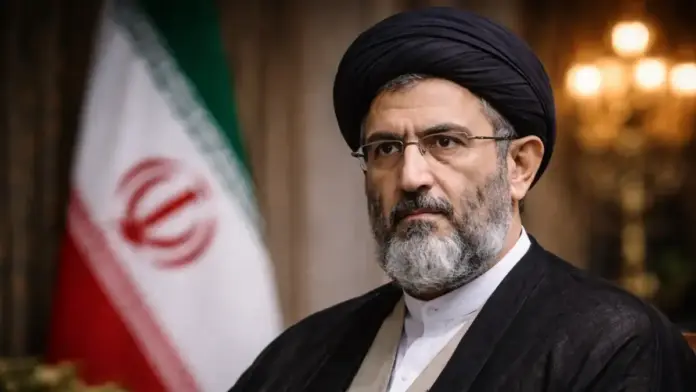
Iran’s new leader is still silent — and that silence is part of the story
Mojtaba Khamenei was elevated as Iran’s new supreme leader, yet nearly 48 hours later he still had not projected a clear public leadership presence through a formal statement or an unmistakable public intervention. Reuters reported that he remained silent after his selection, even as the country moved through one of the most consequential transitions in the Islamic Republic’s history.
That is where the first fact-check matters. The safest wording is not that he is “missing” in the sense of a confirmed disappearance. What is established is narrower and more important: he has remained publicly silent and has not yet offered the kind of visible leadership signal normally expected after such a major transfer of power. Reuters also reported that speculation about his condition exists, but his status had not been independently confirmed.
So the deeper question is not only where Mojtaba Khamenei is. The more important question is what this silence reveals about how power is being arranged in Tehran. On the available evidence, the transition does not look centered on public legitimacy first. It looks centered on system control first.
This is not just a communications gap
In ordinary circumstances, a new supreme leader would be expected to do at least three things quickly: reassure the state, signal continuity to the public, and send a message to allies and adversaries abroad. Here, that visible sequence is missing. In wartime, that absence is not a side note. It becomes part of the political meaning of the transition itself.
Reuters reported that the Revolutionary Guards pushed strongly for Mojtaba Khamenei’s elevation, overcoming objections from senior political and clerical figures. If that account is accurate, then his public silence should not be read simply as personal style. It may instead reflect the way the new order was assembled: the machinery moved first, while the public face of authority remained secondary.
That is also where misinformation has to be stripped down carefully. One false reading says the absence proves the system has collapsed. Another says it means nothing at all and that everything is fully normal. Neither claim is supported by the reporting. Iran does have a named new leader. But the fact that he has not stepped clearly into public view is itself a meaningful signal about how tense and tightly managed this transition appears to be.
His elevation did not come with classic public legitimacy
Mojtaba Khamenei did not arrive at the apex of power as a politician with broad public visibility. Reuters has described him for years as an influential behind-the-scenes figure with deep ties to the Revolutionary Guards and long-running influence through his father’s office, despite never holding a formal government position. That matters because his silence now is not the silence of a leader who already built a public political identity. It is the silence of a man who rose to the highest office without first building open civic legitimacy in the usual sense.
That point is central to how the transition should be understood. When a system places a deeply influential but publicly restrained figure at the top and that figure then remains largely out of view, every day of silence leaves more room for the impression that the real center of gravity lies elsewhere.
For readers who want the broader succession backdrop first, this piece fits naturally alongside Iran: Khamenei’s death confirmed — what we know, what changes now, and what to watch next, which Newsio has already published in English as part of the same developing Iran file.
The Revolutionary Guards are more visible than the leader himself
Perhaps the most important takeaway from Reuters’ reporting is that the Revolutionary Guards appear more visible in the transition than the leader himself. If the new supreme leader remains publicly muted while the security establishment is seen as the decisive force behind his elevation, then the perception naturally grows that the state’s military-security core is consolidating even more power around itself.
Reuters also reported that some sources expect a harder foreign policy line and tougher domestic repression in this next phase. If that proves correct, then Mojtaba Khamenei’s silence will not look like a passing media quirk. It will look like an early marker of a more security-dominant phase in which clerical authority remains symbolically central while operational power becomes even more visibly tied to coercive institutions.
That wider reading also connects with Newsio’s existing English coverage in Khamenei: repression and executions under his rule (fact-checked), because the current transition cannot be separated from the regime’s longer record of coercion, control, and crisis management.
There are injury rumors — but not a confirmed public fact pattern
A second point demands caution. Reuters reported that rumors about Mojtaba Khamenei possibly being wounded have circulated, and that state-linked commentary seemed to nod toward that possibility, but Reuters said it could not independently confirm his condition. That distinction matters.
So the safe newsroom standard is straightforward: there are rumors, there are suggestive signals, but there is no confirmed basis for stating as fact that the new supreme leader is injured, incapacitated, or physically unable to appear. That is exactly the kind of gap where low-quality reporting turns uncertainty into false certainty.
For Newsio’s anti-misinformation identity, this is one of the clearest places to stay disciplined. The point is not to dramatize what cannot yet be verified. The point is to show readers exactly what is known, what is being rumored, and where the line between the two still stands.
Tehran is trying to project continuity, but the image remains incomplete
Iran has already tried to project continuity after the succession. Reuters reported that supporters gathered and that state imagery was used to reinforce the message that the transfer of power had been secured. That means the regime is working actively to create a picture of order.
But image management is not the same as full legitimacy. Portraits, state television, and organized symbolism can tell the public that continuity exists. They cannot fully replace the political effect of a new leader stepping forward in his own voice at a moment of rupture. That is why the transition still feels incomplete. The state has announced continuity, but the new leader has not yet fully embodied it in public.
Why this matters beyond Iran
Mojtaba Khamenei’s public absence is not just an Iranian domestic detail. It shapes how foreign capitals, regional rivals, and markets read Tehran. A state emerging from war, losing its long-ruling leader, and entering succession without a clear public projection from the new top figure creates uncertainty by definition. And uncertainty itself becomes a geopolitical fact.
For the United States and Israel, the silence may be read as either fragility or deeper hardline consolidation. For Gulf states, it may suggest that the decision-making core in Tehran is becoming even more opaque. For markets, it reinforces the idea that political risk in the region has not been reduced simply because a successor was named.
That broader regional context also links naturally with Newsio’s English explainer Strait of Hormuz: what a “closure” claim means (data-driven impact guide) and US ground troops in Iran? What’s confirmed vs. speculation (fact-checked), because succession in Tehran is unfolding inside a live strategic crisis, not in a political vacuum.
The most important falsehood sits in the middle
The most dangerous falsehood here is actually a double distortion.
The first says that because Mojtaba Khamenei has not clearly appeared, the system must be collapsing. That is not established. Reuters reported that the Assembly of Experts had reached consensus on succession and that he was selected despite internal resistance.
The second says that because the state named a successor, the silence does not matter. That is not established either. Reuters treated his silence as meaningful precisely because such a moment would normally call for visible political authority. The silence therefore does not prove collapse, but it also cannot be dismissed as irrelevant.
The safest conclusion sits between those two distortions and is more useful than either one. There is no confirmed disappearance. There is, however, a confirmed lack of normal public leadership presence after elevation. And that fact matters because it points directly to how the new Iranian power structure may be taking shape.
What readers should keep
Mojtaba Khamenei should not, on the evidence now available, be described as “missing” in the strict factual sense. He should be described as publicly silent, still lacking a clear leadership presence after his elevation, and operating inside a transition that appears heavily shaped by the Revolutionary Guards and the state’s security logic.
That matters because Iran’s next phase does not appear to be opening with visible confidence. It is opening with silence, backstage management, and a stronger sense that the institutions speaking most clearly may not be the clerical office itself, but the power centers that lifted it into place. As Reuters reported, the new leader remained publicly silent while the Guards emerged as the decisive force behind the transition. That is not a minor detail. It may be the clearest clue yet to the kind of Iran now taking shape.