

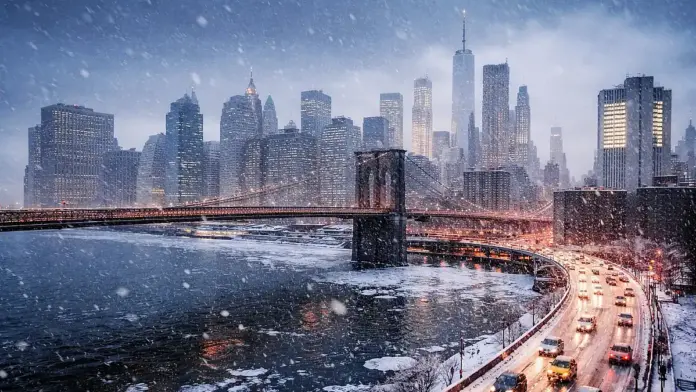
New York Hit by a Major Snowstorm: Hazardous Travel, Flight Disruptions, and a High-Risk 48 Hours
A major winter storm is bearing down on New York City and much of the U.S. Northeast, bringing heavy snowfall, strong winds, and low visibility that can make travel hazardous—sometimes close to impossible—during peak bursts. The immediate impact shows up first in mobility: roads slow or close, transit runs with constraints, and flight schedules unravel across the region.
The headline risk is not only the snow that falls. It’s the combination: snow plus wind plus rapid temperature shifts that set up ice, which tends to drive the most dangerous conditions after the heaviest snow ends.
What follows is a practical, verified guide to what matters now, what officials typically prioritize during a storm like this, and how the next phase can be more dangerous than it looks.
Why New York “locks up” during this kind of storm
New York City doesn’t grind to a halt because it lacks plows. It slows because it runs on continuous flows: commuting, deliveries, emergency response, and networked transportation. When visibility collapses and roads turn to ice, the system prioritizes keeping core corridors functional for emergency services and recovery operations, rather than maintaining normal movement everywhere at once.
That is why the most important advice is usually simple: reduce non-essential travel while conditions are deteriorating.
What officials focus on: travel advisories, ice risk, and why flight disruption spreads nationally
1) Hazardous travel advisories are an operational tool, not a slogan
When city officials warn about dangerous travel, the goal is to prevent cascading failures:
-
fewer crashes in low visibility and icy conditions
-
fewer stranded vehicles blocking plows and emergency routes
-
faster clearance of priority corridors
-
safer access for EMS and utility crews
For the official NYC travel advisory context, use the city’s emergency management updates here: NYC Emergency Management — Hazardous Travel Advisory.
2) The “after phase” can be worse: refreeze and black ice
Many people judge a storm by total snowfall. In practice, injuries and accidents often spike during the transition period, when:
-
daytime melt turns to overnight refreeze
-
slush compacts into slick ice
-
sidewalks, stairs, and crossings become high-risk
-
minor roadway inclines become collision points
This is why officials often urge caution even after the heaviest snowfall looks “over.”
3) Why flight cancellations ripple far beyond New York
When multiple Northeast hubs are affected at the same time, airlines can’t simply “catch up” later. Delays propagate because the system depends on aircraft rotations and crew schedules. Even a short closure window can trigger a chain reaction of missed connections and rolling cancellations nationwide.
Information quality matters during severe weather
Storms generate viral clips, recycled videos from past winters, and misleading “live” claims. If you want a quick method for verifying what you’re seeing (location, timing, source), Newsio’s step-by-step explainer is built for exactly this kind of chaotic news cycle: AI Deepfakes After the Maduro Crisis: How Synthetic Videos Go Viral—and How to Verify Them.
What this means for you
If you’re in New York City
-
Treat official travel advisories as actionable guidance, not optional messaging. Use the city’s updates: NYC Emergency Management — Hazardous Travel Advisory.
-
Assume sidewalks and steps may become more dangerous after the snow tapers, when refreeze begins.
-
Keep essentials charged and accessible so you don’t need to go out during peak hazard periods.
If you have a flight or connection
-
Expect disruption to extend beyond the storm’s most intense hours.
-
Recheck airline and airport updates repeatedly; don’t rely on a single “on time” status early in the day.
If you’re following from abroad
The most useful lens is operational: cities run on flow. When snow, wind, and ice break flow, effects cascade across transit, supply, and schedules.
If you’re interested in how modern public systems manage risk and continuity during high-pressure events—how rules, processes, and data shape outcomes—this Newsio explainer offers a clean parallel example: Electronic Voting in Greece: What’s Changing, What’s Not, and What Citizens Should Watch For.
Summary
A major snowstorm is creating hazardous travel conditions in New York and the Northeast, with the highest risk concentrated in low visibility, ice formation, and the refreeze period after heavy snow. Follow official advisories, reduce unnecessary travel, and expect transportation disruption—especially flights—to ripple well beyond the immediate storm window.