

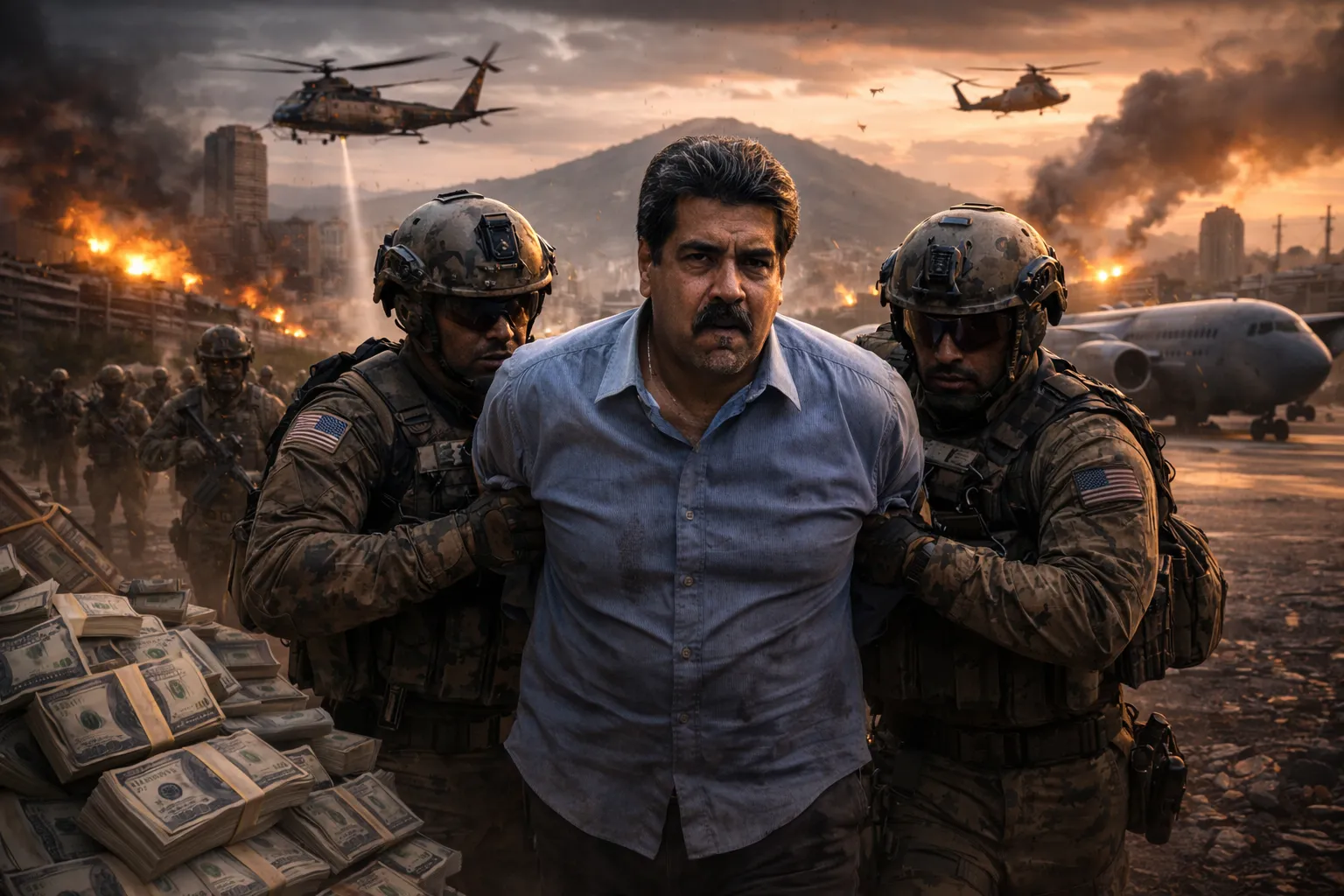
Introduction: A Momentous Event in Global Geopolitics
On January 3, 2026, the world watched in shock and awe as Nicolás Maduro, the long-standing president of Venezuela, was captured in a meticulously planned and executed operation by the United States. The operation, codenamed Operation Absolute Resolve, was more than just an event in international politics—it was a moment of immense geopolitical importance that reverberated throughout the world.
The United States’ move to capture Maduro—who had been embroiled in numerous allegations of corruption, human rights violations, and involvement in international drug trafficking—was seen as a pivotal moment not only in Venezuela’s crisis but in the broader global power dynamics.
“Would you rather listen to the audio version of this article? Watch/listen to it on YouTube”
Cutting-edge military technology, complex strategies
This event, which involved cutting-edge military technology, complex strategies, and international cooperation, raised numerous questions: how did this operation unfold? What were the logistics and costs involved? Which countries participated in the operation, and what role did the wider geopolitical context play?
This article delves deep into the inner workings of Operation absolute resolve, providing an in-depth analysis of its planning, execution, and the global consequences of such a bold military strike. We’ll explore the Military assets used, the Collaborating nations, the Costs Of such an operation, and the Impact on international relations, along with the Ongoing consequences for venezuela And the world stage.
1. the build-up: a long-standing struggle
The decision to capture nicolás maduro was not made overnight. For years, venezuela had been sinking deeper into a political and economic quagmire. Under maduro’s regime, the country faced unprecedented Hyperinflation, Political repression, Widespread corruption, and a Humanitarian crisis That had led millions of venezuelans to flee their homes in search of better prospects elsewhere. Meanwhile, the country’s oil-based economy had crumbled, with revenues severely diminished by global sanctions and internal mismanagement.
Internationally, the United states And several western allies had long seen maduro as an illegitimate ruler. The trump administration had imposed a series of Sanctions Against maduro and his inner circle, accusing them of undermining democracy, engaging in narco-trafficking, and violating human rights. Over time, these sanctions were ramped up, leading to increasingly severe consequences for the venezuelan people and adding fuel to the already volatile situation in the country.
By the time the biden administration took office in 2025, the u.s. government had made it clear that the regime of nicolás maduro was not going to be tolerated indefinitely. With accusations ranging from Money laundering To Drug trafficking And the brutal suppression of opposition groups, the u.s. government’s resolve to take action had reached a boiling point. The groundwork for operation absolute resolve was laid not just by years of u.s. diplomatic efforts but also by the Intelligence networks, Military assets, and the Willingness of allied nations To stand firm against an increasingly authoritarian regime.
2. the execution of the operation: a display of power and precision
The operation was far from a simple covert mission; it was a highly complex military strike involving multiple forces, technologies, and strategies.
A. military resources and strategy
The U.s. military Deployed an array of resources that spanned several domains:
-
Aerial operations: over 150 aircraft Participated in the operation, including f-35 and f/a-18 fighters, Electronic warfare platforms, and C-130 hercules Transport planes. The airstrike campaign was designed not only to ensure the rapid neutralization of key targets but also to disable communication lines, disrupt radar systems, and prevent any possibility of organized resistance.
-
Stealth bombers, such as the b-2 spirit, were poised to carry out strategic strikes against high-value infrastructure, including government buildings and military assets loyal to the maduro regime.
-
Special forces: the operation involved elite units from the U.s. army’s delta force, the 75th ranger regiment, and the 160th special operations aviation regiment. these units were tasked with Infiltrating critical sites and extracting key individuals, including maduro. The precision and coordination between these special forces were paramount to ensuring the capture of the venezuelan leader without incurring heavy civilian casualties.
-
Naval support: u.s. naval forces played a significant role, positioning themselves off the coast of venezuela to establish a Blockade And Control sea access. aircraft carriers and destroyers provided a constant aerial presence, monitoring the operation and providing rapid air support if necessary.
-
Cyber and electronic warfare: one of the most significant aspects of the operation was the use of Electronic warfare, which helped neutralize venezuela’s air defenses and disrupt communication systems. Drones Were deployed for real-time surveillance, offering a clear tactical advantage. Furthermore, the operation saw the deployment of Signal jammers To block communication between venezuelan military units and their command centers, creating chaos and confusion.
B. the political and military coordination
This was not just a U.s. operation In isolation. Intelligence agencies, such as the Cia, played a pivotal role in gathering data on the venezuelan government’s inner workings, the movements of maduro, and the Security layout Of key sites. According to various reports, u.s. officials worked closely with Regional allies To prepare for the operation. While details about Specific foreign participation Remain limited, it is clear that Brazil And other neighboring countries were informed and had a vested interest in seeing the operation succeed.
C. the role of russian and cuban forces
Reports of Russian interference And the Presence of cuban military personnel In venezuela made the operation even more contentious. Russian forces were reported to have Trained venezuelan soldiers, while cuba maintained significant intelligence and military influence in the region.
According to some sources, Russian advisors Attempted to assist in the defense of maduro’s government during the early stages of the operation. However, u.s. military sources claim that any russian presence was Neutralized swiftly, with cuban forces encountering resistance from venezuelan troops loyal to maduro.
Despite these reports, no Direct military confrontation Between russian and u.s. forces has been confirmed. However, the presence of russian military assets in the region raised the stakes significantly, turning what could have been a straightforward operation into a high-risk engagement.
3. the cost: financial and human
While exact figures on the financial costs of the operation have not been publicly released, estimates suggest that Operation absolute resolve Was one of the most expensive military strikes of its kind. The cost of Aircraft, Personnel, Intelligence operations, and Logistical support Was immense. Several sources have reported that the u.s. government allocated Billions of dollars In military resources, including aircraft, drones, and naval vessels, in preparation for this mission.
In terms of Human cost, while most reports suggest that the operation was executed with precision, Civilian casualties Were reported in certain parts of the venezuelan capital. Human rights organizations have raised concerns over the Collateral damage Caused by the aerial bombardments and the intense military presence in civilian areas. The number of Venezuelan military casualties Is also difficult to ascertain, with estimates ranging from 50 to 150.
U.s. losses were minimal, but there were reports of Injuries Among special forces operatives due to the complexity and high risk of the mission. The operation lasted Less than 12 hours, from the initial assault to Maduro’s capture.
4. global reactions and geopolitical ramifications
The repercussions of Maduro’s capture Were felt globally. The immediate reactions from Latin american countries, especially those with strong ties to venezuela, were negative. Mexico, Cuba, and Russia Condemned the operation as a violation of Venezuelan sovereignty And a breach of international law. they called for the immediate release of maduro and demanded Accountability For the u.s. actions.
In contrast, The united states And its European allies Hailed the operation as a success, arguing that it was a necessary step to hold a Dictator Accountable for his crimes. France, Germany, and the Uk Expressed support for the u.s. position, calling the operation a necessary action to end Venezuelan suffering Under maduro’s rule.
However, the operation’s long-term consequences will depend on the Recovery Of venezuela’s political system and how the international community supports the transition. The potential for further Violence, Economic instability, and a Refugee crisis Remains high as venezuela faces the aftermath of the operation.
Conclusion: a new chapter for venezuela
Operation absolute resolve Is A historical moment in venezuela’s turbulent history. the operation, executed with precision and care, has not only led to the capture of nicolás maduro but has set a new precedent in global diplomacy, military intervention, and the fight against authoritarian regimes.
While the Long-term consequences Of the operation remain unclear, one thing is certain: the Political landscape of venezuela Has been irreversibly altered, and the Global power dynamics Surrounding the region will continue to shift. The world is now watching closely to see how venezuela rebuilds in the wake of the Maduro era—and what role the international community will play in this new phase of venezuelan history.