

Paris Bomb Threat Alerts: Evacuations and Security Checks — What We Know
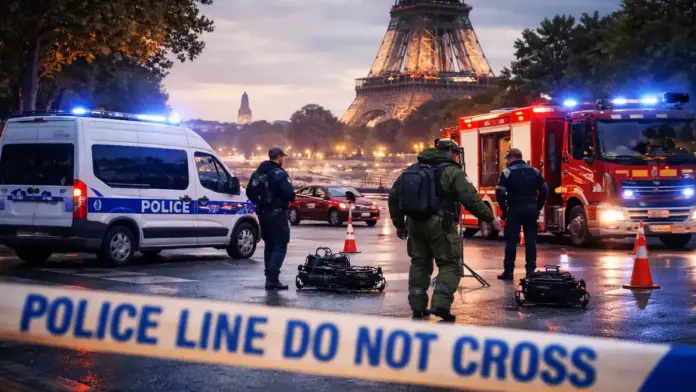
Paris saw a burst of public anxiety after bomb threat reports prompted precautionary evacuations and rapid security checks at prominent locations. The immediate impact was operational: buildings cleared, perimeters established, and specialized teams deployed to assess whether the threat was credible.
At this stage, the core point is not speculation about motives or attribution. It is clarity. What can be said, based on credible reporting, is that authorities treated the alerts as serious until checks were completed, while the investigation into the origin of the threats continued.
This report separates confirmed information from what remains under verification, and explains how these incidents typically unfold in major cities—so readers can understand both the event and the process behind it.
What happened: the picture so far
French media reporting described multiple bomb threat alerts in Paris, with evacuations at Tour Montparnasse and Sciences Po and a police response focused on rapid verification. Tour Montparnasse and Sciences Po were cited among the sites impacted by the alerts, with teams carrying out checks to “lift doubt” and confirm whether any device existed.
International reporting similarly described the alerts as near-simultaneous and noted that authorities moved to secure areas and conduct inspections while details were being assessed.
Because early information in these situations can shift quickly, Newsio is focusing on what is clearly supported by reporting at the time of writing: evacuations occurred, checks were conducted, and the investigation into the source of the threats remained ongoing.
What “security checks” mean in practice
When a bomb threat is reported, authorities typically move through a familiar operational sequence:
-
Initial assessment
The first goal is to protect life and prevent panic. Decisions are made quickly based on the location, crowd density, and the content of the alert. -
Precautionary evacuation
Evacuation does not prove a device exists. It is a protective step taken because uncertainty carries risk. -
Perimeter and access control
Police secure the immediate area and manage entry points to prevent crowding and allow teams to work. -
Search and verification
Specialized units inspect the site to determine whether any suspicious object is present. Only after verification can operations resume.
This process is designed to balance speed and safety: moving fast enough to protect the public, but carefully enough to avoid missing genuine risk.
What is confirmed, and what is not
Confirmed or widely reported by credible outlets
-
Multiple bomb threat alerts were reported in Paris.
-
Precautionary evacuations took place at Tour Montparnasse and Sciences Po.
-
Authorities conducted security checks to verify the alerts.
Not confirmed (do not treat as fact yet)
-
The exact communication method (phone calls vs emails) as a single definitive mechanism, unless confirmed by official statements.
-
Any motive, group attribution, or “terror link” framing.
-
Claims about a specific device without confirmed findings.
In incidents like this, responsible reporting avoids turning the intensity of public reaction into certainty about the underlying facts.
Why these alerts disrupt a city in minutes
Even when an alert turns out to be false, the disruption is real:
-
Mobility and daily routines
Evacuations and perimeters can affect transit and local movement, especially around high-traffic zones. -
Institutional operations
Schools, offices, and public venues shift into emergency protocols, and normal activity pauses. -
Information overload
Social media can multiply rumors faster than verification can catch up. That is exactly when clear, cautious updates matter most.
The public’s sense of disruption is often amplified because modern cities operate as tightly connected systems: a single closure can ripple into crowded streets, delayed schedules, and heightened tension.
How authorities handle bomb threat reports in major cities
Procedures vary by country and agency, but the underlying logic is consistent:
Step 1: Treat uncertainty as risk
A bomb threat is handled as potentially serious until proven otherwise. This is why evacuations can happen even when the threat is later judged to be false.
Step 2: Prioritize crowd safety and communication
The fastest way to reduce risk is to remove people from the potential danger zone. Communication aims to prevent panic, bottlenecks, and confusion.
Step 3: Verify before restoring normal operations
Authorities use trained teams and established search patterns. The key outcome is not “drama,” but “confirmation”—the moment when officials can safely reopen a space.
Step 4: Investigate the origin of the threat
After immediate safety steps, investigators focus on:
-
tracing the source of the message,
-
identifying responsible individuals,
-
and determining whether additional threats were coordinated.
False bomb threats are typically treated as serious offenses because they can tie up emergency resources and create real risk through panic and disruption.
The crucial line: seriousness without panic
A city can take a threat seriously without pushing the public into fear. That balance is the difference between:
-
effective emergency management, and
-
an atmosphere where every rumor becomes a crisis.
That is why “what has been confirmed” matters. Evacuations and checks indicate a protective response. They do not automatically indicate a discovered device or a confirmed attack.
How to read headlines about “bomb threats” responsibly
Two common misunderstandings appear in these stories:
Misunderstanding 1: “If they evacuated, there must have been a bomb.”
Not necessarily. Evacuation is often the safest move in uncertainty. It is not evidence of a device.
Misunderstanding 2: “If nothing was found, it was meaningless.”
Also not true. Even false alerts can cause:
-
crowd movement risks,
-
economic and operational disruption,
-
and heavy resource use for police and emergency services.
The incident remains relevant because it shows how modern security systems respond under pressure—and how easily daily life can be disrupted by malicious or irresponsible reporting.
What we should watch for next
The next meaningful updates are typically:
-
official confirmation of whether anything was found during checks,
-
whether arrests were made or leads identified,
-
whether alerts were linked to each other,
-
and whether additional protective measures were announced.
Until those points are clarified, reporting should avoid conclusions about motives or actors.
What this means for you
If you live in Paris, are traveling, or work near high-traffic venues, the practical takeaway is straightforward:
-
Follow official instructions during evacuations
Move calmly, avoid crowding, and do not return until authorities confirm it is safe. -
Avoid spreading unverified details
In fast-moving incidents, rumor can become a second risk—causing confusion and unnecessary panic. -
Separate “protective action” from “confirmed finding”
Evacuations and checks are protective steps. Confirmation requires verified outcomes.
Safety note
This article summarizes publicly reported information at the time of writing and may be updated as authorities confirm additional details. It does not speculate about identity, motive, or attribution without official support.
Summary
Bomb threat alerts in Paris triggered precautionary evacuations and security checks at prominent locations, including Tour Montparnasse and Sciences Po, as reported by major outlets. Authorities responded through standard protective procedures while the origin of the threats remained under investigation.