

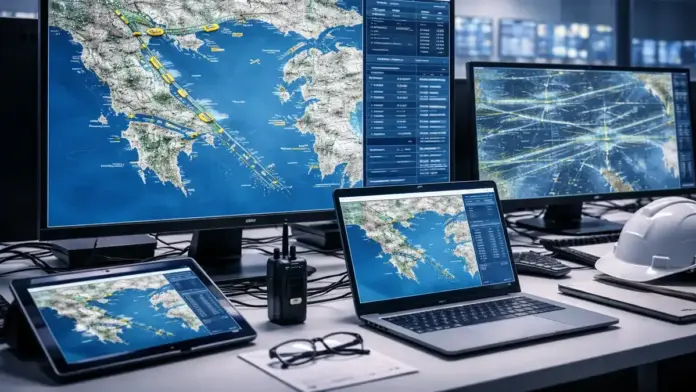
Railway.gov.gr launches: satellite-backed rail oversight and live train visibility in Greece
Greece has put Railway.gov.gr into operation, introducing a new public-facing layer of rail visibility and a broader push for stronger network oversight. The headline isn’t the website itself. It’s what the platform signals: more real-time operational transparency, and a clearer expectation that rail movement can be monitored consistently, with fewer blind spots.
At the user level, the promise is straightforward: a live map view that shows where trains are, in a way that’s easier to verify than scattered updates. At the system level, the promise is bigger: tighter supervision through higher-accuracy positioning and an infrastructure stack that aims to reduce uncertainty about train location on the network.
The part worth watching is not the launch day. It’s whether the data stays dependable, how quickly coverage expands, and how the platform behaves under real conditions: dense traffic windows, disruptions, tunnels, signal gaps, and the everyday friction that separates “pilot” from “routine.”
What we know so far
-
Railway.gov.gr is now live and is presented as a platform for rail supervision and real-time visibility of train movement, starting from key corridors and expanding in stages.
-
The concept relies on satellite positioning and related supporting infrastructure to improve location accuracy and network oversight.
-
Public visibility is not the same as control-room systems, but it creates a new baseline: the public can see movement patterns, and that raises the standard for consistency and explanation when service deviates.
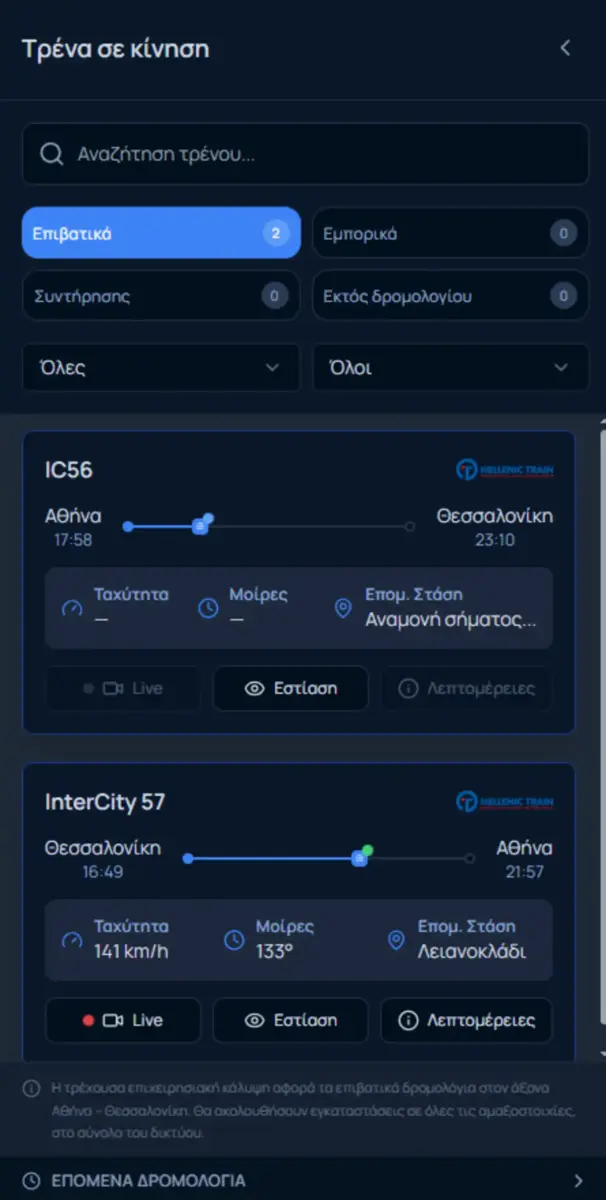
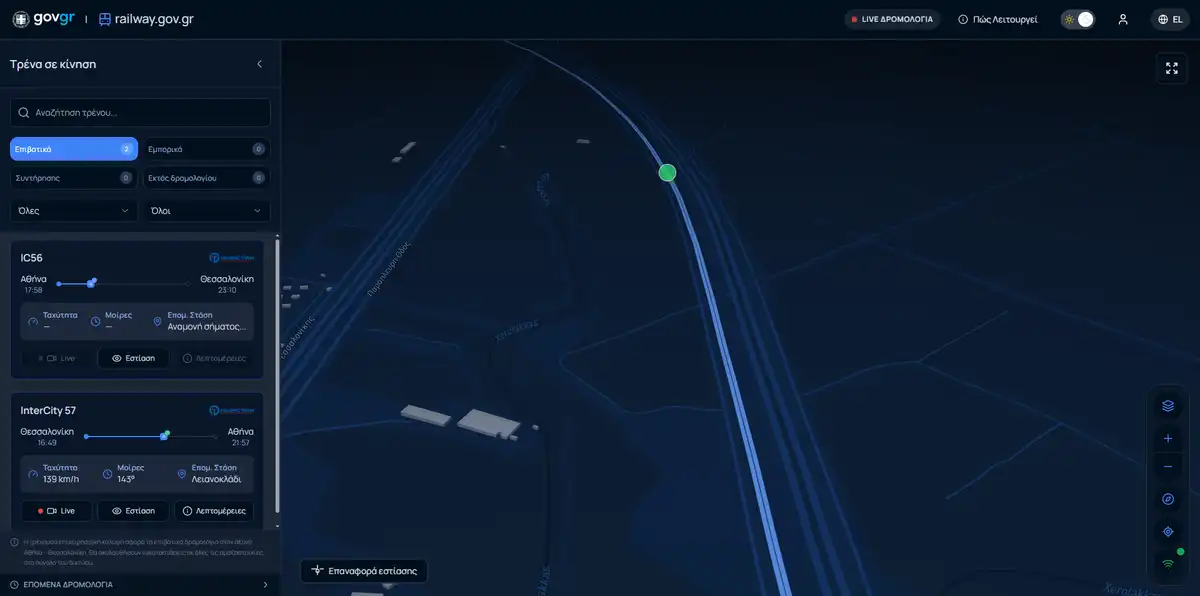
For a related, practical mobility digitization shift (ticketing and how people experience “real time” in transit), see: End of paper tickets in Thessaloniki: digital ticketing in 2026.
What the platform can do — and where early misunderstandings happen
A live rail map sounds self-explanatory. In practice, “live” systems come with three points that matter for trust: coverage, refresh behavior, and precision in context.
1) Coverage: what you’re actually seeing
Early-stage platforms often start with a subset of the network. That can still be valuable, but it changes the user’s expectation. If a line, service type, or region isn’t fully equipped yet, absence on the map may reflect rollout limits, not the absence of rail activity.
2) Refresh behavior: real time versus “near real time”
Even a short refresh delay can change how people interpret a train’s position, especially at higher speeds or near junctions. A stable platform tends to be one that:
-
updates predictably,
-
avoids confusing jumps,
-
and clearly reflects movement without lag that looks like “stops.”
3) Precision: accuracy doesn’t equal certainty
Better positioning can improve oversight, but the real-world result depends on:
-
onboard equipment consistency,
-
data transmission reliability,
-
and how well the digital network model matches the physical track.
This is where platforms win or lose credibility: not on the best-case day, but on the day when the network is stressed.
For broader context on how digital monitoring becomes part of daily-life infrastructure (and why implementation details decide outcomes), see: Technological evolution: how it reshapes daily life, work, and society.
How Railway.gov.gr works — quick overview (30 seconds)
-
Onboard positioning: Trains send location data using higher-accuracy satellite-based positioning (GNSS/HEPOS), alongside basic movement indicators.
-
Redundant connectivity: Data is transmitted to the central system via a primary link with a backup channel to reduce gaps in the feed.
-
Central processing and map display: The stream is processed and checked centrally, then visualized on the platform’s map to support more consistent real-time oversight.
Note: This is a concise summary of how the platform describes its own operation; the public-facing view may differ from internal oversight tools.
What this means for you
If you ride trains regularly, the immediate value is practical: you gain a clearer sense of what’s happening now—useful when you’re deciding when to arrive at the station, whether a delay looks structural, or whether conditions are improving.
If you don’t ride trains often, it still matters as a governance signal. Public visibility pushes systems toward stronger documentation and faster, cleaner explanations when things go wrong. Over time, that can improve institutional trust—if the data stays consistent.
Two disciplined expectations help keep the reading realistic:
-
A public map can strengthen transparency, but it doesn’t replace signaling, dispatch systems, or the full safety stack.
-
The platform is only as strong as its data coverage and reliability across the network.
For the official platform itself (single authority reference), see: Railway.gov.gr.
• Summary: Railway.gov.gr is live, introducing a public-facing layer of rail visibility and supporting a broader push for satellite-backed oversight. The key test will be reliability, refresh behavior, and coverage expansion.