

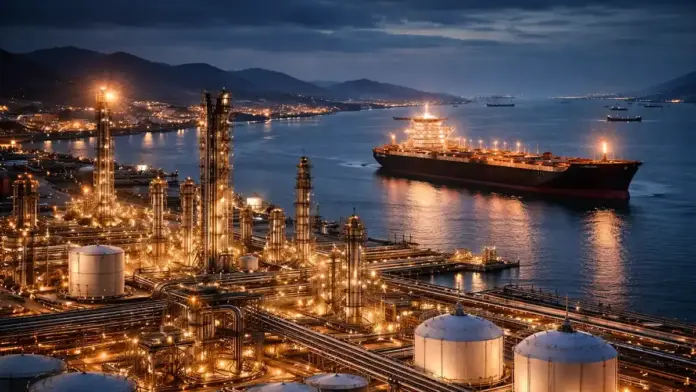
Hormuz now: why a “closure” claim can move oil, fuel, and the cost of living within hours
When you hear “the Strait of Hormuz is closed,” it sounds like a switch was flipped. In markets, it rarely works like that. Prices react to risk first—before a single barrel is physically blocked—because the cost of being wrong is massive. If shipowners, insurers, and traders believe the passage is becoming dangerous or unpredictable, traffic can drop in practice even if the strait isn’t “sealed” in a literal sense. That de facto disruption is enough to push up crude, fuel, shipping, and inflation expectations.
The professional way to cover this is to separate three realities:
-
what is claimed or threatened,
-
what is happening on the water (operations),
-
what markets are pricing as probability (risk premium).
Those three layers can move in different directions on the same day—and that’s why energy prices often spike sharply and then swing.
For readers who want a clean, reliable toolkit for sorting confirmed information from rumor during fast-moving crises, this evergreen internal guide fits naturally: How to read the news without being manipulated: fact-check signals, sources, propaganda.
What the Strait of Hormuz is, and why it matters so much
The Strait of Hormuz is a narrow maritime corridor linking the Persian Gulf to the Gulf of Oman and the open sea. In practical terms, it’s one of the world’s most important energy choke points because:
-
A large share of globally traded oil moves through or depends on the Gulf export system.
-
Significant volumes of LNG flow on routes that are exposed to regional risk.
-
“Replacing” Hormuz overnight isn’t realistic. Alternatives exist (pipelines, rerouting, spare capacity), but they are limited, slower, and often more expensive.
So the moment the perceived security of that corridor changes, the market doesn’t just price oil. It prices the cost of moving oil—and that cost touches nearly everything.
How the shock reaches the pump: the chain in plain English
Think of the “Hormuz shock” as a domino line:
Step 1: Risk premium hits crude oil first (Brent/WTI)
Even without a confirmed physical blockade, fear of disruption lifts benchmark crude. Markets are forward-looking: they price what might happen next.
Step 2: Shipping and insurance costs jump
War-risk insurance premiums can rise fast. If some shipowners hesitate, routes change, voyages slow down, and costs climb. Those costs become part of the final price of energy.
Step 3: Refined products react (gasoline/diesel/jet fuel)
Crude is only the input. Real-world pain often shows up in refined products—especially diesel (logistics) and jet fuel (aviation). In crisis periods, refining margins can widen as traders anticipate supply or logistics stress.
Step 4: Wholesale to retail (pump prices) follows with a lag
Retail prices don’t move minute-by-minute, but they adjust as new shipments and wholesale prices filter through. The lag can be days to weeks, depending on inventories and market structure.
Step 5: The second wave: inflation and everyday costs
Transport, food, packaging, and services all carry “embedded energy.” That’s how a Gulf headline becomes a grocery bill story.
If you want a broader “economy for non-economists” anchor to help readers understand the inflation/interest-rate knock-on effects without jargon, this internal explainer fits cleanly: Economy for non-economists: inflation, interest rates, wages—and why life doesn’t match headlines.
“Closure” in practice: three levels of reality (and why wording matters)
To keep this data-driven and legally safe, don’t treat “closure” as one binary condition. Treat it as a spectrum:
Level A: Announcement / deterrence messaging
A “closure” statement can be strategic signaling—pressure, deterrence, or negotiation leverage. Markets still react because the downside risk is high.
Level B: De facto restriction (fear + insurance + rerouting)
Even if ships technically can pass, if insurance costs spike, security risk rises, or companies pause operations, traffic can shrink sharply. Economically, that behaves like a closure.
Level C: Sustained blockade / major flow disruption
This is the scenario that triggers the biggest spikes—because supply disruption becomes real. It also tends to provoke coordinated government action: strategic reserves, shipping advisories, intense diplomacy, and military posture shifts.
Right now, the critical point is simple: markets are pricing higher risk, and the next question is whether that risk becomes a durable operational disruption.
The data that actually tells you where this is going
You don’t need 20 charts. You need a short dashboard—signals that decide whether a spike fades fast or turns into a sustained cost shock.
1) Brent and WTI: the market’s temperature
Don’t obsess over the exact number. Track:
-
whether the move is a single-day panic or a multi-day trend,
-
whether volatility remains elevated,
-
whether prices “hold” a higher range.
2) War-risk insurance and security advisories
This is often the true driver of de facto disruption. If premiums rise sharply, fewer ships are willing to transit at normal cost. That affects:
-
freight rates,
-
delivery times,
-
and the pricing of future contracts.
3) Traffic and rerouting signals
Even without official statements, traffic patterns can reveal behavior:
-
fewer transits,
-
longer waiting times,
-
detours or convoy-like behavior.
4) Refined product pricing (gasoline/diesel/jet fuel)
If diesel and jet fuel start outpacing crude, that’s a sign the market expects logistics and supply chain pressure—not just a headline shock.
5) OPEC+ signals and spare capacity
Markets calm when supply flexibility seems credible. They tighten when spare capacity is perceived as limited or politically constrained.
6) Strategic reserves and government coordination
Strategic reserve releases don’t “solve” a long disruption, but they can buy time and reduce panic.
7) Currency (EUR/USD) and European import costs
For Europe, currency moves can amplify the cost shock in local terms.
Three scenarios (and what they mean for Greece, specifically)
Scenario 1: De-escalation (risk premium fades)
Globally: crude can drop quickly as fear eases; shipping premiums normalize.
For Greece: pump-price pressure may stabilize within days/weeks, but retail declines can lag. Inflation impact is smaller and shorter-lived.
Scenario 2: Prolonged tension (no full blockade, high risk stays)
Globally: a “tax of uncertainty” persists; higher freight/insurance becomes embedded cost.
For Greece (direct + indirect):
-
Direct: higher fuel prices (especially if refined products stay elevated).
-
Indirect: logistics costs, ferry/airfare pressure, and second-wave effects in food and services—especially in island supply chains.
Scenario 3: Major disruption (flows meaningfully constrained)
Globally: sharper spikes in oil and LNG; knock-on effects in aviation, shipping, and industrial costs.
For Greece: stronger pump-price shock, bigger transport-cost pass-through, and higher inflation risk—especially if disruption lasts long enough to reprice contracts and freight.
Why Greece can feel it “twice”
Two structural reasons:
-
High sensitivity to transport costs
Greece’s geography (islands, tourism corridors, maritime logistics) magnifies energy logistics effects. -
A large energy component in cost-of-living transmission
Fuel affects not only driving, but the entire distribution network: deliveries, tourism services, and retail supply.
And there’s also a strategic-economic layer: Greece is a major maritime nation. When war-risk premiums rise and routes destabilize, it’s not a distant problem—it impacts a core sector of the broader business environment.
For a high-credibility baseline on the market move and the risk narrative around shipping disruption, Reuters’ energy reporting is the most reliable reference point to cite directly: Reuters.
What this means for you
This is where the article should earn its keep: not fear, not theory—clear implications and practical signals.
1) What you’ll notice first
-
Pump prices: often the earliest visible impact, with a lag from wholesale movements.
-
Transport and deliveries: courier, trucking, supply costs start tightening.
-
Travel pricing: pressure on aviation and ferry operators can show up in fares.
-
Grocery bills: usually later, through logistics and packaging energy costs.
2) How to follow the story without getting whiplash
When you see dramatic headlines, ask:
-
Is this a claim, an operational change, or a confirmed disruption?
-
What are insurers and ship operators doing?
-
Are refined products rising faster than crude?
-
Is the market calming—or are volatility and premiums staying elevated?
3) Practical, calm steps (households)
-
Avoid panic-filling at the very top of a spike.
-
Combine trips; reduce “empty miles.”
-
Keep your car efficient (tire pressure, smoother driving).
-
Compare stations consistently; small per-liter differences add up quickly.
4) Practical steps (small businesses)
-
Calculate cost per route now (not at month-end).
-
Optimize routing and consolidate deliveries.
-
If you must adjust pricing, communicate it as transparent cost pass-through.
A useful internal companion here—especially during periods where scams and price manipulation increase around essential goods—is this consumer-facing guide: Fuel Prices Surge: How wars move oil markets and what the data says about what comes next.
The clean conclusion
A Hormuz “closure” claim matters because markets price risk instantly. Whether it becomes a short spike or a lasting shock depends on what happens next in shipping behavior, insurance costs, and real flows. For Greece, the impact can be both direct (fuel prices) and indirect (logistics, tourism supply chains, food and services inflation). The right way to follow it is to watch the mechanism—benchmarks, shipping risk, refined products, and time lags—not just the headline.
• Summary: A Hormuz “closure” claim can raise oil and fuel quickly through risk premiums, shipping insurance and logistics costs. Whether the shock lasts depends on whether disruption becomes real. Greece is exposed through transport-heavy supply chains and second-wave inflation effects.