

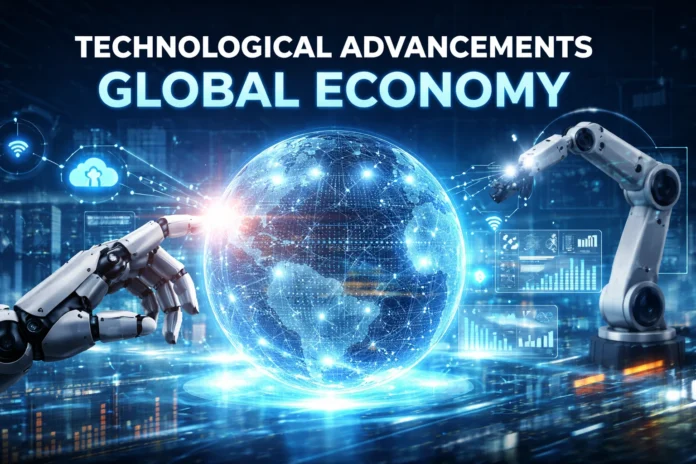
Part A: Introduction to the Impact of Technology on the Global Economy
Technology has become one of the most crucial factors shaping the modern global economy. From technological innovations to digitization and artificial intelligence (AI), technological advancements are fundamentally restructuring the ways in which businesses operate and consumers interact with the market. But what exactly does this mean for the global economy and labor markets?
According to the World Economic Forum The Future of Technology and Economy, these advancements are fundamental in driving growth across all industries and shaping the future of work and economy globally.
With the rapid advancement of robotics, digitization, and other technologies, new opportunities and challenges emerge daily. For instance, the introduction of artificial intelligence in manufacturing has helped businesses reduce costs and improve productivity, while simultaneously creating new job positions in sectors related to technology, data security, and big data analysis.
Part B: The Impact of Digitization on the Economy
Digitization of services and products is one of the largest changes happening today in the global economy. From the connection of businesses to new markets to the promotion of technology for the development of new products and services, digitization is now a critical factor for the success of businesses.
More specifically, digitization allows for the automated management of inventory, the development of new digital products, and direct communication with markets through online platforms. This shift has opened new possibilities for businesses to engage with their audience on a global scale, regardless of location.
But what about small businesses? Small businesses now have the chance to compete with large corporations through digital innovation. Using technologies like cloud computing, small businesses can access infrastructure and tools that were once available only to larger enterprises. This enables them to increase their productivity and expand into new markets.
However, there are challenges. Digitization can increase inequalities between countries that have access to these technologies and those that do not. Digital inequality is one of the most significant risks that could affect the world’s most vulnerable economies.
Part C: Robotics and Artificial Intelligence – Impacts on Labor Markets
The rapid development of robotics and artificial intelligence (AI) has caused a deep shift in labor markets globally. These technologies promise to bring significant improvements in productivity, but they also create challenges for workers and labor relations.
-
Automated Systems: Automation has become a key tool in industrial production. Robotic arms and autonomous machines can replace human jobs in hazardous or repetitive tasks, reducing human error and improving output.
-
The Future of Work: However, this change also brings new challenges. Workers in traditional sectors must retrain to keep up with the new needs of the digital world. The new job positions being created in cloud computing, information security, and data analysis require different skills.
The unemployment caused by automation is a pressing concern, especially in sectors that are most affected, such as transportation, manufacturing, and customer service.
Part D: Policies and Strategies for the Future of Technology in the Economy
As technology continues to evolve, it is crucial for governments to adjust their policies to ensure that workers and businesses can cope with the challenges of the future.
-
Investment in Education: Education and training of the workforce are key to adapting to the needs of the digital age. Governments must ensure that workers have the skills and knowledge to compete in a technology-driven world.
-
Data Protection Laws and Policies: Data protection laws, cybersecurity, and AI regulation must be developed to ensure that new technologies are used responsibly and with respect for individual rights.
-
Structural Policies: Digital transformation requires the creation of new strategies that integrate technology into society, ensuring that all sectors benefit from it.
Conclusion
Technology is undeniably the driving force behind changes in the global economy. While it creates new opportunities and improves production and trade processes, it also brings challenges that require careful management and prudent policy. As technology promotes innovation, it is important to ensure that all workers and businesses can adapt and thrive in this new digital world.