

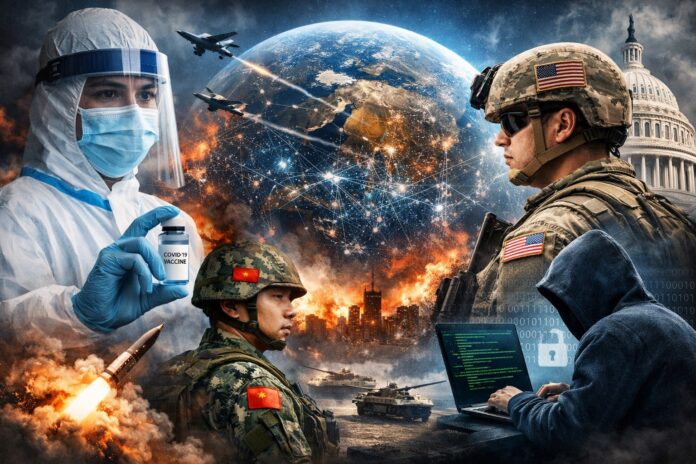
Introduction: How COVID-19 is Shaping Global Political Security
The COVID-19 pandemic has brought about significant shifts in global political security, highlighting new challenges and contradictions for the international community. As major powers try to recover from the pandemic’s effects, geopolitical relationships and economic power are being reshaped at a rapid pace. This health crisis has exposed weaknesses in global policies and underscored the need for cooperation and strategic unity in an ever-changing environment.
Political Security in the Post-COVID World: A Necessary Adaptation
Security Strategies of Major Powers: New Priorities
Post-pandemic, the security strategies of major powers must adapt to new threats, such as cybersecurity, social inequalities, and the emerging forms of digital warfare. Countries like Russia, China, and the United States are adjusting their strategies, not only with military force but also through new digital strategies and economic maneuvers. This has led to the rise of a new, disruptive geopolitical order.
Health Crises and Their Impact on International Political Security
Health Security: Threats and Contradictions
The COVID-19 pandemic brought to light the vulnerability of national healthcare systems and the lack of cooperation at the international level. While major powers have strengthened their domestic security policies, there is also a growing need for new international agreements in health security, as the pandemic proved that national security policies are no longer sufficient to address global crises.
Geopolitical Contradictions: The US-China Standoff Post-Pandemic
Explosive Relations: China and the United States After the Pandemic
The COVID-19 pandemic created new geopolitical contradictions in the ongoing rivalry between China and the United States. The policy of “economic warfare” initiated by China and the tighter diplomacy of the United States have heightened tensions. Digital dominance, economic power, and strategic influence are the main areas of confrontation.
Digital Political Security: Cyberwarfare and New Threats
The Rise of Cyberwarfare and New Digital Risks
The post-COVID world has introduced new forms of conflict, such as cyberwarfare. Digital security is now critical for protecting national infrastructures, with cyberattacks and electronic espionage increasing daily. This leads to new diplomatic challenges in addressing the threats of cyberspace and reinforcing cybersecurity on an international scale.
Economic Recovery and New Inequalities: The Restructuring of the Global Economy
Strategic Recovery and Social Inequalities
The economic crisis triggered by COVID-19 has highlighted the intense social inequalities that exist worldwide. Recovery is not equal for all countries, and inequalities are growing. Some countries are bouncing back faster from the crisis, while others are facing economic stagnation. These inequalities affect global political security and the unity of states.
New Challenges for International Relations and Future Political Security Frameworks
The New International Order: What Will the Challenges Be?
International relations and the global order after the pandemic will not be the same. There is an urgent need for new strategic alliances and the formulation of a new global political security framework. International organizations will need to revisit their strategies and collaborate in new ways to ensure global peace and stability.
Conclusion: Political Security in the Future and International Cooperation
Political security in the post-COVID environment requires a radical shift in the thinking and strategies of countries. The international community must adapt to new geopolitical and social realities to achieve a sustainable peaceful order. The future requires not only the confrontation of new threats but also the creation of new strategies for cooperation and solidarity on a global level.