

Table of Contents
Trump’s ceasefire offer and the Strait of Hormuz still under pressure: why the crisis is not over and what is at stake now
Trump’s offer of a two-week ceasefire with Iran may sound like a step back from immediate escalation, but it is not the same thing as resolution. Reuters reported that Trump agreed to suspend U.S. military action for two weeks after Pakistani mediation, while making the pause conditional on Iran’s full, immediate, and safe reopening of the Strait of Hormuz. At the same time, Reuters also reported that Iran rejected the idea of a simple temporary ceasefire and instead demanded an end to strikes, guarantees against renewed attacks, and compensation. That gap matters. It means the crisis has not actually been solved at its strategic core.
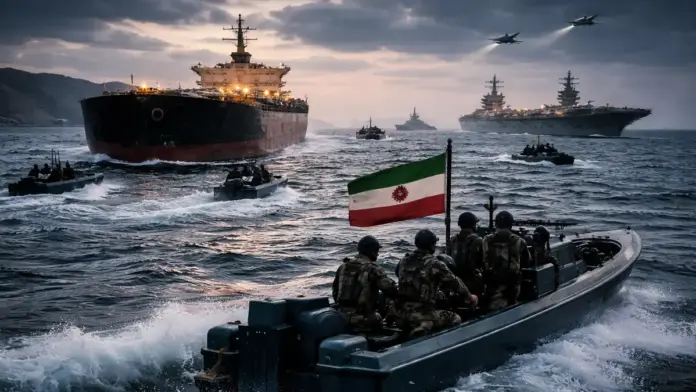
That core is Hormuz. The real issue is not only whether Washington has offered a pause, but whether Tehran is prepared to give up the pressure point that gives it leverage over shipping, energy flows, and global market psychology. As long as that answer remains uncertain, the crisis remains alive even if the rhetoric temporarily softens. Reuters’ live coverage made that plain by framing the ceasefire offer around reopening the strait, not around a settled peace.
Why Hormuz matters more than the ceasefire headline
The Strait of Hormuz is not just another regional waterway. It is one of the world’s most important energy chokepoints. According to the International Energy Agency, roughly 20 million barrels per day of oil and oil products moved through the strait in 2025, and alternative export routes remain limited. That is why even partial disruption there can move far beyond the Gulf and into oil prices, insurance costs, shipping anxiety, and broader inflation pressure.
Newsio has already laid out this logic in Strait of Hormuz: energy infrastructure strikes and ship hit and in Fuel Prices Surge: How wars move oil markets and what the public should actually watch. Those pieces matter here because they show that the crisis had already moved from rhetoric into direct consequences for energy infrastructure and commercial shipping before this new pause offer appeared. The ceasefire headline does not erase that operational reality.
What Trump appears to be trying to do
Trump’s move does not read like a simple retreat. It reads more like an attempt to turn military pressure into political leverage. Reuters reported that the two-week suspension came after mediation efforts by Pakistan and was explicitly tied to the reopening of Hormuz. In other words, Washington appears to be saying that it is willing to hold back immediate escalation, but only if Tehran demonstrates that it is ready to loosen its grip on the most important pressure point in the crisis.
That is why the offer should be read as a test, not as peace. It asks whether Iran wants to convert a dangerous standoff into a managed off-ramp, or whether it wants to keep using maritime pressure as leverage while buying time. For readers who want the earlier phase of that pressure logic in English, Newsio’s Trump–Iran: The 10–15 Day Window and Strike Claims Explained remains useful background because it shows how deadlines, strike warnings, and negotiation windows were already shaping the crisis before the ceasefire offer was made.
Why Tehran is not giving up Hormuz easily
Reuters’ reporting is especially important here because it shows Tehran is not treating Hormuz as a technical shipping issue. Iran’s conditions for lasting talks include an end to U.S. strikes, guarantees, compensation, and demands tied to passage through the strait. That means the Iranian side still sees Hormuz as leverage, not as a neutral corridor that can simply be restored on command.
That reading fits the broader pattern already visible across Newsio’s English coverage. In Strikes on energy infrastructure and a ship hit in the Strait of Hormuz: what is confirmed and why the crisis is deepening, the key point was that the confrontation had already become operational in energy and shipping terms. If Tehran still believes that uncertainty in Hormuz gives it bargaining power, then a ceasefire offer by itself will not remove the central pressure mechanism.
What the next phase most likely looks like
The most realistic path now is not immediate peace, but an unstable middle phase. Diplomacy may continue. Military action may be paused or reduced. But if Hormuz remains under pressure, then the underlying crisis continues in a form that is quieter politically and still dangerous economically. Reuters’ reporting on the ceasefire offer, Iran’s conditions, and outside mediation efforts all points toward that kind of tense interim stage rather than a clean settlement.
That is also why readers should watch the real indicators rather than just political declarations. The most revealing signs will be whether shipping conditions normalize, whether insurance and freight risk ease, whether oil markets relax, and whether Tehran’s public conditions begin to soften. Newsio’s Fuel Prices Surge: How wars move oil markets and what the public should actually watch is especially relevant on this point because it explains how conflict risk moves from the map into daily economic life.
Where misinformation is most likely to spread
The easiest bad reading now comes in two forms. One says the ceasefire offer means the crisis is effectively over. The other says nothing has changed at all, so only the worst possible outcome matters. Both are weak readings. The first ignores that Reuters still describes a serious gap between Washington’s conditions and Tehran’s demands. The second ignores that a two-week pause, if it holds, could still create real negotiating space even if it does not solve the central problem immediately.
A more disciplined reading is that the tone of the crisis may have shifted without the underlying leverage structure being removed. That is exactly why readers should stay focused on confirmation, not social-media certainty. For the broader external energy context behind that risk, the International Energy Agency’s Strait of Hormuz assessment remains one of the clearest references available.
The safest conclusion right now
Trump’s ceasefire offer matters because it slows the logic of immediate escalation and reopens diplomatic space. But it does not, by itself, prove that the system is stabilizing. As long as the Strait of Hormuz remains the active center of pressure rather than a clearly reopened corridor, the most dangerous part of the crisis is still intact.
The real question, then, is not whether a ceasefire was offered. It is whether the ceasefire is matched by genuine de-escalation at the very point where this crisis can still damage shipping, energy, and global confidence. Until that becomes clear, the right posture is caution, discipline, and close attention to the hard facts rather than the headline alone.