
Trump’s 10-Day Window for Iran: What Was Said, What Is Known, and What Comes Next
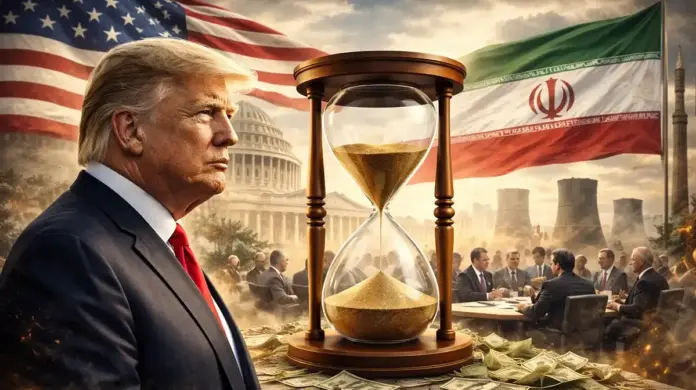
President Donald Trump said he expects clarity “over the next 10 days” on whether Iran will move toward a new nuclear understanding with the United States. He paired the timeline with a warning that “bad things” could happen if diplomacy fails.
He made the comments during the first convening of the Peace Council he established, framing the body as a platform for conflict de-escalation while signaling that military options remain on the table.
The headline is the deadline. In crises like this, a short clock shapes behavior even before it produces a deal: it concentrates pressure, moves markets, forces allies to pick language carefully, and pushes both sides into signaling campaigns that can narrow room for compromise.
What Trump actually put on the table
Trump’s public message combined three elements: a narrow time horizon, a preference for a deal, and an explicit threat if Iran refuses. The precise number of days matters less than the posture it creates—an attempt to move the standoff from “open-ended” to “decision-point.”
That posture serves multiple audiences at once. It signals to Iran that Washington wants movement now, not after months of indirect talks. It signals to domestic audiences that the White House is “in control” of escalation ladders. It signals to allies that the U.S. expects alignment if the window closes.
Why a “window” can raise risk as well as resolve it
Deadlines can accelerate diplomacy. They can also compress verification and sequencing—two issues that usually determine whether nuclear talks succeed or fail.
Iran tends to demand sanctions relief pathways and guarantees. Washington tends to demand constraints, access, and timelines it can explain to Congress and partners. A “10-day” frame makes it harder to do slow, technical bargaining, and easier to fall into all-or-nothing messaging.
That is why public clocks sometimes function more as leverage than as a realistic negotiating schedule. They raise the cost of delay. They also raise the political cost of backing down after strong language.
What the Peace Council adds to the story
The Peace Council’s launch matters because it gives the administration a branded venue to connect multiple crises—Gaza reconstruction, regional stability, Iran’s nuclear file—under a single “peace and leverage” narrative.
For Iran, that narrative can look like a pressure architecture disguised as diplomacy. For U.S. partners, it can look like a new coordination hub. For markets, it reads as a signal that the White House wants rapid, visible movement—one way or the other.
What we can confirm, and what remains fluid
In the short term, two tracks typically run in parallel:
-
Diplomatic signaling: statements, intermediaries, and “framework” language designed to test whether a negotiating zone exists.
-
Deterrence signaling: posture changes, deployments, and warnings designed to convince the other side that delay carries costs.
Because these tracks move fast and often rely on partial information, misinformation risk rises sharply. News consumers should treat viral “leaks,” dramatic videos, and anonymous claims as high-risk until multiple credible outlets corroborate them—especially during countdown diplomacy. For readers who want a verification framework, Newsio has already mapped practical methods in AI Deepfakes After the Maduro Crisis: How Synthetic Videos Go Viral—and How to Verify Them.
The strategic context behind the clock
Trump’s Iran deadline does not exist in isolation. It sits inside a broader pattern: high-visibility foreign policy messaging built around deadlines, leverage, and direct warnings.
Newsio readers have seen this posture in other recent Trump-related geopolitical episodes, including Trump’s Post-Maduro Storm: Escalation, Threats to Colombia and Greenland, and an Assertive U.S. Foreign Policy. Different region, similar mechanism: compress time, dominate the narrative, and force counterparts to respond on Trump’s frame.
The nuclear file: what “a deal” would need to cover
Any meaningful U.S.–Iran nuclear understanding has to answer three practical questions:
1) What happens to enrichment levels and stockpiles?
Negotiators do not bargain over slogans. They bargain over technical ceilings, storage, dilution, export, and monitoring. The key question is not only what Iran agrees to do, but how quickly it does it—and how reversible the changes are.
2) Who verifies, and on what timetable?
Verification is where deals either become durable or collapse under suspicion. The International Atomic Energy Agency (IAEA) remains the central technical actor for monitoring and safeguards. Readers who want the institutional baseline can use the IAEA’s own overview: Monitoring and Verification in Iran.
The crucial point: verification is not a single event. It is a process. It requires access, continuity, and clarity about unresolved questions. If a deadline compresses that process, it increases the risk of an agreement that looks strong politically but proves fragile operationally.
3) What sanctions relief exists—and how does it snap back?
Iran typically wants predictable economic channels. The U.S. and partners typically want conditional relief tied to compliance milestones and snapback tools if Iran breaches terms. These structures can take time to draft because they touch banks, shipping, insurance, and trade rules that move slowly even when politics moves fast.
This is where economics intersects the crisis. Even the expectation of sanctions tightening or conflict risk can reprice energy, shipping, and currency hedges. That is why “10 days” can move markets even before anything happens.
For background on how financial systems absorb geopolitical shock—and how alternative rails can appear under sanctions pressure—see Newsio’s broader explainer on systems and incentives in The Evolution of Digital Currencies: Impact on Traditional Banking and the Future of Finance. The point is not that crypto “solves” sanctions. The point is that financial pressure changes behavior, and policymakers track those adaptation routes closely.
Escalation dynamics: how “bad things” happen in real life
When leaders warn that “bad things” may follow, escalation does not always mean immediate large-scale war. It can mean:
-
Targeted strikes on assets tied to nuclear or missile infrastructure.
-
Cyber operations against command, energy, or financial systems.
-
Maritime interdictions, seizures, or tighter chokepoint controls.
-
Secondary sanctions and aggressive enforcement actions.
-
Proxy escalation through allied militias or regional partners.
These scenarios differ in scale, but they share a common risk: once the first action happens, each side claims “defense,” and the political cost of restraint rises.
That is why countdown diplomacy can become dangerous if it corners either side into choosing between reputational damage and escalation. A leader who sets a public clock must either claim progress, extend the timeline, or act. Each path carries political cost.
What to watch in the next 10 days
To separate durable signals from noise, focus on four indicators:
-
Credible third-party mediation: If intermediaries publicly confirm channels and timing, it suggests a real process.
-
Verification language: Any serious deal talk quickly references inspectors, access, and monitoring continuity.
-
Sanctions sequencing: Watch for phrasing about phased relief, waivers, or conditional mechanisms.
-
Force posture statements: Not rumors—official announcements, allied confirmations, and observable moves.
If these elements appear together, the “window” may be more than a message. If they do not, the deadline likely functions primarily as pressure.
What this means for you
Most readers are not negotiating nuclear terms. But this kind of countdown can still affect daily life through prices, travel risk, and information quality.
1) Energy and inflation sensitivity
Even without a strike, heightened risk in the Gulf can lift oil risk premiums and feed inflation expectations. That can show up in fuel prices, shipping costs, and broader consumer prices—especially if markets fear disruption to supply routes.
2) Investment volatility and safe-haven moves
Geopolitical deadlines can drive short-term shifts into perceived safe havens and away from risk assets. That does not predict long-term direction, but it can increase volatility and change the cost of hedging for businesses.
3) Travel and operational risk
Airlines, insurers, and maritime operators often adjust routes and premiums when rhetoric sharpens. If you travel for work, watch official advisories and airline notices, not social media threads.
4) Misinformation spikes
During “decision windows,” propaganda and fake content proliferate because audiences crave certainty. Treat dramatic claims—especially those paired with viral images or “anonymous briefings”—as unverified until multiple credible sources confirm them. If you want a practical method, use the checklist and verification logic in AI Deepfakes After the Maduro Crisis: How Synthetic Videos Go Viral—and How to Verify Them.
The central uncertainty: leverage versus timetable
Trump’s message can mean two different things:
-
Leverage frame: The White House wants to force movement and shape headlines, but the real diplomacy could extend beyond the public clock.
-
Decision frame: The administration intends to choose a course—deal, coercion, or action—on an actual near-term timeline.
The difference matters because it affects how allies position themselves and how Iran calculates its options. Early signs usually appear in whether officials start talking about verification mechanisms and sequencing, or whether they keep repeating threats without technical detail.
What a “responsible outcome” would look like
A durable diplomatic outcome would include:
-
Clear limits on nuclear activities tied to measurable steps.
-
IAEA-linked verification language with continuity safeguards.
-
Sanctions relief that is structured, conditional, and reversible based on compliance.
-
Communication channels that reduce the risk of miscalculation while military forces operate in proximity.
A responsible security outcome—if diplomacy fails—would still require clear objectives and limits, because “bad things” without defined scope can spiral into outcomes neither side initially intended.
Summary
Trump’s 10-day window pushes the Iran nuclear standoff into a compressed decision narrative. That can accelerate diplomacy, but it can also raise escalation and misinformation risk if the clock becomes a political trap. Watch verification language, sanctions sequencing, and credible mediation signals to distinguish real negotiation from pure pressure.