

Table of Contents
Vondelkerk fire in Amsterdam: what is confirmed, what is not, and why blaming Muslims is unsupported
A historic church in Amsterdam really did burn. The damage was real, the symbolism was real, and the images were powerful. But the viral claim that Muslims were responsible moved much faster than the evidence. The public record does not support presenting that accusation as fact.
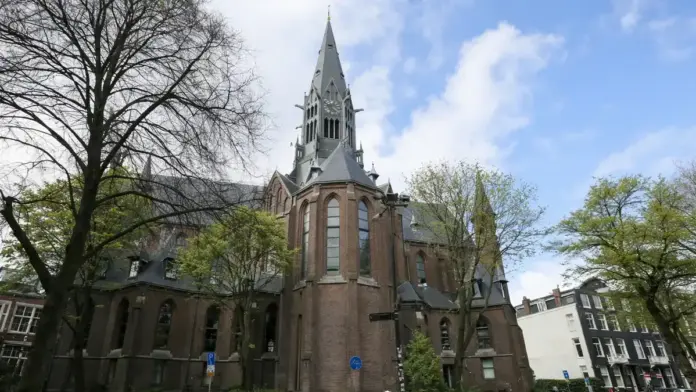
Reuters reported that the Vondelkerk, a neo-Gothic church built in 1872, was destroyed by fire shortly after midnight on New Year’s Day during a night of wider unrest and fireworks-related violence across the Netherlands, while authorities investigated the cause.
That distinction matters. A real event can still be wrapped inside a false narrative. In this case, Dutch reporting later showed that social media accounts rapidly framed the fire as a “jihadist” or “Muslim terrorist” attack even while police and fire officials were still investigating. NL Times and DutchNews both reported that far-right conspiracy theories spread quickly around the Vondelkerk blaze, despite the lack of verified evidence tying the fire to Muslims.
The safe conclusion is straightforward: the fire is confirmed, but the anti-Muslim accusation is not.
Verdict
The claim that Muslims burned the Vondelkerk is unsupported by the publicly available evidence cited here. Credible reporting shows an active investigation into the blaze and a separate wave of social media misinformation that rushed to assign blame without proof.
A historic church in Amsterdam burned during New Year’s unrest, but online claims blaming Muslims ran ahead of the evidence. Here is what is confirmed, what remains under investigation, and why the accusation does not hold up.

URL: https://newsio.org/vondelkerk-fire-amsterdam-fact-check/
Author Name: Eris Locaj
Published Date: 15 Μαρτίου, 2026
Appearance Headline: Vondelkerk fire in Amsterdam: what is confirmed, what is not, and why blaming Muslims is unsupported
Appearance URL: https://newsio.org/vondelkerk-fire-amsterdam-fact-check/
Appearance Author: Eris Locaj
Appearance Published Date: 15 Μαρτίου, 2026
Alternate Name: False
1
What is actually confirmed
Reuters reported that the Vondelkerk fire broke out shortly after midnight during New Year’s violence in the Netherlands, a night that also included fireworks accidents, attacks on emergency workers, and hundreds of arrests. The church was described as a historic neo-Gothic building dating to 1872, and authorities were still investigating the cause.
Reuters video coverage also showed the scale of the damage, including the destruction of large parts of the church and the collapse of the spire. Separate Reuters-connected visual coverage described the fire as reportedly linked to fireworks, which fits the broader context of New Year’s disorder but does not, by itself, amount to a final official cause.
Another iconic European church burned to the ground overnight, this time in Amsterdam.
— Tommy Robinson 🇬🇧 (@TRobinsonNewEra) January 1, 2026
The Vondelkerk, which sits just next to the Dutch capital's famous Vondelpark, was destroyed as invader gangs ran wild with fireworks.
Had enough of them yet?
Mass deportations 2026. pic.twitter.com/KBMzLHmnYI
It does, however, underline something important: the early factual frame around the incident pointed toward an open investigation in a fireworks-heavy environment, not a verified sectarian attack.
That is the core reporting baseline. Before anyone assigns blame to a religious group, the first question has to be simple: what have the authorities or credible primary reports actually established?
How the false narrative spread
According to Dutch media coverage published later in January, the Vondelkerk blaze was framed online as a “jihadist” attack within minutes. NL Times, citing NOS and research by Justice for Prosperity, reported that conspiracy theories and misinformation claimed the church had been attacked by “jihadists,” “Muslim terrorists,” and even a broader anti-Christian network, while the police and fire brigade were still investigating. DutchNews reported the same pattern.
This is how modern misinformation often works. It does not always invent the event. It hijacks the event. A real fire becomes the vehicle for an ideological conclusion that has not been proven. The speed of the claim then creates the illusion of confidence. People begin repeating a narrative not because the evidence is strong, but because repetition itself starts to feel like evidence.
Newsio has covered that same distortion pattern in other contexts, especially when emotionally charged claims outpace verifiable facts. In our fact-check on the Khamenei repression and executions narrative, we showed how high-intensity claims can spread with a tone of certainty long before the evidence settles. In our explainer on electronic voting in Greece, we used the same discipline from a different angle: separate what is confirmed from what is feared, rumored, or politically projected.
🚨🇳🇱 A group of shady young military-age guys just torched the 150-year-old Vondelkerk Church in the Netherlands.
— 𝔉🅰𝒏 Karoline Leavitt (@WHLeavitt) March 15, 2026
Who do you think they are?
A. Muslims
B. Extraterrestrial lives pic.twitter.com/dC100Mgx1f
Why blaming Muslims here is not evidence-based
No credible reporting in the record cited here shows that Dutch authorities publicly identified Muslim perpetrators behind the Vondelkerk fire. No source cited here establishes a jihadist motive. No verified finding ties the church blaze to an organized Muslim attack. What the record does show is a destructive fire during a chaotic New Year’s night, an ongoing investigation, and a later documented misinformation wave that assigned sectarian blame without proof.
That is not a minor distinction. It is the difference between reporting and scapegoating. Once a group is blamed without evidence, the story stops being about facts and starts becoming a tool of hostility. A church fire is serious enough on its own. It does not need an invented culprit layered on top of it.
For readers trying to stay grounded, the best external baseline remains Reuters’ reporting on the fire and the wider New Year’s unrest, because it sticks to what was known, what was not, and what authorities were still examining.
What remains unknown
The final technical cause of the Vondelkerk fire was still under investigation in the reporting cited here. That means the honest position is not overconfidence. It is restraint. We know the church burned. We know the destruction was severe. We know misinformation spread fast. But we do not have verified evidence here that supports the viral anti-Muslim claim.
This is where editorial discipline matters most. When the evidence is incomplete, the job is not to fill the gap with ideological instinct. The job is to protect the reader from false certainty.
Historic Vondelkerk Church Torched in Amsterdam
— Shirion Collective (@ShirionOrg) February 4, 2026
150-Year-Old Church Destroyed by Fire; Locals and Online Reports Point to Deliberate Fireworks Assault by Muslims
This is a tragedy and I bet you didn't even know this happened.
Do you believe this was deliberate?
The… pic.twitter.com/e0EoyLQU6p
That standard also aligns with Newsio’s correction policy : when facts are still emerging, a responsible newsroom separates confirmed reporting from speculation and updates the record only when the evidence warrants it.
What readers should take away
The Vondelkerk fire is real. The destruction of a historic Amsterdam church is not in question. What is in question is the viral claim that Muslims were responsible. On the evidence publicly cited here, that accusation does not hold up.
The stronger conclusion is that a real event was quickly weaponized online through a familiar misinformation pattern: shock first, blame second, evidence last.
That is why this story matters beyond Amsterdam. It is not only about one church fire. It is about how fast a real incident can be converted into a false collective accusation. The defense is simple, but demanding: slow down, separate evidence from narrative, and refuse to turn suspicion into fact before the proof exists.