

Table of Contents
Why Russia Does Not See Israel the Same Way It Sees Other Western Countries
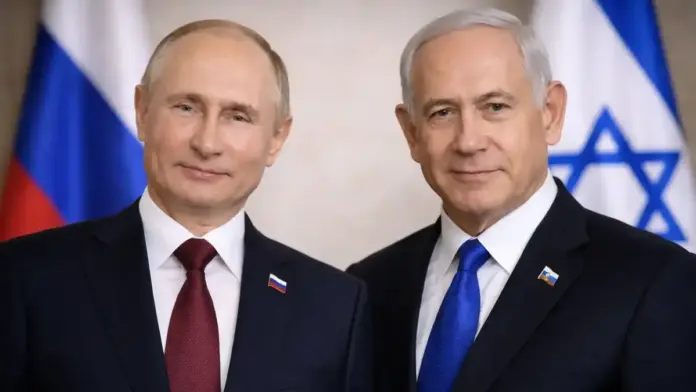
Public debates about geopolitics often fall into a familiar pattern: countries are divided into clear camps, allies and enemies appear fixed, and political narratives suggest that states always act according to simple ideological lines. Reality, however, is far more complex. One of the clearest examples of this complexity is the relationship between Russia and Israel.
In many online discussions, people assume that because Russia is in conflict with parts of the Western world, it must inevitably treat Israel as just another Western adversary. Others go even further, predicting that Moscow will eventually confront Israel in the same way it confronts other Western powers.
Both interpretations overlook a crucial demographic and historical reality: Israel is home to one of the largest Russian-speaking communities outside the former Soviet Union.
Understanding this demographic reality helps explain why Russia’s perspective toward Israel has often been more nuanced than the simplified narratives circulating online.
The Large Russian-Speaking Community in Israel
After the collapse of the Soviet Union in the early 1990s, hundreds of thousands of immigrants from Russia, Ukraine, and other former Soviet republics moved to Israel. This migration was not a marginal phenomenon—it reshaped Israeli society.
Today, roughly one to one and a half million Israelis have roots in the former Soviet Union. Russian remains one of the most widely spoken languages in the country after Hebrew and Arabic. Russian-language media outlets operate in Israel, and the cultural footprint of the post-Soviet diaspora remains visible in politics, business, and everyday life.
This demographic bridge between the two societies is often overlooked in simplified geopolitical narratives. Yet migration patterns, language ties, and shared historical experiences frequently influence international relations more than ideological labels alone.
Understanding how demographic connections influence international politics is part of the broader global shift described in Newsio’s analysis of the changing balance of global power in the 21st century, where economic networks, migration flows, and technology increasingly shape geopolitical realities.
Putin’s “Russian-Speaking Country” Comment
The idea that Israel has a large Russian-speaking population is not a recent claim. Russian President Vladimir Putin has referred to this demographic reality several times in public remarks over the years.
One widely cited example came during discussions about Israel’s population structure, where Putin noted that a significant number of Israeli citizens came from the former Soviet Union. In that context, he described Israel as “almost a Russian-speaking country.”
This statement is frequently taken out of context online. Some interpret it as evidence that Israel is somehow politically aligned with Russia or that the two countries share a special strategic alliance. In reality, Putin’s comment was a reference to demographics, not a declaration of political alignment.
The original remarks can be found in the official Kremlin transcript of the St. Petersburg International Economic Forum session, where Putin discussed the historical migration of people from the former Soviet Union to Israel.
What the statement reflects is recognition of a social reality: millions of Israelis have linguistic and family ties to the post-Soviet world.
Why Demographics Matter in International Relations
International politics rarely follows the rigid ideological lines often portrayed in social media debates. States make decisions based on a complex combination of security concerns, economic interests, diplomatic relationships, and social ties.
The presence of a large Russian-speaking community in Israel means that cultural and historical connections continue to exist between the two societies. Families are spread across borders, business relationships link markets, and language itself creates channels of communication.
This does not eliminate political disagreements between Russia and Israel. The two countries have had tensions and differences over regional security issues. However, the demographic dimension adds a layer of complexity that prevents the relationship from fitting neatly into simple geopolitical categories.
For readers trying to understand how global conflicts evolve, it is useful to view such relationships in the broader context of interconnected international systems, similar to the dynamics described in Newsio’s analysis of how modern states adapt to global political change.
The Danger of Simplified Narratives
During periods of global tension or war, people often look for simple explanations. Online narratives frequently divide the world into absolute camps, where every country must either fully support or completely oppose another.
Reality rarely works that way.
Migration, trade networks, cultural exchange, and historical relationships create connections that blur the lines between political blocs. Russia and Israel provide a clear example of how international relationships are shaped by factors that go far beyond ideological rivalry.
Understanding these layers of connection does not mean ignoring political conflicts. It simply means acknowledging that global politics operates within a web of human relationships that cannot be reduced to slogans or viral posts.
What Readers Should Take Away
The large Russian-speaking community in Israel is one of the most important yet often overlooked factors in understanding how Russia views the country. Millions of Israelis have roots in the former Soviet Union, and this reality continues to influence the broader diplomatic environment.
Recognizing these social and historical connections does not imply political alignment or alliance. It simply highlights the complexity of international relations in a world where societies are deeply interconnected.
In an era dominated by fast-moving online narratives, taking the time to examine context, history, and demographics remains essential for anyone seeking to understand what is actually happening in global politics.