

Table of Contents
Trump 3-0: The Failed Third Attempt, America Still Standing, and Tehran’s Misread
The latest failed attempt against Donald Trump should not be written as a defeat for him. It should be read as the opposite: another failure by political violence to remove him from the center of American power.
Trump was evacuated unharmed from the White House Correspondents’ Dinner. The Secret Service responded. A suspect was detained. A Secret Service agent survived after being struck in a bullet-resistant vest. The event itself was shaken, but the institutional chain did not break. That is the first fact that matters.
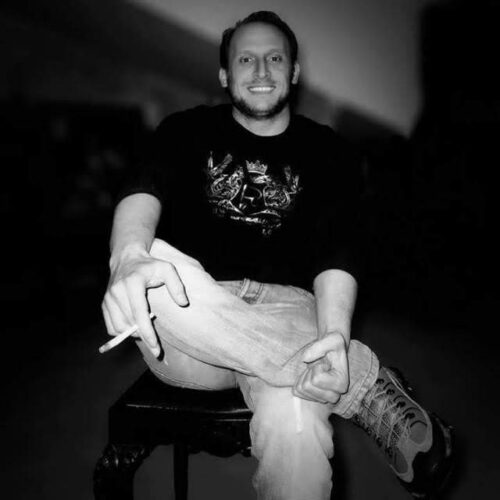
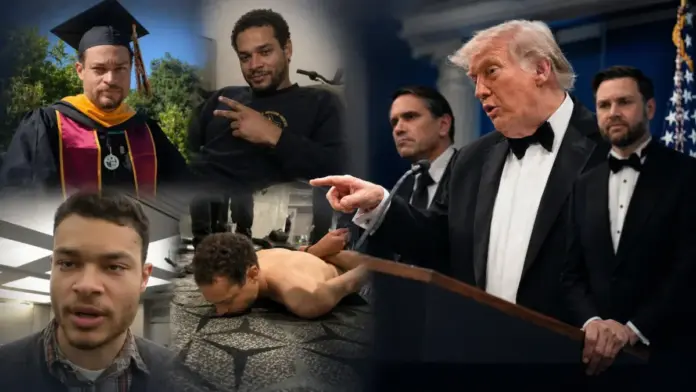
The Associated Press reported that Cole Tomas Allen, 31, of Torrance, California, was taken into custody after allegedly attempting to storm the event armed with guns and knives, while Trump and senior officials were moved to safety.
That is why the phrase “Trump 3-0” works as an editorial frame. It is not a scoreboard of violence. It is a scoreboard of failed violence. Each attempt or serious security incident adds weight not because the violence deserves glory, but because it failed to achieve its purpose. Trump remains physically unharmed in this latest case, politically central, and institutionally protected.
A bullet did not become the symbol of Trump’s weakness. It became the symbol of another failed effort to stop him by force.
What is confirmed — and what must remain precise
The confirmed facts are serious enough without exaggeration.
Reuters identified Allen as a Caltech graduate with a technical and educational background, including mechanical engineering and computer science, while reporting that the motive remains under investigation. The same reporting described him as a part-time teacher and game developer, which matters because this was not the profile of a random street criminal with no social or educational footprint.
The Washington Post reported that investigators searched writings and a home tied to Allen, while officials said he may have been targeting members of the Trump administration, potentially including Trump himself. It also reported that weapons were recovered and that the suspect was expected to face federal charges.
The Guardian likewise reported that Allen was believed to have acted alone at this stage and that the motive remained unclear, while authorities continued to investigate whether additional charges could follow.
That distinction is essential. We can write that the incident had political and geostrategic weight. We cannot write, without evidence, that Iran, the IRGC, China, Russia, or any foreign intelligence network directed it.
The current public record supports a strong article about political violence, presidential security, timing, and strategic pressure. It does not yet support a claim of foreign operational control.
Why “Trump 3-0” is a political frame, not a slogan
The point is not that Trump should be praised because violence targeted him. The point is that violence failed.
Political violence always seeks more than physical harm. It seeks paralysis. It seeks panic. It seeks a break in continuity. It seeks the image of a state that can no longer protect its leader, its institutions, or its public rituals.
This time, it did not get that image.
Trump was moved out. The Secret Service held the physical line. The suspect was detained. The worst outcome was avoided. The American state did not enter a succession crisis. The presidency did not stop functioning. The decision-making center remained intact.
That is why the attack becomes political weight in Trump’s favor. Not because the attack itself is admirable. It is not. But because surviving repeated attempts and serious security incidents can harden the public image of a leader who refuses to disappear under pressure.
Trump’s opponents may dislike that reading. His supporters will understand it immediately. In politics, survival under pressure is never neutral. It becomes narrative.
And in this case, the narrative is simple: the attempt failed, Trump remained standing, and the machinery of government did not break.
The room mattered because the room was symbolic
The White House Correspondents’ Dinner is not just a formal dinner. It is a symbolic room where power, media, ritual, access, and American political theater converge.
That is why the scene matters. A security incident at that event does not only raise questions about one attacker. It raises questions about the vulnerability of America’s institutional rituals in an era of rising political violence.
A democracy can survive harsh disagreement. It can survive brutal elections. It can survive ideological division. But when armed threats begin to haunt its most protected political spaces, the question changes. It is no longer only whether leaders can win elections. It is whether the public space around political leadership can remain open at all.
That is the deeper meaning of the incident.
Trump left unharmed. That is the victory. But the event itself exposed the pressure around the American political system. That pressure is real, and it cannot be ignored.
The timing is not proof of a foreign plot — but it is a strategic link
The timing matters.
The attack occurred while the United States is managing an extraordinary foreign-policy environment: the Iran crisis, the Strait of Hormuz, U.S. naval pressure, Middle East escalation, and Tehran’s internal power struggle. That does not prove a foreign hand behind the suspect. It does prove that the incident happened inside a charged strategic moment.
In geostrategy, timing is never empty.
A domestic shock to presidential security during a major external confrontation becomes part of the strategic environment whether or not a foreign power caused it. Adversaries do not need to have organized an event in order to exploit the image it creates. They can watch it, amplify it, interpret it, and use it to test American steadiness.
That is the careful line: no unproven foreign direction, but undeniable strategic relevance.
This is why the incident belongs beside Newsio’s earlier analysis, Iran Under Pressure: Three U.S. Carriers, an Internal Rift, and Diplomacy in the Shadow of Force. That article examined the pressure around Tehran, Hormuz, U.S. naval power, and the question of who truly controls the next move. The Trump incident adds another layer: the United States is projecting force outward while also absorbing political violence at home.
That is not weakness by itself. But it is a stress test.
The Middle East should not misread the image
If hardliners in Tehran or anti-American circles in the Middle East celebrated the incident as a sign that America is breaking, they misread the image.
The first frame shows panic. The second frame shows the Secret Service moving. The third frame shows the suspect detained. The fourth frame shows Trump unharmed.
That sequence matters.
A successful attack would have been a national trauma. A failed attack becomes something else: proof that the security system absorbed the shock. It does not erase the danger. It shows the state did not collapse under it.
That is why Tehran has no reason to celebrate. Iran is not operating from a position of clean internal unity. It is under pressure from outside and divided inside. Its diplomatic face, its IRGC hardline machinery, and its political survival instincts do not always move in the same direction.
Newsio’s The Hormuz Vise: Why the War in Iran Is Being Fought in Your Wallet explained how Hormuz turns regional conflict into global economic pain. But the vise also works politically: the more Tehran leans on Hormuz as leverage, the more it invites U.S. naval pressure and international scrutiny.
In that environment, an unharmed Trump is not a gift to Tehran. It is a problem for Tehran. The man issuing pressure remains in place.
Trump versus the Tehran regime: why the contest is not only military
Trump’s confrontation with the Tehran regime is not only about strikes, carriers, sanctions, or oil lanes. It is about political will.
Iran’s power system depends on showing that it can absorb pressure, outwait opponents, and use ambiguity as a weapon. The United States, under Trump, has tried to show the opposite: that Washington can compress Tehran’s choices, force costs back into the regime, and prevent Hormuz from becoming a permanent tool of blackmail.
That is why Newsio’s America at the Table with Araghchi: Negotiating with the Polished Face of the Same Threat matters here. The article argues that the diplomatic face of Tehran cannot be separated from the deeper machinery behind it. Araghchi may speak in the language of diplomacy, but the system around him still contains hardline power centers and coercive logic.
Trump’s political advantage is that the Iran file allows him to present himself as the leader who does not accept endless ambiguity. Whether every tactical decision succeeds is a separate question. But the posture is clear: pressure first, concessions only if they produce visible results.
That is why a failed attempt against him inside Washington does not weaken the Middle East frame. It sharpens it. The president who is pressuring Tehran also survived another domestic security shock.
The three centers of pressure inside Iran
The Iranian regime is not as seamless as it wants to appear.
There is the diplomatic layer, represented by officials who carry messages, negotiate through intermediaries, and try to manage external pressure without openly surrendering ground.
There is the IRGC layer, which sees compromise not only as a diplomatic risk but as a potential threat to revolutionary authority.
And there is the regime-survival layer around the top of the system, which must balance repression, legitimacy, factional competition, economic pain, and the fear of appearing weak.
That is why Tehran’s position is more fragile than its rhetoric suggests.
If Iran were a single unified machine, it could negotiate or escalate with cleaner logic. Instead, it often behaves like a regime trying to manage competing centers of power while pretending it has only one voice.
Newsio’s U.S. Strategy Toward Iran: The Pressure Points That Could Shape the Next Phase framed this exact problem: Washington’s challenge is not simply to punish Tehran, but to understand which pressure points create leverage without giving the regime the kind of unity it wants.
That is also why the failed attempt against Trump should not be read as “America weak, Iran strong.” The more accurate reading is this: America absorbed an internal shock while Iran remains under external and internal strain.
U.S. carriers, Hormuz, and the hard map of power
The military context is real.
Al Jazeera reported that three U.S. aircraft carriers were operating in the Middle East for the first time since 2003, citing U.S. Central Command and noting a large accompanying naval and air presence. That deployment does not prove an imminent strike. It does prove that Washington has placed serious force inside the region.
This matters because Hormuz is not a side issue. It is one of the world’s most important chokepoints. If the Strait becomes unstable, the consequences move immediately into energy, shipping, insurance, inflation expectations, and consumer costs.
That is why Trump’s posture toward Iran cannot be judged only in speeches. It must be judged against the map.
The map says the United States has force in theater. The map says Hormuz matters. The map says Tehran cannot threaten energy flows without inviting a larger response. And the latest domestic attack did not remove the American commander-in-chief from that equation.
That is another reason “Trump 3-0” works. The incident did not freeze American power. It failed to interrupt it.
The economy: Trump’s strongest argument must be written carefully
The economic claim also needs discipline.
It is fair to say Trump has material for a victory narrative on the economy. It is not responsible to say the economy is flawless.
The Bureau of Labor Statistics reported that total nonfarm payroll employment rose by 178,000 in March 2026 and that the unemployment rate changed little at 4.3%. That gives Trump a real labor-market argument: the job market did not collapse under pressure.
Reuters reported that U.S. stocks were near record highs, supported by earnings strength and optimism around technology and AI-linked growth. It also reported that a strong first-quarter earnings season helped support investor confidence, even as geopolitical risk remained in the background.
FactCheck.org gives a more balanced picture: job growth slowed, unemployment rose to 4.3%, inflation worsened somewhat, real weekly earnings rose 1%, and the economy grew 2.1% in 2025. That is not a perfect economy. But it is an economy that gives Trump enough evidence to argue resilience.
So the best line is not “Trump has solved the economy.” The best line is stronger because it is more accurate: Trump is operating in an economy that still gives him a credible resilience argument. Markets have shown strength. Employment remains historically stable. Growth has continued. But inflation, sentiment, and cost-of-living pressure remain political risks.
That is the correct economic frame: victory narrative with caveats, not blind triumphalism.
Why strength does not mean absence of danger
Trump is not winning because there is no danger. He is winning politically because danger has not removed him.
That distinction matters.
The United States faces political violence at home. It faces Iran abroad. It faces energy pressure through Hormuz. It faces economic contradictions. It faces an adversarial information environment. None of that should be minimized.
But the core fact remains: the latest attempt failed. Trump remained alive, visible, and operational. The Secret Service held the line. The presidency continued. America did not stop projecting power abroad. The economy did not collapse overnight. Tehran did not suddenly become unified or strategically comfortable.
That is why the story is not “Trump under attack, therefore weakened.”
The story is “Trump under attack, therefore tested — and still standing.”
In politics, that difference is everything.
The American image: battered, but not broken
America’s image is not pristine. It is under strain.
The shooting at the dinner exposed vulnerability. The need to evacuate a president from a formal political event is not normal. The rise of political violence is a serious national problem. The United States must not pretend otherwise.
But exposure is not collapse.
A country can be attacked and remain functional. A president can be targeted and remain politically stronger. A security system can be tested and still pass the decisive test. That is what happened here.
The American system showed both weakness and strength: weakness because the threat reached a symbolic room; strength because the threat did not succeed.
For Trump, the political result is clear. The attack did not become a humiliating image of defeat. It became another chapter in the argument that he is a leader who absorbs pressure and remains in command.
That is why the visual of the trophy matters for the article. It is not childish triumphalism when handled correctly. It is a symbol: the failed attempts did not own the story. Survival did.
The “3-0” meaning for international readers
For international readers, “Trump 3-0” should be understood as a strategic metaphor.
First, violence failed to remove him.
Second, the American security apparatus prevented a worse outcome.
Third, his foreign-policy posture toward Iran and the Middle East remained intact after the shock.
That is the 3-0.
It does not mean every Trump policy is flawless. It does not mean America has no internal fracture. It does not mean the Iran crisis is resolved. It means that in this specific sequence, those trying to turn violence into political collapse did not win.
For Tehran, that matters.
For allies, that matters.
For markets, that matters.
For voters, that matters.
Because in a world where perception travels faster than policy, survival becomes political force.
The final conclusion
The failed attack at the White House Correspondents’ Dinner did not write Trump’s defeat. It wrote another failure by political violence.
Trump left unharmed. The suspect was detained. A Secret Service agent survived. The event was shaken, but the presidency continued. The public record does not support claims of Iranian, Russian, Chinese, or IRGC direction. But it does support a powerful conclusion: the attack occurred during a moment of intense international pressure, and Trump remained standing inside that pressure.
That is why the headline is not “Trump wounded.”
It is Trump 3-0.
Not because violence deserves a scoreboard, but because violence failed again.
In the Middle East, Trump is not dealing with a clean and unified regime. Tehran is under pressure, divided among diplomacy, hardline security power, and regime survival. Around Hormuz, the United States still holds the capacity to project naval force. In the economy, the picture is mixed but resilient enough to support Trump’s claim that America has not broken under the weight of crisis.
So the conclusion is sharp:
Trump did not win because there was no attempt.
He won because the attempt failed.
America did not win because it has no problems.
It won because its institutional continuity held.
Tehran should not celebrate the image of a security scare in Washington.
The man it watches across the strategic table is still there.
And for now, that is the only scoreboard that matters.